
_0b6494.png)
_5c07e1.png)
_0d1bd3.png)
_75149d.png)
(26).png.c97dc453b63ee0a4658a82af0237d93f.png)
.jpg.6f4c4cdf271c439b9589ba629f6acbd4.jpg)
Brazilian pink breastmilk - let's take a closer look

By Nicholas Embleton in nutrition
· 274 views
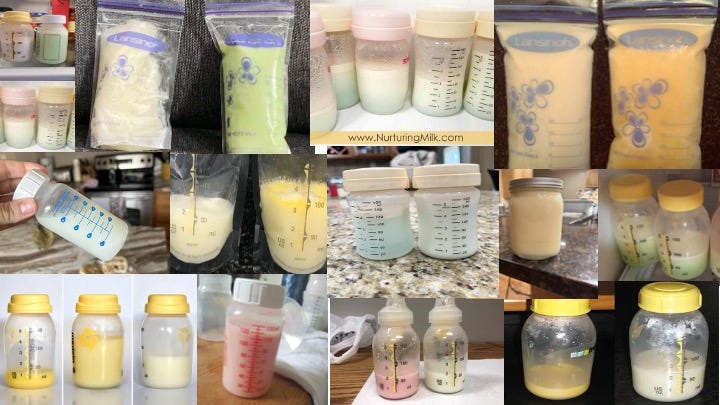
The colour of breastmilk is rarely a uniform, static white and changes during the day, stage of lactation and maternal diet. Colostrum is often yellow or orange due to high concentrations of beta-carotene. At the start of a pump or feed, foremilk appears ‘thin’, almost watery, sometimes with a blue/translucent tint due to lower fat content whereas hind milk is more typically creamy white or yellow. Maternal diet impacts colour variations. Eating large amounts of foods rich in carotene—such as carrots, pumpkins, or sweet potatoes—can deepen the yellow tint of mature milk. Consuming high amounts of green vegetables (spinach or kale), seaweed, or supplements containing spirulina or iron can give breastmilk a green hue.
I’ve been lucky to meet neonatal doctors, nurses and parents in multiple countries around the world and was contacted for advice via a neonatal colleague when the mother developed pink milk, and I then helped write up the case. Cracked nipples might lend breast milk an orange/brown colour but what foods might lead to pink milk? In Brazil. I decided I should take a look.

Thanks for the invitation. This has recently been published and I include extracts of the paper here, with some minor space-saving edits.
"Leite materno rosa: implicações clínicas e relato de caso". Autores: Fernandes PS, Embleton N, Gonçalves AB. Referência: Rev Pediatria SOPERJ 2026;26(4): e20260410.
Pink Breast Milk: Clinical Implications and Case Report.
The composition of breast milk is complex and dynamic. It provides essential nutrients to the infant, including proteins, fats, lactose, vitamins, and minerals, as well as bioactive substances with antimicrobial, immunological, and anti-inflammatory properties. This composition varies throughout lactation, across different times of the day, and even during a single feeding session. Although such variations affect milk density and appearance, they typically do not cause colour changes as striking as those observed in pink breast milk [1,2]. Alterations in breast milk coloration are occasionally observed in clinical practice and may reflect physiological, dietary, traumatic, or infectious causes. Among these alterations, the occurrence of pink-tinted breast milk, stands out.
CASE REPORT
Female newborn, born at term, AGA. At the first postnatal check-up, the infant showed significant weight loss (11.5%), and breastfeeding technique guidance was provided. The parents are healthy, no significant pregnancy complications, baby well other than poor weight gain.
At 9 days of life, the mother required manual intrauterine aspiration due to chorioamnionitis. She was hospitalized for three days and received intravenous antibiotic therapy (gentamicin, metronidazole, and ciprofloxacin), followed by oral amoxicillin-clavulanate. During hospitalization and after discharge, breastfeeding was maintained; however, the infant continued to have poor weight gain. Speech therapy assessment didn’t show ankyloglossia (tongue tie) and due to poor weight gain, infant formula was introduced.
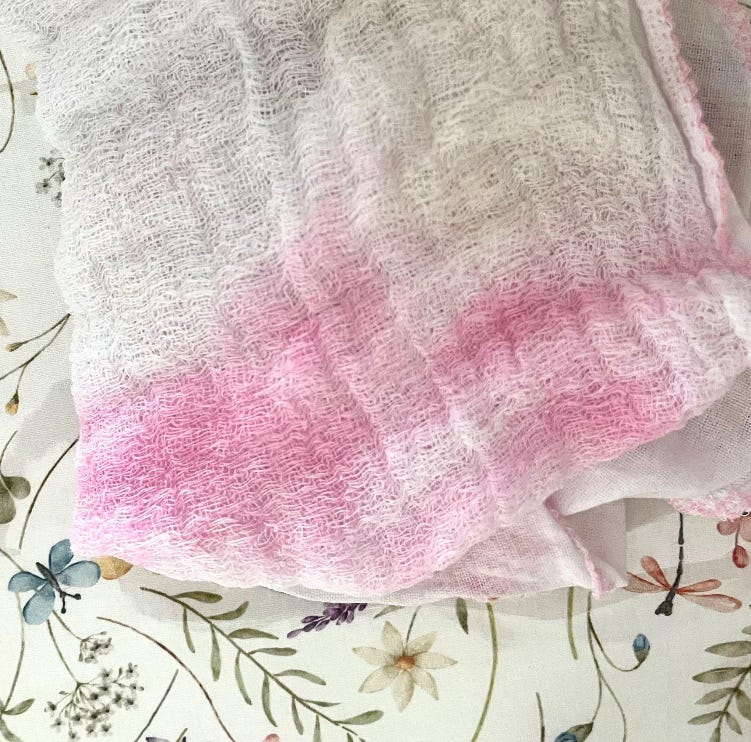
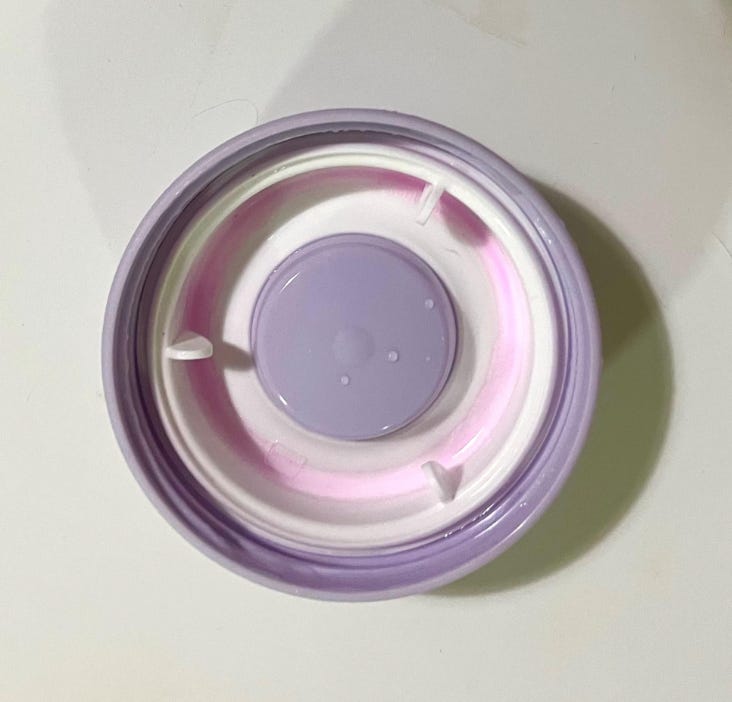
At 33 days of life, the mother had noticed pink-stained towels and pink milk at the bottom of the bottle used to offer milk expressed with a breast pump. Parts of the pump also showed a pink coloration.
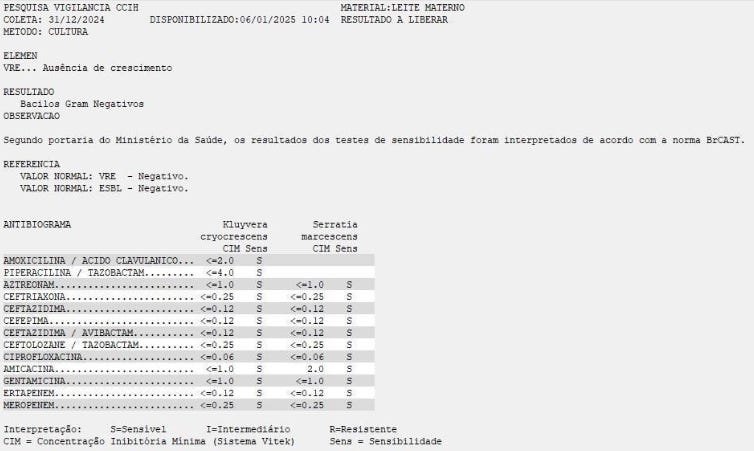
Given the suspicion of Serratia colonization, cultures of breast milk, as well as the infant’s stool, urine, and oropharyngeal swab were collected. The mother was started on intramuscular ceftriaxone and was advised to suspend breastfeeding for 48 hours. The breast milk culture tested positive for Serratia marcescens, sensitive to sulfamethoxazole-trimethoprim. The infant’s cultures were negative.
After maternal treatment, the new bottle and nipple used to offer formula to the infant still showed pink discoloration, and weight gain remained unsatisfactory. The infant was started on sulfamethoxazole-trimethoprim. After the treatment, no pink coloration was observed on the mother’s or the baby’s items.
DISCUSSION
Studies have demonstrated that human milk undergoes fluctuations in macronutrient concentrations, with higher fat content at the end of feedings and during specific times of the day, particularly at night. These variations are physiological and not indicative of pathology, nor can they explain the pink discolouration of milk.
Therefore, other causes must be considered, including nipple bleeding and microbial contamination [4]. Bleeding within the mammary ducts, often seen in the first postpartum days due to increased vascularization and suction-related trauma, can confer a pink or brownish hue to the milk. This condition, referred to as rusty pipe syndrome, is typically self-limited, poses no harm to the infant, and does not contraindicate breastfeeding, except when signs of infant intolerance or severe maternal pain are present [1,5].
However, infectious causes must be considered when the pink coloration is persistent or occurs in hospital settings, particularly in neonatal units. Serratia marcescens, a Gram-negative bacterium from the Enterobacteriaceae family, is widely described as an opportunistic pathogen in neonatal intensive care units (NICUs). Its ability to produce pigments, form biofilms, and colonize medical devices renders it a potential threat in the NICU [6,7].
S. marcescens is especially relevant in NICUs, and can cause septicemia, pneumonia, urinary tract infections, and meningitis, particularly in premature or immunocompromised neonates. Routes of contamination include breast pumps, reusable containers, and inadequately sanitized hands [6]. Early detection of the microorganism in breast milk or on hospital surfaces can prevent transmission to multiple neonates, especially when improper milk expression or room-temperature storage practices are involved [7].
The association between pink breast milk and contamination by S. marcescens was first described by Hernández Marchant et al., who reported the so-called red diaper syndrome, characterized by reddish pigmentation of diapers in infants fed contaminated breast milk. This was one of the earliest reports linking the pigmentation to the prodigiosin-producing bacterium, contributing to the recognition of the phenomenon in pediatric literature [8]. Quinn et al. described a series of five cases of pink breast milk in neonatal units in the United Kingdom. In all cases, the coloration was associated with the presence of S. marcescens, confirmed by cultures of both the milk and the expression equipment. Notably, not all exposed neonates developed infection, suggesting that bacterial presence in milk may sometimes reflect asymptomatic colonization [9]. [10].
Human milk contamination is largely preventable through safe handling practices, as outlined by CDC guidelines. Recommendations include proper hand hygiene, cleaning and sterilization of breast pumps and containers, and storage of milk according to guidelines. Prolonged exposure of milk to room temperature, promotes the proliferation of opportunistic bacteria such as S. marcescens [11,12].
CONCLUSION
Pink breast milk may have benign etiologies, such as nipple bleeding, but may also indicate contamination by pigmented microorganisms, with S. marcescens being the most prominent. Ongoing surveillance, combined with scientific and technical knowledge, supports evidence-based clinical decision-making and the maintenance of breastfeeding as a safe and recommended practice [1–12].
REFERENCES
1. Ballard O, Morrow AL. Human milk composition: nutrients and bioactive factors. Pediatr Clin North Am. 2013;60(1):49-74. doi:10.1016/j.pcl.2012.10.002.
2. Picciano MF. Nutrient composition of human milk. Pediatr Clin North Am. 2001;48(1):53-67. doi:10.1016/S0031-3955(05)70285-6.
3. Section on Breastfeeding. Breastfeeding and the use of human milk. Pediatrics. 2012;129(3):e827-e841. doi:10.1542/peds.2011-3552.
4. Mitoulas LR, Kent JC, Cox DB, Owens RA, Sherriff JL, Hartmann PE. Variation in fat, lactose and protein in human milk over 24 h and throughout the first year of lactation. Br J Nutr. 2002;88(1):29-37. doi:10.1079/BJN2002579.
5. World Health Organization. Infant and young child feeding: model chapter for textbooks for medical students and allied health professionals. Geneva: World Health Organization; 2009. Available from: https://www.ncbi.nlm.nih.gov/books/NBK148965/
6. Cristina ML, Sartini M, Spagnolo AM. Serratia marcescens infections in neonatal intensive care units (NICUs). Int J Environ Res Public Health. 2019;16(4):610. doi:10.3390/ijerph16040610.
7. Voelz A, Müller A, Gillen J, et al. Outbreaks of Serratia marcescens in neonatal and pediatric intensive care units: clinical aspects, risk factors and management. Int J Hyg Environ Health. 2010;213(2):79-87. doi:10.1016/j.ijheh.2009.09.003.
8. Hernandez Marchant R, Oyarce Rojas P, Arcaya O. Síndrome del pañal rojo. Infección por Serratia marcescens. Rev Chil Pediatr. 1960;31:335-339.
9. Quinn L, Ailsworth M, Matthews E, Kellams A, Shirley DA. Serratia marcescens colonization causing pink breast milk and pink diapers: a case report and literature review. Breastfeed Med. 2018;13(5):388-394. doi:10.1089/bfm.2018.0002.
10. Valle CA, Salinas ET. Pink breast milk: Serratia marcescens colonization. AJP Rep. 2014;4(2):e101-e104. doi:10.1055/s-0034-1387934.
11. World Health Organization. Guideline: protecting, promoting and supporting breastfeeding in facilities providing maternity and newborn services. Geneva: World Health Organization; 2017. Available from: https://www.ncbi.nlm.nih.gov/books/NBK487819
12. Centers for Disease Control and Prevention (CDC). Breast milk storage and preparation. 2025. Available from: https://www.cdc.gov/breastfeeding/breast-milk-preparation-and-storage/handling-breastmilk
Authors:
Patrícia da Silva Fernandes, MD¹ Nicholas Embleton, MD, PhD² Ana Beatriz Gonçalves, MD, MSc³
* * *
Recommended Comments