_0b6494.png)
_5c07e1.png)
_0d1bd3.png)
_75149d.png)

-
The colour of breastmilk is rarely a uniform, static white and changes during the day, stage of lactation and maternal diet. Colostrum is often yellow or orange due to high concentrations of beta-carotene. At the start of a pump or feed, foremilk appears ‘thin’, almost watery, sometimes with a blue/translucent tint due to lower fat content whereas hind milk is more typically creamy white or yellow. Maternal diet impacts colour variations. Eating large amounts of foods rich in carotene—such as carrots, pumpkins, or sweet potatoes—can deepen the yellow tint of mature milk. Consuming high amounts of green vegetables (spinach or kale), seaweed, or supplements containing spirulina or iron can give breastmilk a green hue. I’ve been lucky to meet neonatal doctors, nurses and parents in multiple countries around the world and was contacted for advice via a neonatal colleague when the mother developed pink milk, and I then helped write up the case. Cracked nipples might lend breast milk an orange/brown colour but what foods might lead to pink milk? In Brazil. I decided I should take a look. Thanks for the invitation. This has recently been published and I include extracts of the paper here, with some minor space-saving edits. "Leite materno rosa: implicações clínicas e relato de caso". Autores: Fernandes PS, Embleton N, Gonçalves AB. Referência: Rev Pediatria SOPERJ 2026;26(4): e20260410. Pink Breast Milk: Clinical Implications and Case Report. The composition of breast milk is complex and dynamic. It provides essential nutrients to the infant, including proteins, fats, lactose, vitamins, and minerals, as well as bioactive substances with antimicrobial, immunological, and anti-inflammatory properties. This composition varies throughout lactation, across different times of the day, and even during a single feeding session. Although such variations affect milk density and appearance, they typically do not cause colour changes as striking as those observed in pink breast milk [1,2]. Alterations in breast milk coloration are occasionally observed in clinical practice and may reflect physiological, dietary, traumatic, or infectious causes. Among these alterations, the occurrence of pink-tinted breast milk, stands out. CASE REPORT Female newborn, born at term, AGA. At the first postnatal check-up, the infant showed significant weight loss (11.5%), and breastfeeding technique guidance was provided. The parents are healthy, no significant pregnancy complications, baby well other than poor weight gain. At 9 days of life, the mother required manual intrauterine aspiration due to chorioamnionitis. She was hospitalized for three days and received intravenous antibiotic therapy (gentamicin, metronidazole, and ciprofloxacin), followed by oral amoxicillin-clavulanate. During hospitalization and after discharge, breastfeeding was maintained; however, the infant continued to have poor weight gain. Speech therapy assessment didn’t show ankyloglossia (tongue tie) and due to poor weight gain, infant formula was introduced. At 33 days of life, the mother had noticed pink-stained towels and pink milk at the bottom of the bottle used to offer milk expressed with a breast pump. Parts of the pump also showed a pink coloration. Given the suspicion of Serratia colonization, cultures of breast milk, as well as the infant’s stool, urine, and oropharyngeal swab were collected. The mother was started on intramuscular ceftriaxone and was advised to suspend breastfeeding for 48 hours. The breast milk culture tested positive for Serratia marcescens, sensitive to sulfamethoxazole-trimethoprim. The infant’s cultures were negative. After maternal treatment, the new bottle and nipple used to offer formula to the infant still showed pink discoloration, and weight gain remained unsatisfactory. The infant was started on sulfamethoxazole-trimethoprim. After the treatment, no pink coloration was observed on the mother’s or the baby’s items. DISCUSSION Studies have demonstrated that human milk undergoes fluctuations in macronutrient concentrations, with higher fat content at the end of feedings and during specific times of the day, particularly at night. These variations are physiological and not indicative of pathology, nor can they explain the pink discolouration of milk. Therefore, other causes must be considered, including nipple bleeding and microbial contamination [4]. Bleeding within the mammary ducts, often seen in the first postpartum days due to increased vascularization and suction-related trauma, can confer a pink or brownish hue to the milk. This condition, referred to as rusty pipe syndrome, is typically self-limited, poses no harm to the infant, and does not contraindicate breastfeeding, except when signs of infant intolerance or severe maternal pain are present [1,5]. However, infectious causes must be considered when the pink coloration is persistent or occurs in hospital settings, particularly in neonatal units. Serratia marcescens, a Gram-negative bacterium from the Enterobacteriaceae family, is widely described as an opportunistic pathogen in neonatal intensive care units (NICUs). Its ability to produce pigments, form biofilms, and colonize medical devices renders it a potential threat in the NICU [6,7]. S. marcescens is especially relevant in NICUs, and can cause septicemia, pneumonia, urinary tract infections, and meningitis, particularly in premature or immunocompromised neonates. Routes of contamination include breast pumps, reusable containers, and inadequately sanitized hands [6]. Early detection of the microorganism in breast milk or on hospital surfaces can prevent transmission to multiple neonates, especially when improper milk expression or room-temperature storage practices are involved [7]. The association between pink breast milk and contamination by S. marcescens was first described by Hernández Marchant et al., who reported the so-called red diaper syndrome, characterized by reddish pigmentation of diapers in infants fed contaminated breast milk. This was one of the earliest reports linking the pigmentation to the prodigiosin-producing bacterium, contributing to the recognition of the phenomenon in pediatric literature [8]. Quinn et al. described a series of five cases of pink breast milk in neonatal units in the United Kingdom. In all cases, the coloration was associated with the presence of S. marcescens, confirmed by cultures of both the milk and the expression equipment. Notably, not all exposed neonates developed infection, suggesting that bacterial presence in milk may sometimes reflect asymptomatic colonization [9]. [10]. Human milk contamination is largely preventable through safe handling practices, as outlined by CDC guidelines. Recommendations include proper hand hygiene, cleaning and sterilization of breast pumps and containers, and storage of milk according to guidelines. Prolonged exposure of milk to room temperature, promotes the proliferation of opportunistic bacteria such as S. marcescens [11,12]. CONCLUSION Pink breast milk may have benign etiologies, such as nipple bleeding, but may also indicate contamination by pigmented microorganisms, with S. marcescens being the most prominent. Ongoing surveillance, combined with scientific and technical knowledge, supports evidence-based clinical decision-making and the maintenance of breastfeeding as a safe and recommended practice [1–12]. REFERENCES 1. Ballard O, Morrow AL. Human milk composition: nutrients and bioactive factors. Pediatr Clin North Am. 2013;60(1):49-74. doi:10.1016/j.pcl.2012.10.002. 2. Picciano MF. Nutrient composition of human milk. Pediatr Clin North Am. 2001;48(1):53-67. doi:10.1016/S0031-3955(05)70285-6. 3. Section on Breastfeeding. Breastfeeding and the use of human milk. Pediatrics. 2012;129(3):e827-e841. doi:10.1542/peds.2011-3552. 4. Mitoulas LR, Kent JC, Cox DB, Owens RA, Sherriff JL, Hartmann PE. Variation in fat, lactose and protein in human milk over 24 h and throughout the first year of lactation. Br J Nutr. 2002;88(1):29-37. doi:10.1079/BJN2002579. 5. World Health Organization. Infant and young child feeding: model chapter for textbooks for medical students and allied health professionals. Geneva: World Health Organization; 2009. Available from: https://www.ncbi.nlm.nih.gov/books/NBK148965/ 6. Cristina ML, Sartini M, Spagnolo AM. Serratia marcescens infections in neonatal intensive care units (NICUs). Int J Environ Res Public Health. 2019;16(4):610. doi:10.3390/ijerph16040610. 7. Voelz A, Müller A, Gillen J, et al. Outbreaks of Serratia marcescens in neonatal and pediatric intensive care units: clinical aspects, risk factors and management. Int J Hyg Environ Health. 2010;213(2):79-87. doi:10.1016/j.ijheh.2009.09.003. 8. Hernandez Marchant R, Oyarce Rojas P, Arcaya O. Síndrome del pañal rojo. Infección por Serratia marcescens. Rev Chil Pediatr. 1960;31:335-339. 9. Quinn L, Ailsworth M, Matthews E, Kellams A, Shirley DA. Serratia marcescens colonization causing pink breast milk and pink diapers: a case report and literature review. Breastfeed Med. 2018;13(5):388-394. doi:10.1089/bfm.2018.0002. 10. Valle CA, Salinas ET. Pink breast milk: Serratia marcescens colonization. AJP Rep. 2014;4(2):e101-e104. doi:10.1055/s-0034-1387934. 11. World Health Organization. Guideline: protecting, promoting and supporting breastfeeding in facilities providing maternity and newborn services. Geneva: World Health Organization; 2017. Available from: https://www.ncbi.nlm.nih.gov/books/NBK487819 12. Centers for Disease Control and Prevention (CDC). Breast milk storage and preparation. 2025. Available from: https://www.cdc.gov/breastfeeding/breast-milk-preparation-and-storage/handling-breastmilk Authors: Patrícia da Silva Fernandes, MD¹ Nicholas Embleton, MD, PhD² Ana Beatriz Gonçalves, MD, MSc³ * * * This post is also published here on Substack.
-
I thought I was going to dieThere is more than one life at risk when you’re standing at the cot side of your HIE baby. Why do physicians continually seek to crush hope?Nick Embleton I contacted Dani when I was creating an online educational course for healthcare practitioners (see link at the bottom) and she was kind enough to share her story in her previous post about Olivia-Grace available on substack here. Balancing hope with honesty is one of the most delicate challenges we face when dealing with the uncertainty of sick infants. We all realise the need to be honest, but at the same time we must avoid crushing hope. We need to learn to build relationships with parents, to involve them in all aspects of care, and avoid the incessant doom-speak. It’s almost as if were we to celebrate small achievements (breathing without support, having less desats, tolerating more milk etc.) we would not be acting honestly. I don’t think any of us know how best to do this, but I do believe it is possible to do both: to acknowledge uncertainty and the likelihood of a short life, whilst at the same time helping parents retain hope that their baby may do better than we fear. Setting up this substack project was never about making this a purely educational website. I don’t pretend to know the answers, and even after 30+ years I still struggle to know what to say, and how best to behave. I hope by providing a platform for parents to share their stories of love and loss, we can all take away something that helps us reflect and perhaps do a bit better next time. * * * This post is also published here on Substack.
-
Elaine’s short story of Henry and Blake is a powerful mix of raw emotion, and some humour, that stopped me in my tracks. Elaine Gregersen I didn’t want twins. When the sonographer at the twelve-week scan said, ‘I’ve got something very special to tell you,’ I wasn’t flooded with love or joy. I was irritated. An internal sigh. A hidden eye roll. I only wanted one. We were 38, not long married, living in an expensive rental and paying off a dodgy hatchback. We’d have to move. We’d need a bigger house. We’d need two of everything. How would we cope? That’s what I thought about. My pregnancy was difficult. I ballooned. I spent every single day feeling nauseous, or, more frequently, throwing up into a mixing bowl I brought with me to work. Even when my waters broke unexpectedly at 24 weeks and three days, I vomited on myself while some poor junior doctor was trying to work out how many centimetres dilated I was. My mind twisted. Somewhere in heat of it all, I decided that without any amniotic fluid the twins couldn’t possibly still be alive. I imagined that when they arrived, they would look terrible, their faces full of pain. So, when they were born, I didn’t look. I didn’t ask how they were. I went back to the maternity ward, sat on the bed and stared at the empty plastic crib which had been left next to me. Next door, a woman had a very loud, very healthy newborn. We named the twins Henry and Blake. They were alive. They weighed 1lb 9oz. We were in a strange hospital, far from home. I’d been taken there in an ambulance mid-labour, the midwife begging me to keep my legs closed. I heard her whisper in fear about giving birth on the side of the road. Initially Blake was thought to be the most vulnerable twin. He had a hole in his heart called a patent ductus arteriosus - a PDA. About forty-eight hours later I wrote the word mother for the first time, signing him up for an Oxford University trial looking at the use of paracetamol for premature babies with PDAs. It’s funny what your brain does. I thought, at least if he dies he’ll have been part of Oxbridge. Henry, meanwhile, was doing unexpectedly well. He was extubated and though a few hours later the decision was made to re-intubate the fact he had given it a go was a good sign. I don’t remember that. In fact, I remember very little of the early days. Just disconnected scenes, like flashes from a film I watched years ago. I remember the nurses though. I remember a consultant putting his hand on my shoulder and saying, ‘I’m glad you weren’t here to see that.’ And I remember the decision to reorientate Henry’s care and let him die peacefully on day six. His little body had been through so much. Everything had shut down. Fair enough, I told him. Most people go home after their baby dies. They begin grieving. I got in the car, drove home from the room where we’d left Henry’s body, had a lie down, then drove us back to the neonatal unit and sat in front of a single incubator and the space where Henry had been. The first time I held Blake after Henry died. The hospital was part of The Butterfly Project and we were given a butterfly with Henry’s name to place on Blake’s incubator. Someone new to the unit came in, pointed to it and asked, ‘is that his name then?’ I said, ‘No. That’s his dead twin brother.’ Blake’s neonatal journey was - and there is really only one word for it - wild. He caught every infection imaginable. He moved to a hospital closer to home because he became so ill and then he had five operations one after the other. I signed consent forms acknowledging that surgery could result in his death. I drank diet coke cans in the multi-storey car park, read Empire magazine, and made myself go back to the unit, knowing every second was building more trauma in my body. I also ate an impressive quantity of the free biscuits in the family room. All the while I had to push Henry away. We went to his funeral, then drove straight back to Blake. There wasn’t a gap between those two things. I could tell you every story from the four months we spent across two neonatal units, but we’d be here all day. Sometimes I stood in the expressing room looking through a small opening in the window. I watched grandparents arriving. Smokers sneaking outside. Taxi drivers coming and going. People laughing. The smell of the city. I couldn’t understand how ordinary life was continuing while I was trapped in what felt like a hell-scape. What I remember most, though, is humanity. The cards the night nurses made ‘from’ Blake for me to find in the morning. The photographs they took of him while I was asleep. The consultant who asked everyone on ward round if they knew that ‘Blake’s mum had a PhD’ at a time when I’d forgotten I’d ever been anything except the mad woman sitting beside an incubator. The butterfly card with Henry’s name on it that travelled everywhere Blake did. I am 45 now. Blake is seven. My husband and I still quote funny things the neonatal staff said. We still mention the nurse who spoke of her two miniature schnauzers whenever we see one. We still remember every wait in the Costa downstairs watching our phones to hear if Blake had survived his latest rush to theatre. When I read stories like this, they often end on a hopeful note about the health of the surviving child/ren. For us, though, life has taken us on a different path. The consequences of Blake’s extreme prematurity have been profound. He is severely disabled and has life-limiting conditions. There is remarkably little understanding of twin loss, even within the medical profession. Despite Henry being recorded in Blake’s notes, I am still regularly asked whether Blake is my only child or whether there are any other children at home. The last time it happened was only a month ago. In my own house. I’ve asked for big red stickers to be placed on both our files. Still, the questions come. I sometimes feel jealous when I hear parents talk about telling their surviving child about the sibling who died and doing special things to remember them. I do tell Blake about Henry, but the reality is that he doesn’t understand. The world reminds me of him anyway. I can spot a double buggy from a mile off. If I see twins, I look away. We have friends with twins and, sometimes, I just can’t bring myself to see them. Not because I’m not happy for them. I am. I’m just so terribly, terribly sad for me. Turns out I did want two, after all. Henry’s butterfly card is still on Blake’s bed. Nick Embleton Elaine’s story is a powerful mix of raw emotion, and some humour, that will stop many of us in our tracks. What was I left thinking after I read it? I remember Elaine on the NICU, she had helped with some of our research studies, but I had never met Henry and only came to know the family in the few weeks before Blake went home. Looking back 7 years later, I remember Elaine and her partner, but knew little of what they must have been feeling after all they had been through. I probably introduced myself as the neonatologist doing rounds in “low dependancy”. Even that term, low dependancy, seems to downplay the complex mix of trauma, emotions and endless uncertainty parents still have to face. How do you (as a physician or nurse) start a conversation with a parent on a ward round, knowing the complexity of her experience, but never having met before. I knew Henry’s name of course, and that Blake was “complex”, and could imagine that the last months had been [enter appropriate word here] ______________ challenging/ brutal/ life-changing/ grief-stricken. I probably said ‘… hello my name’s Nick Embleton, I’m the consultant in charge this week…’ and then gone on to say I had been told about Blake during the morning handover. And I hope I noted the Butterfly cot card, and acknowledged Henry’s death. But after that, what did I say? How do you discuss the relatively mundane day-to-day medical issues of weight gain, oxygen requirements, and discharge planning when you know parents have gone through (and are still going through) something as monumental as twin loss and growing realisation of the complexity of needs that Blake has? How do we connect, show parents we know the details of what happened, express care or empathy, but still attend to the immediate medical needs of Blake? We never know what’s going to happen when we admit a baby to NICU. By definition, every admitted baby is at risk of not surviving, and we need to get better at helping parents understand parallel planning and uncertainty, whilst still maintaining hope and positivity. We need not to wait until non-survival looks ‘likely’ before we start “memory making”. We need to help parents understand that we will plan for active management, and do everything we can, but at the same time acknowledge that survival is uncertain. These aren’t easy conversations, and no one knows how best to do this for each family we meet. One thing I have learned over the years, is that we (health professionals) can get better at this. I liked to think I was always caring and thoughtful, but over the years I think I got better at listening to parents, helping them, and supporting the whole team. When you start as a neonatologist you are so close to the baby - inserting the i.v., or examining them - literally millimetres away, you don’t see the room, then you step back a bit, supervise the residents/trainees, then step further back until you see the parents. I stand so far back now, I almost can’t see the baby. I see the staff, the body language, where the parents are sitting, who’s doing what, who’s smiling, who’s looking worried, who’s not engaged. Thank you Elaine for sharing your story, and thank you to all the other amazing parents who have joined this project, and helped with the research over many years. * * * This post is also published here on Substack.
-
This is the second article written by Pia Rockström, sister to Maria and Sara. You can read the first article here. Pia. One of the strongest stories I came across during my research on twin loss, when I wrote Living for two, twin loss stories, is the story of a pair of twins in Massachusetts who came to change American obstetric and neonatal care. The premature twins Kyrie and Brielle were first placed in separate incubators to avoid infecting each other if they got infections. Kyrie gained weight while Brielle had difficulty breathing. When the situation one day became increasingly critical, the two twins were placed in the same incubator. The year was 1995 and nothing like this had been done in the United States. Kyrie put her arm around her sister and in each other’s proximity, Brielle’s values stabilized. The twin sisters miraculously survived. The rescuing hug was widely reported in the media and, as I said, changed care routines in the United States and many other countries. Photo credit: The rescue hug. CNN, Reuters, Facebook The book ‘Living for two’ was Pia’s way to heal. How twins have an unusual bond and draw strength from each other was something I noticed in my interviews. I am thinking, among other things, of the Norwegian twin pair Mariell and Michelle, who were born at week 23. They spent two months of their lives together in an incubator in Oslo. When the condition of one of them deteriorated, the same happened to the other. Likewise when their health improved. In the last three days that Michelle lived, she rapidly deteriorated. When her lungs collapsed at the same time as her kidneys failed, there was nothing more to do, the respirator was disconnected and she took her last breaths in her mother’s arms. When Michelle died, Mariell got better in just two hours. It was as if Michelle gave her sister her last strength. The oxygen levels could be turned down completely and instead she was able to take her first breaths with the help of a CPAP machine. The doctors had never seen anything like it. Against all odds, Mariell has since made it through life and been able to live a normal life. Despite several challenges since birth, she now has two university degrees. She is convinced that she gets extra strength from her sister. I encounter the same experience among other lone twins; it is as if the bond with the twin sibling remains. Many of those I interviewed have also chosen supportive professional roles in society, some work with palliative care, others as speech therapists, a third as a paediatric nurse. The book title Living for two is aimed at precisely this. The lone twin often feels like they have been given a chance that their sibling did not get, a humility about this and a desire to make something very special of their life. Regardless of whether the loss occurs early or late, many lone twins experience an identity crisis. For those who have lost their twin early in life, many questions arise about what it would have been like to be two. Twin grief is the same all over the world. That is my experience after meeting lone twins in different countries. I think of the American family who named a spruce tree that was lit every Christmas - the Heather-tree. The tree stood at the sanatorium where their daughter spent her last days. In Norway, Mariell’s parents planted a lilac in their garden in memory of Michelle, which was named the Michelle-tree. Small things become important It becomes clear that small things become important in a loss, not least in the beginning of life when keepsakes are few. I have been told about stuffed animals that parents said came from a dead twin brother that his sister then carried with her throughout her childhood. Or about baby clothes and photographs that have been preserved as comforting memories. Various things have given strength to the twinless twins I interviewed. Ingrid in Sweden wrote numerous diaries, but also had an important mentor as a young woman, with whom she corresponded for nine years while she trained to become a deacon. In the letters, she found an outlet for her innermost thoughts about the sister she had lost. For Anne in Sweden, Icelandic horses became a source of security and peace in life. Christine from the USA received support in reading about death on a university-level course. Debra in the USA wrote a fictional book about losing twins in which she talked about different ways of dealing with grief. Eva in Sweden lost her sister as a young woman and expressed how she lacked perspective on being a twin when she met healthcare professionals. She has had difficulty finding the right therapist as they take the individual perspective on grief. Therapy has helped her in other areas of life but not in grieving over her twin sister. Those who lose their twin as teenagers or adults have lived a long time as a “we”. But I feel that even twins who have lost their twin at birth have a we-consciousness. One twin told me that when she played with dolls she always served for two. The picture was sent to Pia from a twinless twin as an expression of being a lone twin “I talk to my twin the way others talk to God,” said several of the twins who lost their siblings early in life. A twin bond lasts, no matter how early it is broken. With “Living for two - twin loss stories,” I want to share a little of the special twin bond that makes a twin loss so unique. Nick Embleton Being on the NICU can sometimes feel all consuming, both for us as healthcare professionals, but especially for families and parents. Parents often talk about “living life in a bubble”. The focus of our medical and nursing care is very much the here and now - ventilator settings, constant changes in FiO2 requirements, planning X-rays or blood tests. We rarely stop to think that for the babies that survive, more than 95% of their lives will be lived outside the NICU. However, how we help parents understand their experiences, how we behave and act towards them impacts on them for a lifetime. Family integrated care and ‘parallel planning’ matter. They help parents learn their journeys that over time become their own stories of love, and sometimes of loss. Every parent of a NICU baby who I spoke to describes ‘trauma’ in some way. For many, and especially those whose babies die, this trauma lasts forever. I don’t think neonatal doctors and nurses always appreciate that. Pia’s stories strongly identify the importance of “twin identity”, a strong theme that emerged in our qualitative research studies. On the NICU we need to remember that surviving babies are still twins or triplets even if one died. We need to speak with parents, ask them what we can do, remember the name/s of the babies who died, and help parents learn to cope with the multiple ‘triggers’ they will face for the rest of their lives. It really matters when they come for neonatal follow up, and you remember the name of the baby who died, just as much as it did on the NICU. The Butterfly symbol seems to help, but can bring other challenges especially post-discharge (or even on the NICU) when people ask or say ‘that’s a pretty Butterfly’ and parents again must explain or share some aspect of their painful stories. Thanks for reading. As always, please share and help raise awareness. It’s the little things that count. * * * This post is also published here on Substack.
-
I want to use the substack Butterfly project to increase awareness not just of ‘twin loss’ in the general public, but also share other stories of love and baby loss. I want healthcare professionals to hear from parents, and not just read my opinions or research experience. I have enjoyed a 35-year career in neonatal medicine, learning lots of science and clinical practice. Listening to parents made an enormous impact, and I want to share that with you. As a resident/fellow or neonatal nurse it is sometimes difficult to be in the ‘right place’ to hear these stories. In addition to the Butterfly project which focuses on loss from a multiple pregnancy, I have been part of collaborations promoting ‘Lactation after Loss’ and ‘Managing Uncertainty in Perinatal Palliative Care’ where I have worked with professionals from other specialities and disciplines. You can access free online learning courses on each of these 3 topics although currently free access is limited to UK. I’m working on making them more globally available. To create the courses I met lots of amazing parents (and some wonderful, caring professionals!) who were kind enough to share their deeply personal and sad experiences, and Dani also made a short 5’ video for the course. Dani had already written a book, set up a website and blog in memory of her baby Olivia-Grace, and I wanted to use this opportunity to introduce Dani’s journey. Dani and Olivia-Grace Where it all started. The founder of LoveandlossOG, the author of "A Loss Mum's Journal" and "Poems of a loss mum", and Olivia-Grace’s mummy. This is my story... I went into spontaneous labour at 36 weeks exactly, though I had been having labour symptoms and extreme pain for a few days prior. At 35 +6, I spent all night up and down, trying to ease the constant discomfort I felt. The pain didn’t come in waves exactly, and as my first baby, it wasn’t what I imagined contractions to be like. I will never forgive myself for not knowing better, or going into the hospital sooner. Looking back, this type of pain may have been my first warning sign. By 6am, I couldn’t talk through the pain. I couldn’t breathe. I went to the hospital and it was confirmed I was in labour. The contractions started to get more intense, and they felt like they were suffocating me. They came all the way to my throat. Was this normal? Should it hurt this much, or feel like this? I was terrified. I felt faint. I was losing all control. I had one particular spot on my bump that felt like a knife had gone through me. It was constant, relentless, agonising. At 10cm, my waters still hadn’t broken. They had been struggling to get a good CTG reading of my little miss’s heart rate, but were reassured that it differed to mine and that she was OK. Looking back, a false sense of security that would later be their biggest error in judgement. They broke my waters and a huge bloodied gush was released, and it was time to push. I couldn’t stop my body. It was like it knew what to do and that she had to get out. It all happened so fast. From 3cm to active pushing in under an hour... an unusual occurrence for a first baby I was told, but some women “just labour like this”. I kept saying, “It’s too fast”. I think deep down I knew something was wrong. A while later, she was born. My beautiful baby girl. She was laid on my stomach but I couldn’t look. She didn’t cry. She never cried. They quickly moved her off me and handed her to the neonatal team. I will always be so grateful to them, because they gave me and her the gift of time. The gift of a chance. They acted so quickly, when they knew she had been starved of oxygen and required immediate resuscitation. Pain. Shock. All I could hear was “...brain damage...brain damage...” Before I knew what was happening, she was taken away, blue lighted to the nearest NICU. The place we would call home for the next 5 weeks and 2 days.... My little miss suffered severe HIE. Hypoxic Ischaemic Encephalopathy. In basic terms, she suffered a lack of oxygen during labour which caused brain damage. Unfortunately for us, and for her, it was so catastrophic that it affected her most primal reflexes, such as protecting her own airway, swallowing, coughing. Our brain controls everything that keeps us alive. She suffered seizures, neuro irritability, blindness, inability to control blood pressure, and as a secondary consequence, she had bleeding elsewhere on her pituitary and adrenal glands, causing diabetes insipidus. I would later find out that this had happened because I had a concealed placental abruption during my labour, and I didn’t get her out in time. They didn’t see what was going on, and they didn’t get her out. We all let her down. If she had been born 10 minutes earlier, our story would look so different. My body failed to deliver her before the placenta, her very own lifeline, and I think I will blame myself for a lifetime. I am lucky I didn’t haemorrhage myself. There is no cure, or a way to reverse brain damage, and currently the only treatment is a cooling therapy, to reduce the risk of secondary hypoxic damage. Babies’ brains are incredible little things, and they can rewire the neurons and create new pathways around the damaged parts of the brain, this is called neuroplasticity, but unfortunately for us, her damage was just too great. We spent a day at the hospice, where we took out her tracheal tube, the very thing keeping her alive, and let her pass away in our arms. I never imagined in my worst nightmare that I’d get all the way to labour, only for a life changing emergency like this to happen, and I never thought I’d never bring her home. I just thought, she’ll fight and find a way to live, and we’ll learn to take care of her no matter what. I truly believed she would be a miracle, instead of an Angel. Yet here I am, 6 years on, raising awareness and working on a business in her memory. Six years of missing her, aching and lonely, with a hole in my heart that can never be repaired. Living with the trauma of her birth, the NICU, and holding your lifeless baby in your arms I’ll never forget the time we spent in the NICU, the wonderful and kind nurses, who fell in love with her as much as we did. How they cried when we left. And since then life has been so confusing, painful, hopeful, lonely, inspired.... life is.... not what I expected, but here I am, trying every day. I love you Olivia-Grace, always and forever, Your mummy. About LoveandlossOG Dani created a website as a safe space for remembrance, a blog where she shares the raw and unfiltered life of a grieving mama, and her special handmade keepsake shop. She is the author of “A Loss Mum’s Journal. A Memoir: Life After Losing You”, a 5 star read on Amazon and Goodreads, and recently released a special poetry book, “Poems of a loss mum”, a raw and beautiful collection of baby loss poetry, born from the ache in her heart and her bond with the stars above. Nick Embleton I first met Dani after I had contacted the HIE support group in the UK - Peeps HIE - and we chatted on a Teams call. I had been developing an online course on Managing Uncertainty in Perinatal Palliative Care with many colleagues, parents and advocacy groups. You can do the 4-hour course for free via the NHS learning hub. I was struck by Dani’s bravery and determination to make a difference as an expression of love for Olivia-Grace, and she was kind enough to record a short 5 minute video of some of her experience. I listened to the short video whilst waiting at an airport and was so moved I almost missed my connection. It made me reflect on how we, as neonatologists, need to demonstrate care and not continually seek to crush what little hope parents have left in these difficult moments. In my determination to be “honest” with parents about the likely ‘medical’ outcome, I worry I often did this too. Kept hammering home the medical diagnosis. You know she probably isn’t going to make it? If she does make it home, remember the MRI I showed you, she’s going to have severe disability. As if I was constantly trying to blow out that tiny flame parents could still see flickering. I’ll share Dani’s video in another post. Physicians in general seem to be particularly bad at this, whereas the nurses seem more able to ‘celebrate’ small successes. It’s not about us as physicians not being honest; of course we have to be honest about what we think is likely to happen. But being honest doesn’t also mean we have to continually crush hope. Thanks for reading. Please share, encourage friends and colleagues to subscribe (all for free!) and feel free to share your thoughts. * * * This post is also published here on Substack.
-
Living for Two: Twin Loss Stories is a 2023 book written by journalist and triplet Pia Rockström. It explores the profound and unique grief experienced by surviving twins, reflecting the feeling of some, of having to live both for oneself and one's lost sibling. I connected with Pia after we met through the Lone Twin Network and read her book including 20 stories of twin loss at birth, in childhood and in adulthood from around the world. All of the stories are beautiful and touching, and I asked Pia to share the story of her sister Maria, and of writing her book. When I read Pia’s story I was struck by how long Pia had held that grief, before even she ‘found’ it inside her. Almost half a century… Sara and Pia, twins but also triplets Pia RockströmIn memory of my sister Maria and all the twin souls who have gone first When I was 54 years old, I was given access to my mother’s birth record. I saw in black and white the exact sequence of events, the October day in 1970 when my sisters and I were born. Ultrasounds did not become common in maternity care in Sweden until ten years later. Therefore, as a 23-year-old first-time mother, my mother came to the maternity ward in Lund with the belief that she was expecting one baby. It was only when she came in with contractions at week 35 that the staff discovered that there were three fetuses. That year, only seven of all births in Sweden were triplets. All three of us came into the world nine minutes apart. I, as number one, with my head first, just like my sister Sara who comes out number three. Between us, Maria is born breech. Maria is operated on for a left-sided diaphragmatic hernia and dies during the procedure. Pia and Sara the first month at Lunds hospital We rarely talked about Maria in the family. When she is mentioned at some point, it is more practical, like me celebrating my name day on her day, Maria Day, when my name is not in the calendar. We two surviving sisters are tight and do most things together. I therefore did not think of myself as someone who carried grief. It was only when I was over forty that the longing catches up with me during a yoga session. We travel through time, when we count down from our achieved age, with five-year intervals and feel what our body is telling us. I do not feel anything special in the exercise until the end when we have come down to the nine months that precede life. Then I burst into tears that couldn’t be stopped. I cry loudly in the room, it is many years of grief over my sister that comes up. The incident made me want to know more about the twin relationship and how other lone twins have experienced twin loss. As a journalist, I see my opportunity to spread information about a subject that is barely covered in my home country of Sweden. I take a leave of absence from work and spend a year interviewing around twenty twins from Sweden, the USA, the UK and Norway who have lost their twin at some point in their lives. Sometimes I have thought that if we had talked more about Maria at home, I would never have had to write a book. Now the book is my way of facing my feelings. And I have really healed by hearing other people’s stories. I have understood that I am not alone in the experience of walking with unconscious grief that has arisen in the middle of life. I met another set of triplets who lost their brother when they were two years old. When Jan, who came from the same egg as Alf, did a stomach massage at the age of 25, the grief over his brother came up. I was also deeply moved by Ingrid, an lone twin who lost her sister at birth in 1950s Sweden. At that time, it was common for stillborn children to be buried in already open graves. The parents were not told where the children who died went. They were spoken of in silence, all pregnancies would end happily, it was seen as best that the parents had no relationship with the child. That interview made me search for Maria on a page of Swedish graves. For the first time, I saw her name in text, Maria Holmberg, Lund pastorate, which states the day of our birth but also the day she was buried. But the most healing thing is knowing that since the 1970s in Sweden, parents have been given the option to hold a funeral for children who die at birth. My parents got to say goodbye with a funeral where my sister lay in a small white coffin. Before that, she was also baptized and given her name, Maria. It is so easy for those around them to only see twins who have lost their twin in their teenage years or as adults. But grief for someone with whom you shared the time of conception can leave deep traces. The bond is already created in the womb and is permanent. Important research that can explain the depth of such grief has been done by Italian psychotherapist Alessandra Piontelli. Through ultrasound, she has followed twins’ relationship with each other in the fetal stage. She has categorized their behavior in the womb as “the playing pair”, “the hostile pair” and “the hugging pair”. She has then shown that the relationship patterns they have with each other in the womb tend to continue even after birth. My interviews eventually became the Swedish book Leva för två, which was translated into the English book Living for two, published by Free Association Books in London. It was only after the book was finished that I got to see my mother’s birth record. Thanks to that, I had the opportunity to meet the midwife who took me and my sisters in. I found her name in the birth record and learned from a mutual acquaintance that she was now over eighty years old. Even though she, Anita, did not remember our birth, it was nice to meet her with my sister Sara and share all her experience. She had only been a practicing midwife for three years when she had her first triplets, and then worked in the profession for almost fifty more years. I can recommend that parents of lone twins allow the surviving twin to see the birth record when they are old enough. The record clearly showed me that my sister was in such a bad condition that life on earth was not preferable. I could read how the medical staff made several attempts to keep her alive, how she was met with professionalism, which has helped me accept that I did not get to share life here on earth with her. I also hope that my book Living for two will provide comfort in that I and other twins often feel a kind of connection with our twin siblings after a loss. It’s as if the bond is so strong that not even death can break it. I’ll tell you more about my experiences of meeting other lone twins in a future post. Nick EmbletonUntil I became an attending neonatologist, I would never have imagined this situation existed; that there may have been a triplet pregnancy but where only two babies survived. It’s possible that as a resident or fellow I met families like this; I don’t know or remember. I had always been aware that we struggled to know what to do, or say, on the NICU when there were twins, where only one baby survived, and that led to the Butterfly Project. Triplets are much less common, and the challenges faced when there are only two survivors are unique. Not better or worse than singleton loss, or twin loss. But unique and different. I have now met several triplet families like Pia, and their stories are profound and deeply moving. I don’t know what the “take home” message from Pia’s story is. There are probably many. But every time I listen to parents or siblings speak or write like this it continues to strike me what a privileged life I have led. Pia carried her grief for Maria for almost half-a-century before she realised it was there. I never thought that could happen. Of course, it’s possible to suppress ‘trauma’ for years, but Pia’s grief was and is different. I have heard health professionals caring for bereaved families say, or heard from the parents direct that they’ve been told, “you’ll get over it”. If there’s an important take away for health professionals from Pia, it is that the grief of baby loss lives with you forever. We never know what someone else is going through. We will never know what it feels like to be Pia, or Dani or the other siblings and parents who will write here in the Butterfly project. I hope it makes all of us behave and act with more kindness, compassion and gratitude. * * * This post is also published here on Substack.
-
I want to share parents and siblings’ stories of love and loss, to raise awareness of the complex and lifelong nature of baby loss, and to help healthcare professionals better understand some of what parents feel. We will never really know what it feels like, but listening and reflecting makes our jobs more rewarding, changes the way we act and behave, and helps us provide better support to parents. Genevieve contacted me via the Butterfly project website after she received a purple butterfly on a NICU, and she has been kind enough to share her story below. Genevieve Howell - Keira, Kendall and Hannah I will never forget the moment the sonographer describing what she could see on my first ultrasound… three babies - triplets! I can still feel the shock when I recall this memory, with this being something I had never anticipated or even imagined before. It didn’t take long for my mind to be filled with questions, with so much feeling unknown. Credit: https://ambadyscan.com/blog/anomalies-in-triplet-pregnancy/ Soon after that first appointment, we attended the fetal medicine unit (FMU) where we learned I had spontaneously conceived dichorionic triamniotic triplets – three babies, three sacs, and two placentas. The babies sharing a placenta would be identical. After a lengthy scan, a serious appointment followed, discussing my ‘high risk’ pregnancy, selective reduction, a plan for a c-section, and the risks of things like ‘twin to twin transfusion syndrome’ (TTTS) and the triplets being likely to be delivered much earlier than the already adjusted limit of 35 weeks of pregnancy. Due to spontaneous labour, my triplets were born at 31+1 days. Hannah was born first, weighing 4lb 1oz, followed by Kendall who weighed 3lb 10oz, and then Keira weighing 2lb 14oz. There were lots of people in the delivery room, and there was an air of excitement. However, soon after Keira was born the atmosphere in the delivery room quickly changed. I know now that Keira struggled to breath after birth and was resuscitated and needed to be put on a ventilator in the delivery suite. Within minutes of their arrival, each of my babies was whisked past us from the delivery room to a different room each in the neonatal unit - Keira in Room 1, Kendall in Room 2, and Hannah in Room 3. Life changing news came too soon. We were told that Keira had a condition called congenital diaphragmatic hernia (CDH). We had never heard of this condition and did not know what it was, however, we were about to quickly learn. Keira’s lungs had not been able to fully develop due to a herniated diaphragm, which meant she was fighting for her life. We never got to the surgery we initially hoped for to repair the hernia, and Keira died after 10 hours and 5 minutes. Keira was my first baby that I held, looked at, talked to and sang to. She was perfect and our moments together are those I treasure more than anything. Keira (triplet 3) – born at 02.44. This was our first time meeting in ICU, when we had already learned that she was not going to survive. Kendall (triplet 2) – born at 02.44. This was my first time meeting her in ICU on the day she was born at 17.48. Hannah (triplet 1) – born at 02.41. This was taken at 17.53 and was my first time meeting her in HDU. For the next 5 days we stayed in a bereavement suite that enabled us to have Keira with us and spend time with her in those early days of shock, loss and grief. We were shown indescribable kindness and compassion from everyone who came into our room and I was touched by those who asked if they could see and meet Keira. As well as needing time with Keira, we also had our survivors, Hannah and Kendall, without us on the neonatal unit, both relying on treatment and care for their own survival. Amongst the many feelings I had, I was frightened, and I no longer knew what to expect. No one was supposed to die, yet Keira was gone. Outside of the bereavement suite I felt exposed and scared that I’d need to explain, or I would be expected to say and do things that I could not. With the news of Keira’s death, a little purple butterfly was placed on the girls’ incubators. We learned that this signified that each baby was part of a multiple birth where not all the babies had survived. The purple butterfly gave me a sense of safety and comfort in a dark and excruciatingly painful time. It was my hope for protection against one of my initially devastating thoughts – that people would view Hannah and Kendall as twins, when they were not, and they would not know about Keira, who was here too and just as important and precious as them. I wanted everyone to know Keira. To know she was here, that I loved her, that she should have stayed. I wanted to say and hear her name that I had chosen for her. I also wanted to be a mother to each of my babies, who needed me in different ways. My surviving babies, and my baby who had died. An example of staff keeping Keira in mind when making a card for Dad. Everything had changed. I suddenly needed to learn to express breastmilk, change nappies through incubator windows, learn a new medical language, how to tube feed, and get to know my babies, all while processing tremendous loss. The purple butterfly stayed by our sides, and I believe was the facilitator for helping me feel my situation was understood as much as it could be, and for encouraging others to treat us all with care and compassion. For the 9 weeks that Hannah and Kendall were cared for on the neonatal unit, Keira remained in the care of the bereavement team. I was able to spend time with Keira in the bereavement suite and took comfort in knowing she would leave with us. I couldn’t think of having Keira’s funeral without her sisters. And I couldn’t believe her sisters were going to live until we were discharged from the hospital. After 63 days we left on the same day, and a few days later we had our funeral for our girl. These photos were on the same day – spending time with Keira in the bereavement area in the hospital, and later in HDU finding that Hannah and Kendall were finally in the same room and together for the first time since birth. Having two babies attracts a lot of interest from others, meaning I could not really go anywhere without people commenting and most often asking, ‘are they twins?’. Every time this hit me like a bullet, and was so incredibly painful. I found going through the medical system was not met with the same sensitivity that we had experienced in the neonatal unit at times. Hospital appointments were difficult, with staff asking questions like ‘where is the other one?’ which occurred on multiple occasions and was truly so devastating and challenging to deal with at that time. Over the years I have found my own way of responding to comments and questions, and have found strength that helps me to overcome the sense of shame I have felt to simply say ‘they are triplets, and one of my daughters has died’. I have learned to understand that the shame is not mine to bear, nor is the comfort of other people with my truth. I have learned that it is down to me to educate other people about situations like mine. When it was time for my girls to start nursery, and then again with starting school, it was important to me to explain to the staff that Hannah and Kendall have a sister called Keira, and they are triplets. This was important to me as I wanted to advocate for them and their identity, and I was keen for them to have a good and clear understanding of themselves and their family. I knew that they may talk about Keira and wanted staff to know who they were talking about so that they could respond with context. I have some fond memories of staff telling me how the girls talked about Keira, and felt I was met with understanding and sensitivity during the early years of nursery. Preparing for starting school was a challenge. It was one of my earliest thoughts when I was saying goodbye to Keira, that she wouldn’t get to go to school, and I wouldn’t get to take her there. So, like I had in the years up to that point, I carried the loss of her not being there alongside the joy and anticipation of my survivors starting school. I believe I was met with kindness and compassion from the reception class teacher, and our wishes and experiences have been considered at school in the most part. Although looking back I know this was such a painful and lonely time for me as well as it being incredibly difficult to know how best to deal with this situation for everyone. I think it would help for educators and professionals to understand that for us, there’s a part of our family who they cannot see but is very much present in our lives. She’s on our photographs at home, in our memories, hearts and thoughts. But there’s always a pair of shoes missing at the front door, and a smiling face missing on every photograph of my children and family. Every milestone, achievement and happy time is accompanied by enormous loss and sadness. Every school play, performance, parents evening, report. Every first, every last. Managing both is exhausting and unavoidable, as both occur through love which will never fade. Now my survivors are 8 years old, and I’m proud when they say ‘we’re triplets’, because they are and always will be. I know that as they grow and develop their thoughts and feelings about their sister and their own identity will change over time, and this might be something they need the adults around them to understand and support them with. *** Nick Embleton The purple butterfly idea came from a bereaved parent during some of the workshops we ran after our research studies. We had spoken to lots of bereaved parents, and staff, and conducted our thematic analysis where we identified several themes. When the bereaved mother suggested placing a butterfly on the cot of the surviving babies, it seems such an easy and logical thing to do. It was just saying ‘this baby has it’s own unique identity’. The importance of “identity” really struck me when I first worked with sociologists. Looking back, if I’m honest, I’m not sure I had ever really thought about the term prior to the early 2000s, or what it meant, but we’ve come to realise how important identity is in all it’s socio-cultural dimensions. I’m not a sociologist or psychologist, but I see identity as the intersection of how you think about yourself and how the world views or categorises you. Identity is clearly multi-dimensional and changes over time, and for all of us acknowledgement is key. For children (or adults) born as part of a multiple pregnancy where one or more babies die, the importance of identity emerges at many different points, from conception and early life as embryos, and then throughout the life-course. Many parents struggle with knowing how to maintain and project that identity to others. Most surviving lone twins or triplets (and in that I include higher order pregnancies) maintain a very strong twin/triplet identity throughout their life. In the case of Genevieve, and other triplet/quad families, this can be even more challenging. Many bereaved parents told me how they were often upset when walking down the street with two babies, and the endless congratulations from onlookers on their “twins”. Genevieve has unique insights into how schools treat children like hers, and how they can be educated to better support families like hers. We have been working together with various advocacy groups on guidelines which we will share here in the future. Thanks for reading, please share and subscribe and feel free to share your thoughts. * * * This post is also published here on Substack.
-
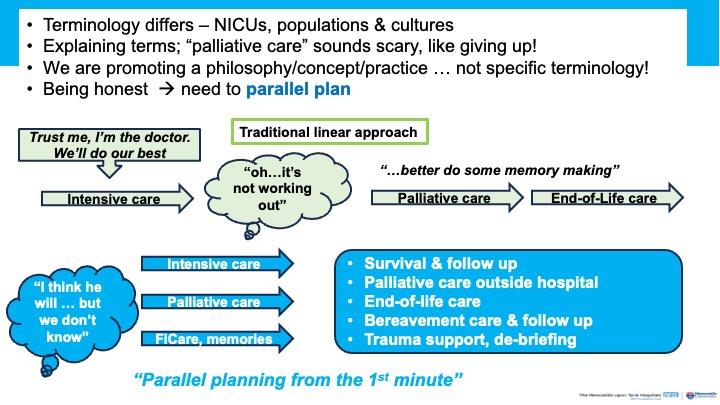
Great post. I agree. Our individual use of terminology (as physicians) differs between practitioners and with the public, each of whom have their own set of values/beliefs/experience and all of this is set in the different cultural/socio-political/religious contexts. This can create confusion about what we (as physicians) are trying to offer in the best-interests of the family and baby. Any baby admitted to a NICU has an "uncertain" outcome by definition - if you are not sick, you do not need NICU. Historically we were too slow to recognise and help parents understand the uncertain nature of neonatal medicine. Now we know better, that memory making/family integrated care and helpign parents better understand their journeys is vital for future decision making. I summarised this in a graphic attached here.
-
Trigger warning - discussions about babies dying. Trust in the medical profession is the foundation of effective healthcare systems, directly influencing adult patients’ willingness to seek care, disclose confidential & highly sensitive information, and comply with treatments. Human connections are what builds that trust. In the NICU it’s a bit different because the first human connections often happen around admission, which is often unexpected, sudden and dramatic. Connections we form in fetal medicine consults are also taking place surrounded by uncertainty and anxiety. Most of the information we need as physicians to plan acute management is gleaned from discussions with midwifery, obstetric & fetal medicine teams, or is available in the maternal notes. Unlike in adult medicine where trust is built on past interactions and public profiles, trust in the NICU team represents an immediate future-oriented acceptance of vulnerability. However, trust rapidly changes during the NICU stay. The amazing & welcoming neonatal team at PGH, Manila. Neonatal care looks very similar in most of the world! Most parents have little idea about neonatal medicine and trust is based on the belief that the team will consistently act in the baby’s best interest. Parents have no idea how good we are at tasks like intubation or echo scanning, how experienced we are, or how much we do or do not genuinely care. As someone who worked on the NICU for 35 years, it seems we just expect parents to automatically trust us. We know we’re ‘trustworthy’, why don’t parents? It’s the little things that count.My experience over many years tells me that “micro-interactions” are the basis of the relationship and trust that parents form with healthcare staff. It’s the little things, the smile and greeting at the start of the day, remembering the baby’s name, who the partner or other family members are, what are the things that the mother worried about yesterday, how did she get to the NICU this morning. During antenatal consults, do we greet, introduce ourselves, explain what we do and demonstrate ‘active listening’? Or do we just tell parents what’s going to happen, and then let our colleagues know “I updated them, they didn’t seem to have any questions.” Micro-interactions matter On the NICU, do we behave in a way that demonstrates we have got time to listen to their questions and we aren’t endlessly busy doing ‘more important things’? If we looked at them rather than checking our pager, if we sat down instead of standing over them. These micro-interactions are vital skills for all healthcare workers, especially nurses and therapists, but it is physicians who parents see as being ultimately responsible for ‘life and death’ decision making on the NICU. Almost 20 years ago, I was fortunate to start working with fetal medicine specialists and other specialties, as well as sociologists and academics from other disciplines. It opened my eyes, and I never saw the NICU in the same way again. I became fascinated with our body language, the precise words we use, the facial expressions that convey so much to parents without us realising. And I would watch the difference in parents’ expressions when we said things like “he’s had a bad night, we’ve been struggling to get the CO2 down” compared to “he had a CO2 of 9, so we put the MAP up, the CXR is better expanded and the CO2 is now 7.” I’m pretty sure most of my colleagues never realised I always was watching their body language and expressions so intently! Emotion work in twin lossRecognition of, and evaluation of, emotion work was an issue raised by all parents in our qualitative studies of baby loss when talking about their interactions with staff, in particular nurses. Mothers placed a high value on their relationships with staff who offered emotional support, and the nature of those relationships had a major impact on parents’ experiences in the hospital. Bereaved parents often identified one particular health professional who had acknowledged their bereavement and spent time allowing them to talk about their loss, or simply made time for a friendly chat. This person became a familiar face that mothers felt they could relate to, rely on and trust. Usually they were a nurse and they figured prominently in parent’s accounts. However, whilst parents appreciated any ‘emotion work’ done by physicians, there were many more accounts of ‘less positive’ interactions. It seemed like parents had lower expectations of physicians providing emotional support because we had something ‘more important’ to do. In contrast, parents talked about nursing as a ‘vocation’ almost with an expectation that nurses would instinctively recognise the parents’ need for emotional support alongside the formal role of caring for their babies. It doesn’t seem that parents necessarily had the same expectations of medical staff to do emotion work. Nurses who were less emotionally accessible were also perceived as ‘just doing their job’ - caring for the baby but not recognising the emotional needs of the mothers. Staff who provide emotional support are perceived as more competentParents perceived the staff who provided emotional support as also more competent at providing the medical care for their baby. Staff who were emotionally remote made parents feel uncertain about leaving the baby in their care. Staff behaviours and unit ‘culture’ had a big impact on how parents felt when they had left the hospital to go home. It’s clear to all of us who work in the NICU, that a balance needed to be struck. There is a tension with views expressed in other literature that a genuine display of emotion is ‘unprofessional’ and potentially detrimental to the standard of care provided to the baby. Nurses are expected to balance the these views by displaying ‘managed emotions’ which emphasises a ‘display’ of emotion perhaps rather than a deeper, more genuine feeling. If a really sick or dying baby upset us as much as another family member, or a friend, we couldn’t be effective and safe. But of course, it is OK to be upset, and to demonstrate that we care. It has to be authentic though. How should physicians display emotions?Like all neonatologists, I have been present in the room when a baby dies, most often in parents’ arms after a shared decision that further active intensive care is not what parents want. It’s a central component of our work. We all train to be neonatologists recognising we will have to do this. It happens a lot; in a large NICU there might be 40-50 neonatal deaths a year. Most of the babies die peacefully in a private room on the NICU or nearby. Death happens when we remove the endotracheal breathing tube that connects the baby to the ventilator. Typically in the room with the baby are the neonatologist and nurse, the parents, and sometimes other family members. I will write more about how it happens, and what it feels like to be the physician in another article. I will also ask a nurse to write about what it feels like for them (message me!). I would stay in the room with the parents sometimes for a few minutes but sometimes longer, perhaps 20-30 minutes after removing all life-sustaining support but it is very variable. As we sit there, sometimes next to parents on the sofa, or separately, I am ‘reading’ parents’ body language and cues, and wondering what I feel. Parents are usually focussed looking at the baby, but sometimes they will look at the nurse or me, perhaps for reassurance, or to ask a question. I try to sit still, not fidget, look relaxed but still focussed. I hope my face displays the fact that I genuinely care, but I have never shed a tear in the room. The nurses tend to display more emotion, but not always. It wouldn’t be unusual for some nurses - if they are female - to shed a tear. There is some non-verbal eye communication with the nurse that helps me work out when it feels appropriate for me to leave the room. I might say, “what do you think if I step out for a while, and give you some time. I’m just outside if you need me, but i’ll pop back in 15 minutes?” As humans, we are very quick to form opinions of others. Sometimes, that very first interaction that only lasts a few seconds or minutes colours impressions for a lifetime. As we then see people over months and years, our opinions and feelings change and develop. But new NICU parents don’t get that luxury. In an instant they are asked to trust us. To have a meaningful discussion about treatment decisions such as withdrawal of active intensive care, parents need to trust all of us. Micro-interactions matter enormously. Also posted here on Substack.
-
Most of us are fascinated by how different or similar twins are. I often use ‘twins’ as shorthand for ‘twins, triplets and more’ but fully recognise the unique challenges of a loss in higher order pregnancy. I know several families who had triplets and either one or two babies died; I will ask some parents to share their stories and the unique challenges faced by loss in a higher order pregnancy. To find out why people feel a twin pregnancy is special, we need to speak to them. How did we do the research?Thematic analysis takes a large dataset - in our case from audio-recorded interview recordings with parents - that are then transcribed and reviewed by researchers to familiarise themselves. Data collection (interviews) continue until the researcher feels they are reaching “thematic saturation” - where parents are saying similar things and no new findings are emerging. Typically, this takes between 5-20 interviews depending on the diversity that exists - people (age, identity, profession), topic, intensity of emotions generated (e.g. baby loss versus parking problems), variation in experience (e.g. miscarriage, neonatal death etc.) Researchers then generate initial codes (phrases, words or sentences e.g. sadness, anxiety, work, children going to school), and then group these codes into broader meaningful categories (mental health, family relationships) as structured findings and themes. This is often led by 1-2 researchers, although the wider research group will contribute. Findings (themes) can then be validated by sharing them with others e.g. other bereaved parents at workshops. The analysis highlights similarities, differences, and unexpected insights across a dataset. Qualitative analysis can have a huge impact on both neonatal morbidities and long-term parental trauma-informed care but is often “looked down” upon especially by physicians who don’t understand research studies without p values and confidence intervals. However, those physicians should also recognise that most p values make no difference to clinical care, and most conclusions are false or biased. I digress. We spoke with 14 mothers with a multiple pregnancy where one twin had died during pregnancy or in the neonatal period, between 6-24 months after the loss. Fathers or grandparents were present in half the interviews, and the surviving sibling present in most. Our analysis identified three main themes - 1) status as special, 2) trust and 3) control & empowerment. Here we will focus on the first theme. Feeling specialMothers often spoke of feeling ‘special’ when they discovered that they were expecting twins. The unexpected loss of one baby was devastating and parents grieved both the loss of the baby, and the loss of their ‘special status’. Where surviving babies were being cared for in the hospital, parents had to deal with their grief, alongside their joy for the other baby/s and their fears that the surviving baby might die. Parents appreciated healthcare professionals (HCP) who tried to maintain the special twin identity on the NICU. But many HCPs didn’t recognise the twin identity. I remember before we did the Butterfly project feeling really uncertain about what to say or do. Should I keep mentioning the twin status or just quietly let it slip away? It felt a bit awkward, and maybe we thought we might upset parents if we mentioned it again. Parents probably took that as indication that we didn’t care. Baby namesA baby’s name gives them their identity. Parents will often (but not always) give their babies names during the pregnancy. When a twin died on the NICU, we often forgot the name, or didn’t ever know it perhaps. I was always scared I would get the names of the babies mixed up if one died. Some of the nurses would encourage parents to place a photo of the baby who died into the incubator of the surviving twin, even better if there was a photo of both of them together. Sometimes it was an antenatal scan. Sadly, many parents had no photos of both their babies together. Trauma and grief on holdMost mother’s described a rollercoaster of emotions whilst in hospital with the surviving twin. Parents talked of a juxtaposition of feelings of simultaneous joy and grief, but in the period immediately following the loss, they overwhelmingly talked of feeling traumatised. Mother’s talked about the need to keep their emotions ‘on hold’ and described strong grief reactions that emerged weeks, months or years later. In some cases mothers talked about putting feelings on hold in order to be strong for the surviving baby. There was often nothing to see that demonstrated the twin identity, and many staff cared for babies without even realising they had a brother or sister who had died. Many felt it was too soon to see counsellors or psychologists whilst they were on the NICU - many waited a few weeks or months, but I know other parents (and surviving twins) have felt they would benefit from counselling years or decades later. Feeling ‘special’ or ‘different’ was common during the pregnancy and continued throughout their lives. Parent experiences of care in the NICU whilst supportive, seemed to reinforce that sense of difference, in terms of how their contradictory feelings were accommodated, and the ways in which their grieving did not seem to fit with the usual offers of support. Twin identity is very strong. Most “twinless twins” feel a strong sense of their brother or sister throughout their lives. Some describe “living life for two” or living life in a way that honours and respects their twin. But many parents I’ve spoken with struggle to know how to maintain the special twin identity. And many twin survivors are uncertain how to make sense of it all. Great if you can share these posts with anyone you think might be interested. I am not after ‘likes’ - I am interested in connecting with others, and helping give voice to the parents’ experiences to improve understanding and care for future families. Thanks for reading to the end! Have a great day. Gigi’s book is available on Amazon and is a great read. Gigi is a bereaved mum of twins and I’m asking her to write an article at some stage (thanks Gigi!). Also posted here on Substack.
-
Previous posts described that very preterm infants ex-utero are ‘programmed’ to grow at a similar rate to the fetus before birth, gaining about 2g/kg/day of protein (as well as gaining fat, water, minerals etc. etc.). A 25 week infants increases her birthweight by more than 400% (500g to 2500g) over 3 months of NICU stay. Thankfully, that rate of weight gain isn’t sustained into early infancy and protein needs dramatically reduce as the fetus/baby approaches term. Breastmilk alone cannot meet protein needs of very preterm infants on the NICU, although high volume feeds and other supplements may ameliorate some of the growth faltering we commonly observe. We’ll discuss approaches in another post. Energy needs are dramatic. Using different theoretical approaches, most estimates are that total energy requirements in preterm infants are around 120kcal/kg/day on average. Compare this to Colombian cycling legend Egan Bernal who won the Tour de France in 2019. He weighs around 60-70kg and during ‘le Tour’ consumes around 6,000-7,000 Kcal/day. Imagine how wonderful it would be to consume that many calories without getting fat? If you estimate energy requirements you can see that very preterm infants need more energy, than the energy required to cycle up and down mountains. Some of that energy in preterm infants is expended in wriggling about, but that only accounts for a small fraction. A small amount of energy is also expended in heat production - more if you don’t keep them warm with KMC or incubators. Most of the energy is ‘used’ in two ways (1) being converted into energy stored in tissues (fat, protein, glycogen etc.) or, (2) accounted for by the energy consumed by “Basal Metabolic Rate”, or BMR. BMR is effectively the energy required to run all your vital functions and cellular systems at rest, including brain, cardiac and respiratory activity, sodium/potassium pumps in every cell, hepatic production of proteins etc. BMR actually doesn’t vary that much during the NICU stay - it’s around 50kcal/kg/day. Heat production and activity are around 5-10kcal/kg each per day, meaning there’s around 50kcal/kg/day remaining to be stored as protein and fat. BMR doesn’t really alter (except during acute illness when it’s not by definition ‘basal’), nor can you stop babies moving, breathing, heart pumping or trying to keep potassium inside their cells. That all takes around 60-70kcal. Simple maths will show you that giving 100kcal/kg/day, which sounds like a good amount, means you’re only making 30kcal available for tissue deposition. A seemingly small deficit of 20kcal. The problem is that the ‘first’ 70kcal you give has to go to BMR (and movement and heat.) You are then only meeting 60% (30/50) of the energy needed for growth. Growth faltering is pretty common even when you think you’re doing a good job. Which of us could maintain our weight on 60% of predicated needs? Though there are a few who could risk giving it a go. Failing to give enough macronutrients to a preterm infants is also very common and often avoidable; seriously, why would you not give enough? And if body growth is slow, maybe brain growth is also slow, and maybe some of the long-term neuro-cognitive sequelae of preterm birth are more common… It’s difficult to see how any of this can be good, despite a few sceptics telling us not to worry about growth, and the experts who tell us there’s nothing more dangerous than an expert. Human brains are massive It is the human brain that distinguishes us from every other mammal including other primates. It is huge and it requires lots of energy to develop and function. Throughout pregnancy neurones formed in one part of the body need to migrate to their final destinations (NEURONAL MIGRATION) ready to perform critical brain functions. At birth babies have all the neurones they will ever need - about 100 billion. But, they are not wired together very well, and that process of SYNAPTOGENESIS takes a huge amount of energy over the next 2 years. In the first few postnatal months, babies form 1,000,000 synapses per second! If we gave a term infant 40% less energy I expect he would have to down-regulate synaptogenesis. If you are not impressed by that stat feel free to unsubscribe and watch England lose on penalties to Germany. Synaptogenesis is especially active in the visual and auditory cortex of course. We can see it coming. We can discuss apoptosis, synaptic pruning and myelination in other posts. Although it is difficult to precisely measure, it seems that about 50-60% of energy expenditure in healthy newborn infants over the first months is the brain. Growth has slowed from fetal life, thankfully, and diets have low protein but energy demands are high. Whilst protein seems to dominate nutrient requirements as a preterm infant on the NICU, after term age ENERGY becomes most important, and all efforts focus on this. Lots of lipids, lactose in milk, and just enough protein to form the cells and support slow growth. As adults, the brain represents about 20-25% of energy expenditure but we do not know what % it is for preterm infants. Synaptogenesis is starting slowly in the second and third trimester, and whilst I used to think the brain might represent 50% of all energy in preterm infants, I suspect the true figure is much less, as proportionately more of the energy is needed for lean mass accretion. Maybe it’s only 20-25%, who knows? Either way, it’s significant, and failing to meet energy needs, or observing growth faltering must cause concern about the adequacy of macronutrient supply for the brain. Brain growth and differentiation is so complex we won’t ever understand it. We would need an even bigger brain to understand it, which would then be even more complex to understand … catch 22. What we do know, is that these processes are under the control of multiple hormones, especially IGF-1 (Insulin like growth factor 1). IGF-1 concentrations ex-utero are pretty dismal compared to in-utero (50-80% lower), and whilst some companies are investing millions into trials of synthetic supplemental IGF-1 the data to date are underwhelming. There is however, some evidence that macronutrient intakes (energy and protein) modulate IGF-1 concentrations providing a potential mechanistic link between diet and brain differentiation and growth. Back to breastmilk. Mother’s own milk, especially fresh (i.e. warm), is life-saving for premature infants and the most cost-effective in all of medicine. Prove me wrong. All medicine, not just neonatal. Donated human milk has lost many of it’s functional benefits through storage, pasteurisation and transport, but is still associated with lower rates of NEC even though it doesn’t seem to reduce surgical NEC or mortality (another post needed there). This might be because although heat permanently alters protein structures (antibodies etc.) it has much less effect on small sugars (HMOs) which may be a key component in reducing NEC risk. Human milk with <1g/100mL will never meet protein requirements in extremely preterm infants. But for energy, the equation differs. Human milk has around 65kcal/100mL albeit with substantial variation between individuals and stage of expression, and usually much lower in DHM. This means that feeding MOM at 180-200ml/kg/day will meet energy needs in most very preterm infants (but won’t meet micronutrient, mineral, vitamins needs etc.) DHM at 200ml/kg/day won’t meet needs. Protein is the problem. Preterm babies need more protein than from MOM alone. If energy was the problem, we could solve it more easily. Where can we get more protein? We’re surrounded by a key element for the diet, nitrogen. Preterm babies breathe more nitrogen in and out than oxygen, and have at their finger tips (well alveoli) the core element for building amino acids. Why don’t they wake up, smell the coffee and use it? Caffeine citrate is, of course, odourless which might be part of the problem. Nitrogen is the core element of amino acids, amino acids make proteins, and proteins make prizes … but humans (like all mammals) are incapable of turning atmospheric nitrogen into amino acids. Nature didn’t think it necessary. Shame. How disappointing to watch a sick preterm infants on a ventilator, being given all the nitrogen it could dream off, being ‘expirated’ 0.3 seconds later before it could be fixed. We need plants or insects which animals can eat, which we can then eat, or consume their milk. Theoretically, we could get extra protein from non-animal sources (seaweed, plants, bioreactor bacterial synthesising proteins) but that won’t be available this decade (but I am predicting that next decade milk-identical protein will come from a bioreactor). As of 2026, the protein preterm babies need has to come from another animal, and whether you like it or not that’s going to be a cow in the global majority. I could though write another post on human milk-protein-derived products if you want? Please subscribe to these posts and the Baby Loss posts from the Butterfly project. Some of the email sign-ups end up in junk mail folders so check there. Feel free to comment and spread the word. I’m open to questions, but can’t promise to answer them. Also posted here on Substack.
-
Parents' views and experience of baby loss in a multiple pregnancy. Acknowledgement is key.PParents who had a multiple pregnancy where one or more babies died, but where one (or more) babies survive, face unique challenges. Our research identified many themes - mostly centred around acknowledgment. Acknowledgement that this was/is a multiple pregnancy a baby died - and most often had a name (and not “twin 2”, or a “9-week fetal loss”) there is a juxtaposition of grief for the baby/s who died, alongside hope and fears and joy for the baby who is surviving challenges are not better or worse than a singleton loss, but they are different Every parent we have ever spoken to has been told “at least you’ve still got one”. They are told it by friends and family, by nurses, doctors, midwives. Everyone. Even decades later. I can, perhaps, understand why some people might say it without thought, but when challenged to reflect, most people can see how hurtful that statement must be. If the loss occurred early in the pregnancy, many parents were encouraged to no longer consider it a twin pregnancy and were told ‘just think about it as a singleton pregnancy’. With many families from decades ago, the baby who died was never mentioned again, and some parents (and living twins) didn’t even know where the baby was even buried. They were discouraged from giving that baby a name and many hid their grief for a lifetime. Surviving twins who found out they were a surviving twin when they were adolescents, sometimes asked their parents’ permission to give their twin a name. Continuity & connectionOn the neonatal unit (or postnatal wards) we often made things worse. We might forget the surviving baby is a twin, or that parents were struggling with the juxtaposition of loss and hope & joy. Parents, quite rightly, expect that healthcare staff know what happened. We should know what happened, when and how, and the baby’s name. Parents didn’t like having to retell the painful story they felt we should already have known. But they often valued the opportunity to share their story again, often with the bedside nurse. They wanted a chance to tell us his/her name, how much they loved him, how much he meant and how proud they were of his short life. We are usually quite good at ‘handing over’ medical information about the baby (ventilator settings, medications, scan results, management plans etc.) but we are not so good about handing over the emotions parents share with us; their fears, hopes, uncertainties. Many writers have discussed the important sense of the ‘connection’ that patients, clients or parents have with their ‘provider’. This sense of connection is vital to building trust and makes a big difference to parents’ sense of wellbeing. How could parents trust us if we didn’t even remember there was another baby who had died? Sadly, for many families of premature babies, or those with short lives, healthcare staff may be one of the few people who met their baby alive as friends and family weren’t able to meet them. We hold a special place in those families’ hearts. They may not remember what we said to them, but they never forget how we made them feel (Maya Angelou). Who’s looking after him tonight?Most parents do not stay on the NICU 24/7 - unless they are fortunate enough to have childcare at home, financial stability and be in a hospital with single rooms. But parents like to know who is looking after their baby when they are not there. They will often ring the unit last thing before they go to sleep and ask ‘which nurse is looking after my baby tonight’. If they know (and trust) that nurse, they may sleep easy for a few hours. But if they don’t know the nurse by name, they often struggle to sleep, or might ring back after a few hours to check all is well. Cot spaces and lossEvery neonatal unit is busy; sometimes it feels like it’s “one out, one in” on a shift. When we admit twins, we try to place them in incubators that are next to each other but sometimes that isn’t possible. But when a twin baby dies, parents often have to witness the heart-breaking admission of a baby into the cot space where their baby had died, perhaps just a few hours or day earlier. We often have no choice, and the parents of the newly admitted baby of course have no idea either what just transpired. What must it feel like to have sat between two incubators reaching out to both your twin babies at the same time, and then after one dies, just sit and look at your surviving twin? Telling parents we recognise how hard that might be, shows parents we care, even if we can’t solve the problem. If possible, the nurses will offer to move the surviving twin into the cot space that was occupied by the twin who died. If that is what parents want. To know what parents want, we have to share options and ask them. We cannot second guess. “I know what you are going through”.Actually, most of us probably don’t. We might have years of experience of caring for parents experiencing loss, read literature and attended training days, and we might have our own experiences of loss. Many of us do. Most often though, we don’t know what these parents really feel. But parents do gain comfort from knowing they are not alone, and that others may have experienced similar challenges. Many, but not all, parents benefit from psychological support. Peer-support can be vital and life saving. Groups that offer this, or when parents manage to connect with other families who have similar experiences, can have a lifelong impact. Also posted here on Substack.
-
The process of evolution resulted in breastmilk perfectly suited to the survival and developmental needs of the newborn of that species. Mammalian milk composition varies during the day, and over the days, weeks and months of breastfeeding. All species vary in macronutrient, micronutrient and bionutrient composition. Bionutrients (also known as immuno-nutrients, or functional components) are key to many of the benefits of getting the ‘right’ breastmilk, and there are 1000s of them - we’ll get to them in another post. Human milk has lowest protein concentration of all mammals on the planetHuman breastmilk has lowest concentration of protein, just under 1g/100mL on average. It is a little higher 1.5-2g/100mL in the first few days, but at this stage lactational volumes are much lower and the protein concentrations decrease in most women (even those delivering preterm) to around 1g/100mL by 1-2 weeks of age, and sometimes lower. The protein content in Orangutans is slightly higher - perhaps 1.2g, but human milk has a concentration less than 1/3 of the protein of cow milk (3.2g-3.5g). And compared to many marine mammals, human milk contains only 1/10th the amount of protein (whales and seals 12-14g/100mL) but this is still lower than a cotton-tail rabbit (14g/100ml). Protein is the essence of life, and is needed to support growth. When growth is slower, less protein is needed. A rabbit doubles its birthweight in under a week, a calf takes just over a month, but human babies take around 6 months to double weight. Orangutans also grow slowly - they also breastfeed for longest, 6-8 years by some accounts and stay close to their mother’s sides for much of this. A newborn calf has to stand on it’s own four legs within hours of birth, and like many other mammals needs to be able to evade predators soon after birth to stop being food for some other mammal. Seal pups are vulnerable to predators in the sea or ice; certain species grow at unbelievable rates - the hooded seal only breastfeeds for 4 days. Humans and big brainsThese differences between humans and calves, are explained by the complexity of human brain development and the complexities of our social environments - the two are, of course, inextricably linked. Although the brains and breastmilk of other primates are similar, most mammals are nothing like humans. It is the reason you are reading this on a phone instead of spending all day searching for fruit like an orangutan. Rhinos have huge heads, but most is fresh air in sinuses, compared to humans where the brain fills the entire cranial cavity. The figure on the right below shows body weight on the X-axis, and brain weight on the Y-axis (both on a logarithmic scale so it fits on the page). Proportionately you can see shrews, dogs and rhinos all plot close to the average line. But human brains are off the scale - 10-20x as big as most mammals proportionately. Human’s have massive brains, and around 85-90% of the final adult volume is acquired in the period between 24 weeks gestation and 2 years of life - most of the first “1000 days”. Nutrition and growth in this period determines your cognitive function, lifelong metabolic health, whether you will get type 2 diabetes, or die of a heart attack. Slow growth gives humans the time needed to learn the complex rules of social interaction. It takes around 15-20 years to learn adult behaviours, and recent societal changes show ‘parenting’ continues into the 20’s. Fast growth (like most other non-primate mammals) would be a disaster. We’d have 5 year olds the size of adults. What appears to be ‘low’ protein concentration in breastmilk is actually ‘normal’ and perfectly adapted to slow infant growth in healthy, term newborns. During these first 1000 days the body grows slowly, but the brain grows rapidly. Whilst low protein concentration is ideal, massive amounts of energy are needed to support synaptogenesis (brain wiring) and explains in part why humans are the fattest mammals in early infancy. Whilst human fetuses also require high energy intakes, they also need high protein intakes provided by massive trans-placental amino acid transport especially after 24 weeks. Human milk doesn’t replicate these needs. Human mother’s own milk, warm and recently expressed, is life-saving for preterm infants, and also results in the best longer term cognitive and metabolic outcomes. But at 1g/100mL protein, it will fail to meet protein needs for ELBW even when fed at 200ml/kg/day. This is one of the key challenges we face in neonatal medicine. My aim in writing these posts is to improve understanding and create a global community where we can share ideas, knowledge and insights to improve nutrition and growth especially in resource limited countries. Thank you for reading. Please share with your networks and like-minded friends. The next few posts will cover more topics around early growth and breastmilk composition, and we will start to un-pick the challenges we face. After that, I’d like your ideas as to practical solutions. Also posted here on Substack.
-
More than 15 years ago I started working with a team to explore parent feelings and experiences about the time when the NICU team felt it appropriate to discuss the option of withdrawing/stopping active intensive care for their sick baby. The research ethics committee were hesitant suggesting that we might upset parents if we reminded them their baby had died … I found the research experience deeply humbling on many levels, and I learned much more in that study than I expected. I learned from academics in other disciplines, but most importantly from parents. We spoke with around 15-20 families, and a similar number of NICU staff. I thought we might end up focussing on themes around communication, or practical aspects of end-of-life care, or perhaps the morals, and ‘rights and wrongs’ of withdrawing life-sustaining support. However, most importantly I learned to listen to other peoples’ stories and the meaning of life. I quickly came to realise that the NICU doesn’t exist in a vacuum, and became fascinated with parents’ stories, and the reflections of staff. To my shame we still haven’t got that paper published. It was rejected by two ‘decent’ journals, and even the abstract was rejected from a large paediatric meeting (PAS/AAP) that usually accepted pretty much everything! During the parent interviews we noted that 3 families had premature twins where one had died, but one had survived. This was a challenge/situation that I and many others had observed as doctors and nurses on the NICU but tended to ignore. Everyone, pretty much, is fascinated by twins and triplets - how similar or different they are, and whether any differences are due to the environment and parenting or their genes. There are films and documentaries about twins, they feature regularly in social media and they are often subjects of scientific study to determine heritability. If you haven’t seen it, check out the film “Three Identical Strangers” - which used to be available on Netflix. A very sad and moving story, and one of those most powerful films I have ever seen. Identical triplets put up for adoption in the early 1960s, and deliberately placed with three separate families who had no idea they were not singletons, in what can only be described as a cruel psychological experiment. They were studied without realising they were part of an experiment. Shockingly, some of the research ‘data’ has never been made available. It gives you an idea of the importance of love and connection when you’re growing up. Elvis Presley was a twin whose brother was stillborn just half hour before him. Elvis’ mother apparently commented that one of Elvis’ driving motivations in life was to try and connect with Jesse. Interestingly, Elvis was encouraged by Liberace to be a showman; Liberace was also a twin whose brother died at birth. These were two of the most flamboyant characters in the 1960s and 1970s - how did their identity as twins (what some would call twinless twins or lone twins) shape their life and behaviour? And more recently Georgina Rodriguez and Cristiano Ronaldo had to share the sad news that one of their twins had died shortly before birth. They and their other children grow up with the world watching their lives evolve. Our first research studies taught me a lot, and I noted [on the NICU] that there was a tendency not to talk about the twin who died, or acknowledge the surviving baby was (and still is) a twin. We rarely mentioned that twin again, forgot his name, didn’t acknowledge him/her in the NICU discharge letter, or when they came back to follow up appointments. A lot of the time we didn’t know what to say. Sometimes I would return to clinical service after having been on leave, and no one told me that the baby on the ventilator in cot 5 had a twin who died 10 days ago. This made the parents’ grief more challenging and sad, and probably made the parents feel that we didn’t care. This led us to conduct a further qualitative study with the parents of multiple pregnancies where one baby had died, and at least one baby had survived. The baby loss may have been a miscarriage, stillbirth or neonatal death. We included pregnancies where the baby may have died following medical intervention e.g. a termination, or following assisted reproductive techniques (“IVF”) and included triplets as well as twins. Most often though, they were prematurely born twins. In some cases parents knew during the pregnancy that one of the babies might die if they had a serious genetic anomaly associated with a short life; in others, such as extremely preterm birth parents suddenly found themselves thrust into the trauma of the NICU, scared that one or both of their babies might not survive. We analysed the findings using standard qualitative methods (thematic analysis) and then shared the results at workshops with other healthcare professionals, and with other bereaved parents. It was at one of these workshops that a parent remarked “…just put a little blue butterfly on the cot of the survivor, and everyone will know he was a twin”. A lightbulb went off, and I immediately discussed the idea with some of the nurses and we decided to make the butterfly purple-coloured to avoid any boy/girl connotations with blue/pink. I also recognised the importance of remembering the baby’s name. More than once, I had called the surviving baby by his deceased brother’s name, but more importantly, using the name made this personal for the families. We encouraged the parents to write the name - we used waterproof pens so it wouldn’t rub off with the humidity or cleaning wipes. Simply writing the name appeared to carry immense meaning for parents. Millie from the Skye High Foundation (named in honour of her twin baby Skye who died) had a similar idea and we have worked together for more than 10 years now sharing this project. I’ll ask her to share her story in a later post. The Butterfly project has spread to 100’s hospitals in many countries around the world. We made all the resources free to download so the truth is we have no idea which hospitals use it. It would be nice to know where, but it doesn’t really matter. In the next post, I’d like to share some of the themes that came from the research. Please share links with friends and feel free to share your opinions, insights and experience. thanks. Also posted here on Substack.
-
thanks Vicky, Stefan!