




#mypapers - When drinking too much water during labour became dangerous (#1)

By Stefan Johansson in mypapers
· 188 views
Join me for a walk along my academic memory lane! In a series of posts, I want revisit my papers. My intention is to share a summary of main findings and their impact, if any 🙂
As my academic training was in epidemiology and biostatistics, my niche grew into methodological competence rather being disease orientated. So, you will notice that I have been working with a variety of topics.
The very first paper was a result of unexpected clinical observations.
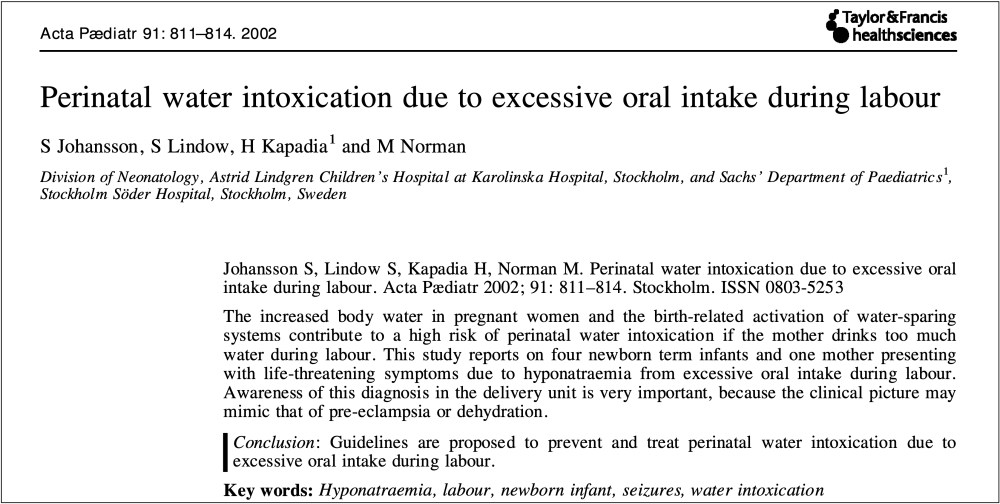
In 2002, together with colleagues in Stockholm, I published a case series in Acta Paediatrica. We described suffering from water intoxication caused by excessive maternal drinking during labour.
The case series included four term infants presenting with seizures and other neurological symtoms shortly after birth. Blood tests revealed severe hyponatraemia, from 105 to 121 mmol/L, clearly below the normal range.
These infants had in common that their mothers had consumed unusually large volumes of water/fluids during labour. In two cases, the reported intake reached eight litres! One mother herself developed seizures from severe hyponatremia.
Fortunately, all four infants recovered and had normal neurological development at follow-up during their first year of life.
How could maternal water drinking affect the newborn? During labour, physiological hormonal changes make women potentially more vulnerable to water retention. Mechanisms involving vasopressin and oxytocin may reduce the ability to excrete excess water, that in turn can result in reduced maternal sodium levels from water retention. Since water and electrolytes are exchanged freely across the placenta, the infant can also develop hyponatraemia before birth.
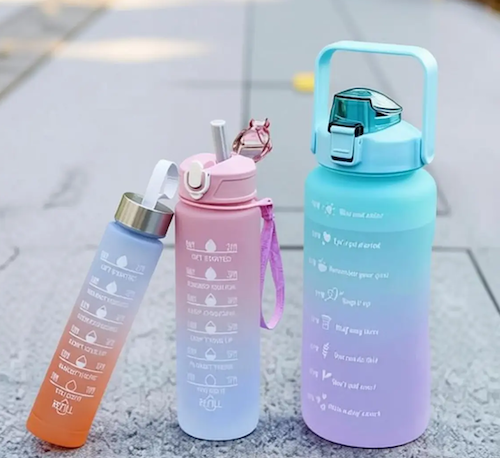 Around this time, young women carrying water bottles as an accessoir were frequently seen “downtown”, like a fashion trend signalling a healthy life style. Furthermore, women in labour were encouraged to drink fluids during labour, with a good intention: to prevent dehydration during a physically demanding process.
Our case series illustrated that a well-intended advice could become harmful when taken to extremes. The publication even made some headlines in regular news in Sweden, spreading awareness to the public. Importantly, our message was not that women should avoid drinking during labour, but rather that fluid intake should be reasonable.
Looking back, almost 25 years later, I still rank this small case series highly. The paper was not only my “first-born”, it also gained enough publicity to improve practises. Most importantly, this first step made me enter more complex research projects in a PhD project. The next post will be about the first project in my PhD. As the saying goes, stay tuned 🙂
Reference
Johansson S, Lindow S, Kapadia H, Norman M. Perinatal water intoxication due to excessive oral intake during labour. Acta Paediatr. 2002;91:811–814. DOI: 10.1111/j.1651-2227.2002.tb03332.x
Recommended Comments