
_0b6494.png)
_5c07e1.png)
_0d1bd3.png)
_75149d.png)
(26).png.c97dc453b63ee0a4658a82af0237d93f.png)

I didn't want twins
By Nicholas Embleton in Neonatal Butterfly Project
· 252 views
Elaine’s short story of Henry and Blake is a powerful mix of raw emotion, and some humour, that stopped me in my tracks.
Elaine Gregersen
I didn’t want twins.
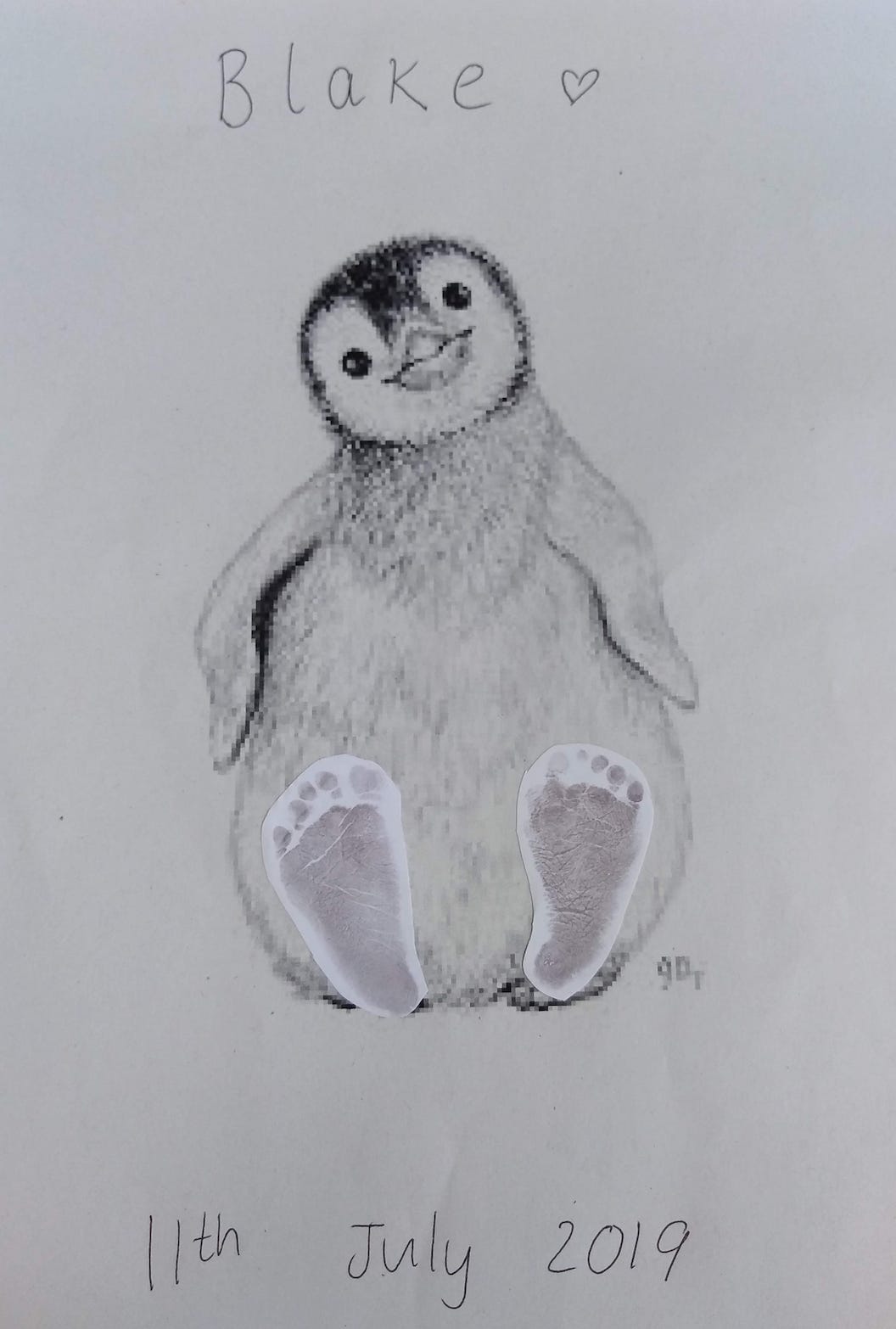
When the sonographer at the twelve-week scan said, ‘I’ve got something very special to tell you,’ I wasn’t flooded with love or joy. I was irritated. An internal sigh. A hidden eye roll.
I only wanted one.
We were 38, not long married, living in an expensive rental and paying off a dodgy hatchback. We’d have to move. We’d need a bigger house. We’d need two of everything.
How would we pay for two children in nursery at the same time?
How would we cope? That’s what I thought about.
My pregnancy was difficult. I ballooned. I spent every single day feeling nauseous, or, more frequently, throwing up into a mixing bowl I brought with me to work. Even when my waters broke unexpectedly at 24 weeks and three days, I vomited on myself while some poor junior doctor was trying to work out how many centimetres dilated I was.
Everything I’d learned from years of watching Casualty, ER and 24 Hours in A&E disappeared from my brain when I went into premature labour.
My mind twisted. Somewhere in heat of it all, I decided that without any amniotic fluid the twins couldn’t possibly still be alive. I imagined that when they arrived, they would look terrible, their faces full of pain.
So, when they were born, I didn’t look. I didn’t ask how they were. I went back to the maternity ward, sat on the bed and stared at the empty plastic crib which had been left next to me. Next door, a woman had a very loud, very healthy newborn.
We named the twins Henry and Blake. They were alive. They weighed 1lb 9oz.
We were in a strange hospital, far from home. I’d been taken there in an ambulance mid-labour, the midwife begging me to keep my legs closed. I heard her whisper in fear about giving birth on the side of the road.
Initially Blake was thought to be the most vulnerable twin. He had a hole in his heart called a patent ductus arteriosus - a PDA. About forty-eight hours later I wrote the word mother for the first time, signing him up for an Oxford University trial looking at the use of paracetamol for premature babies with PDAs. It’s funny what your brain does. I thought, at least if he dies he’ll have been part of Oxbridge.
Henry, meanwhile, was doing unexpectedly well. He was extubated and though a few hours later the decision was made to re-intubate the fact he had given it a go was a good sign. I don’t remember that. In fact, I remember very little of the early days. Just disconnected scenes, like flashes from a film I watched years ago.
I remember the nurses though.
‘I’m glad you weren’t here to see that.’
I remember a consultant putting his hand on my shoulder and saying, ‘I’m glad you weren’t here to see that.’
And I remember the decision to reorientate Henry’s care and let him die peacefully on day six. His little body had been through so much. Everything had shut down. Fair enough, I told him.
Most people go home after their baby dies. They begin grieving. I got in the car, drove home from the room where we’d left Henry’s body, had a lie down, then drove us back to the neonatal unit and sat in front of a single incubator and the space where Henry had been.
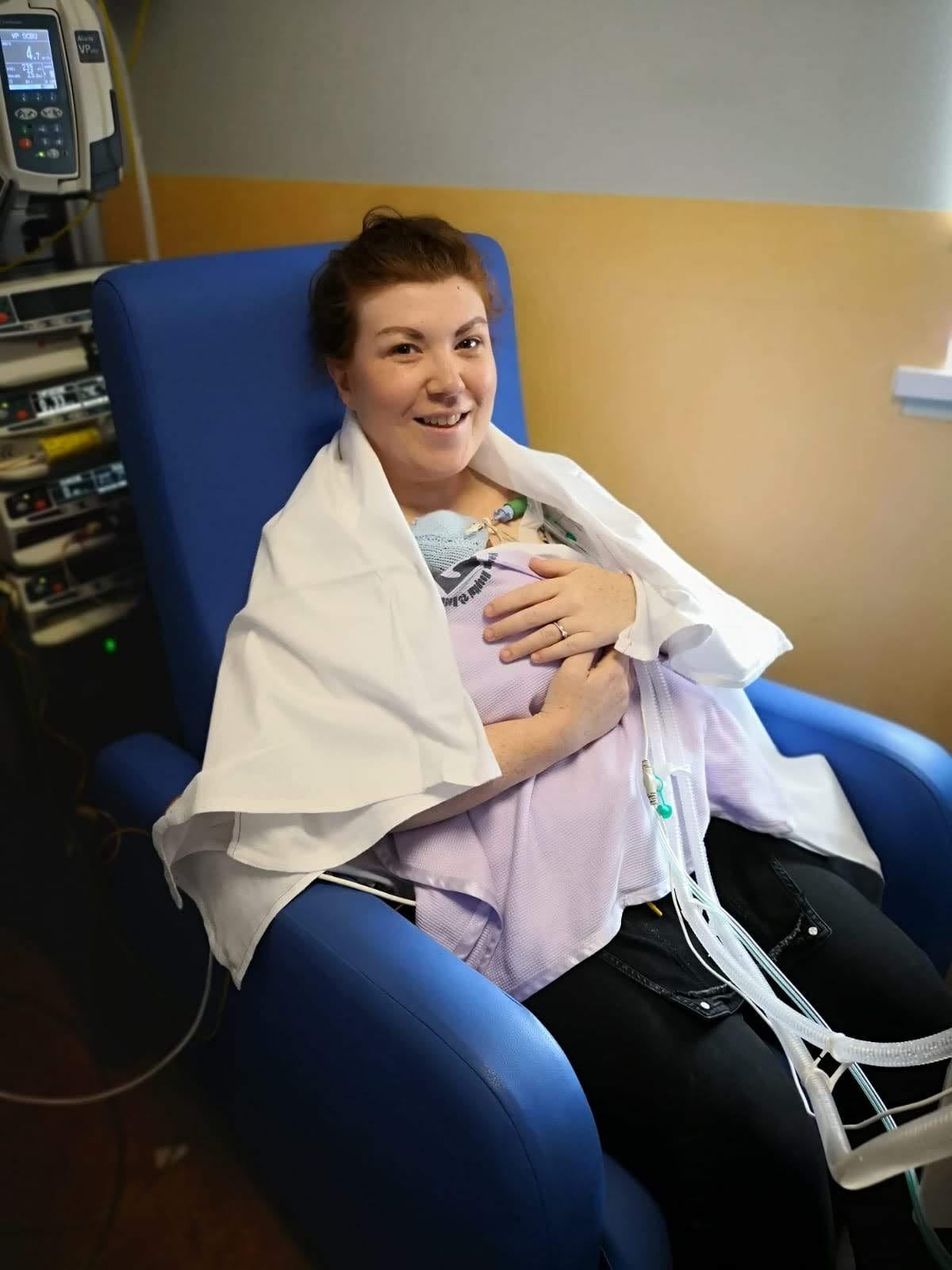
The first time I held Blake after Henry died.
The hospital was part of The Butterfly Project and we were given a butterfly with Henry’s name to place on Blake’s incubator. Someone new to the unit came in, pointed to it and asked, ‘is that his name then?’
I said, ‘No. That’s his dead twin brother.’
Blake’s neonatal journey was - and there is really only one word for it - wild.
He caught every infection imaginable. He moved to a hospital closer to home because he became so ill and then he had five operations one after the other. I signed consent forms acknowledging that surgery could result in his death.
I was sick into one of the little metal bins.
I drank diet coke cans in the multi-storey car park, read Empire magazine, and made myself go back to the unit, knowing every second was building more trauma in my body. I also ate an impressive quantity of the free biscuits in the family room.
All the while I had to push Henry away. We went to his funeral, then drove straight back to Blake. There wasn’t a gap between those two things.
There wasn’t time or energy to think about the dead child when the alive one was being really quite a challenge.
I could tell you every story from the four months we spent across two neonatal units, but we’d be here all day. Sometimes I stood in the expressing room looking through a small opening in the window. I watched grandparents arriving. Smokers sneaking outside. Taxi drivers coming and going. People laughing. The smell of the city. I couldn’t understand how ordinary life was continuing while I was trapped in what felt like a hell-scape.
What I remember most, though, is humanity. The cards the night nurses made ‘from’ Blake for me to find in the morning. The photographs they took of him while I was asleep. The consultant who asked everyone on ward round if they knew that ‘Blake’s mum had a PhD’ at a time when I’d forgotten I’d ever been anything except the mad woman sitting beside an incubator. The butterfly card with Henry’s name on it that travelled everywhere Blake did.
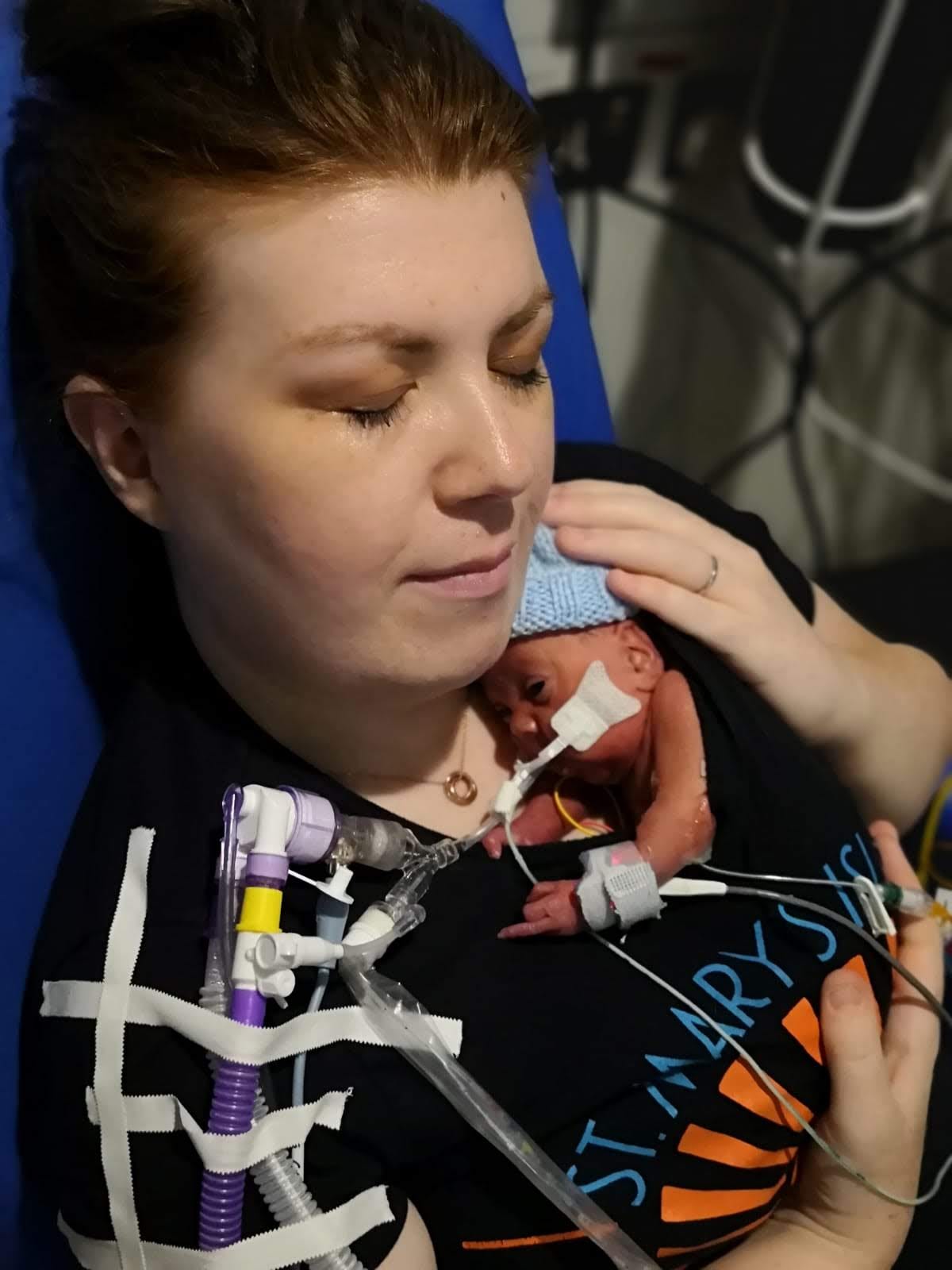
I am 45 now. Blake is seven.
My husband and I still quote funny things the neonatal staff said. We still mention the nurse who spoke of her two miniature schnauzers whenever we see one. We still remember every wait in the Costa downstairs watching our phones to hear if Blake had survived his latest rush to theatre.
When I read stories like this, they often end on a hopeful note about the health of the surviving child/ren. For us, though, life has taken us on a different path. The consequences of Blake’s extreme prematurity have been profound. He is severely disabled and has life-limiting conditions.
Our lives are dominated by appointments, assessments, and being his voice in a world that isn’t built for kids like him.
There is remarkably little understanding of twin loss, even within the medical profession. Despite Henry being recorded in Blake’s notes, I am still regularly asked whether Blake is my only child or whether there are any other children at home. The last time it happened was only a month ago. In my own house. I’ve asked for big red stickers to be placed on both our files. Still, the questions come.
I sometimes feel jealous when I hear parents talk about telling their surviving child about the sibling who died and doing special things to remember them. I do tell Blake about Henry, but the reality is that he doesn’t understand.
The world reminds me of him anyway. I can spot a double buggy from a mile off. If I see twins, I look away. We have friends with twins and, sometimes, I just can’t bring myself to see them. Not because I’m not happy for them. I am. I’m just so terribly, terribly sad for me.
Turns out I did want two, after all.
Henry’s butterfly card is still on Blake’s bed.
Nick Embleton
Elaine’s story is a powerful mix of raw emotion, and some humour, that will stop many of us in our tracks. What was I left thinking after I read it?
I remember Elaine on the NICU, she had helped with some of our research studies, but I had never met Henry and only came to know the family in the few weeks before Blake went home. Looking back 7 years later, I remember Elaine and her partner, but knew little of what they must have been feeling after all they had been through. I probably introduced myself as the neonatologist doing rounds in “low dependancy”. Even that term, low dependancy, seems to downplay the complex mix of trauma, emotions and endless uncertainty parents still have to face.
How do you (as a physician or nurse) start a conversation with a parent on a ward round, knowing the complexity of her experience, but never having met before. I knew Henry’s name of course, and that Blake was “complex”, and could imagine that the last months had been [enter appropriate word here] ______________ challenging/ brutal/ life-changing/ grief-stricken.
I probably said ‘… hello my name’s Nick Embleton, I’m the consultant in charge this week…’ and then gone on to say I had been told about Blake during the morning handover. And I hope I noted the Butterfly cot card, and acknowledged Henry’s death. But after that, what did I say?
How do you discuss the relatively mundane day-to-day medical issues of weight gain, oxygen requirements, and discharge planning when you know parents have gone through (and are still going through) something as monumental as twin loss and growing realisation of the complexity of needs that Blake has? How do we connect, show parents we know the details of what happened, express care or empathy, but still attend to the immediate medical needs of Blake?
We never know what’s going to happen when we admit a baby to NICU. By definition, every admitted baby is at risk of not surviving, and we need to get better at helping parents understand parallel planning and uncertainty, whilst still maintaining hope and positivity. We need not to wait until non-survival looks ‘likely’ before we start “memory making”. We need to help parents understand that we will plan for active management, and do everything we can, but at the same time acknowledge that survival is uncertain. These aren’t easy conversations, and no one knows how best to do this for each family we meet.
One thing I have learned over the years, is that we (health professionals) can get better at this. I liked to think I was always caring and thoughtful, but over the years I think I got better at listening to parents, helping them, and supporting the whole team. When you start as a neonatologist you are so close to the baby - inserting the i.v., or examining them - literally millimetres away, you don’t see the room, then you step back a bit, supervise the residents/trainees, then step further back until you see the parents. I stand so far back now, I almost can’t see the baby. I see the staff, the body language, where the parents are sitting, who’s doing what, who’s smiling, who’s looking worried, who’s not engaged.
Thank you Elaine for sharing your story, and thank you to all the other amazing parents who have joined this project, and helped with the research over many years.
* * *
Recommended Comments