
_0b6494.png)
_5c07e1.png)
_0d1bd3.png)
_75149d.png)
(26).png.c97dc453b63ee0a4658a82af0237d93f.png)

Twins are born as a we
By Nicholas Embleton in Neonatal Butterfly Project
· 148 views
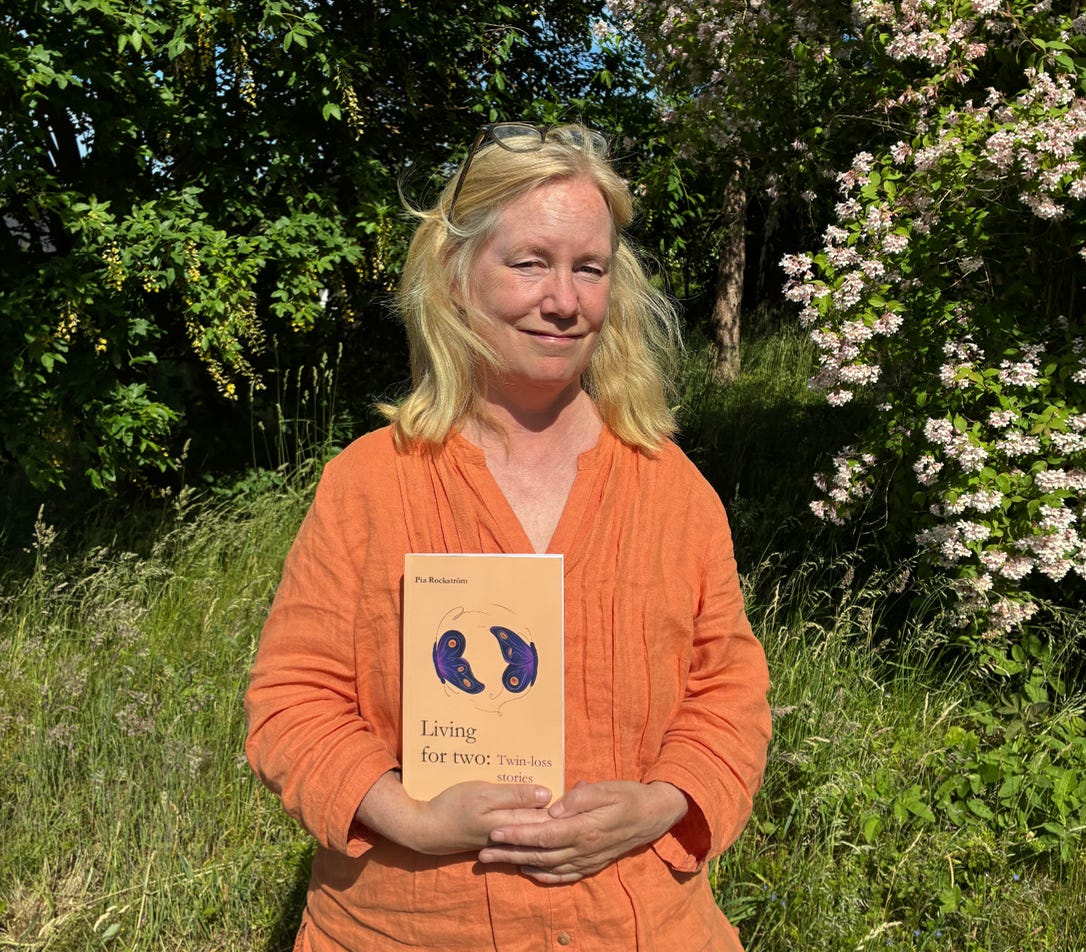
This is the second article written by Pia Rockström, sister to Maria and Sara. You can read the first article here.
Pia.
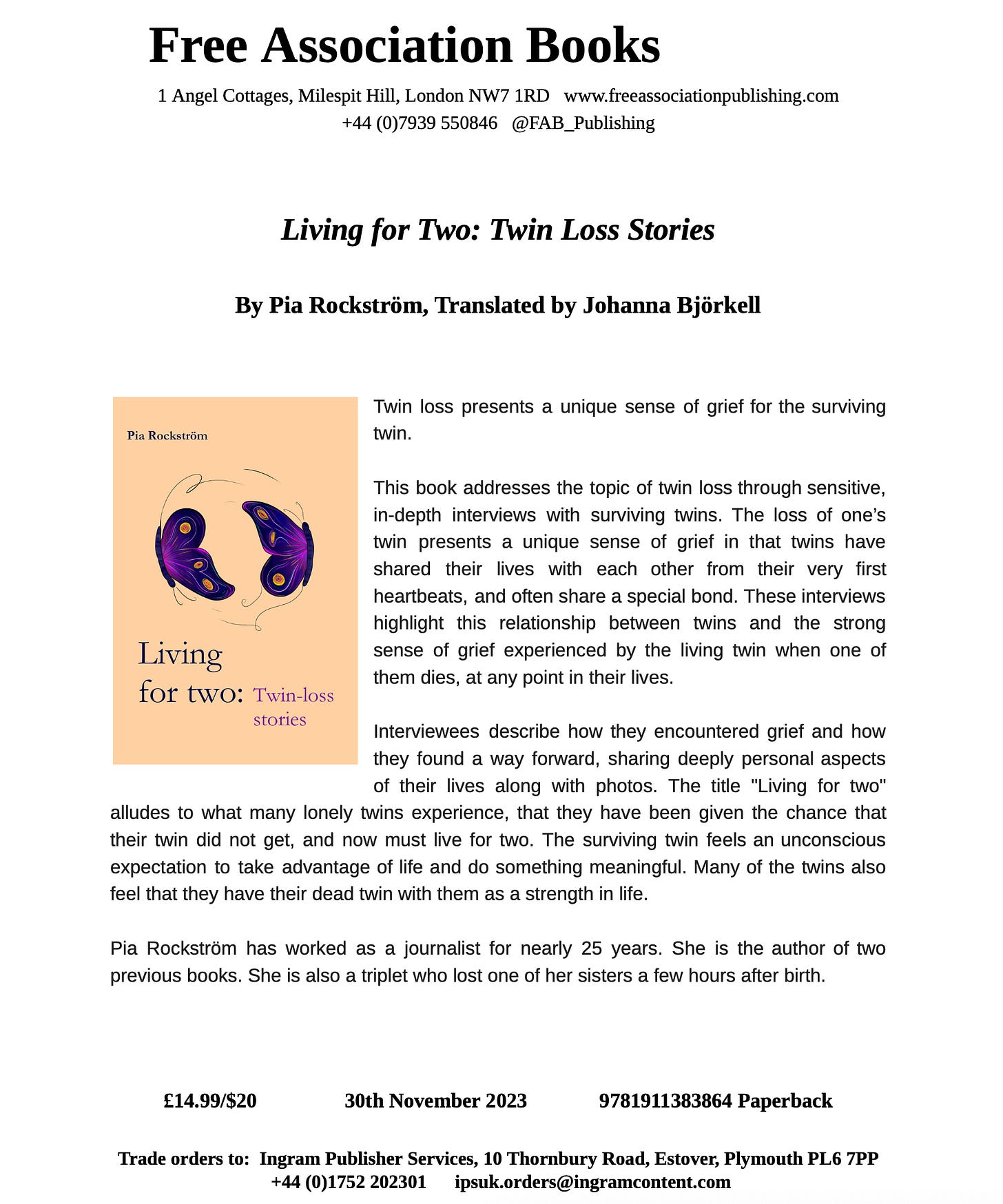
One of the strongest stories I came across during my research on twin loss, when I wrote Living for two, twin loss stories, is the story of a pair of twins in Massachusetts who came to change American obstetric and neonatal care. The premature twins Kyrie and Brielle were first placed in separate incubators to avoid infecting each other if they got infections. Kyrie gained weight while Brielle had difficulty breathing. When the situation one day became increasingly critical, the two twins were placed in the same incubator. The year was 1995 and nothing like this had been done in the United States. Kyrie put her arm around her sister and in each other’s proximity, Brielle’s values stabilized. The twin sisters miraculously survived. The rescuing hug was widely reported in the media and, as I said, changed care routines in the United States and many other countries.
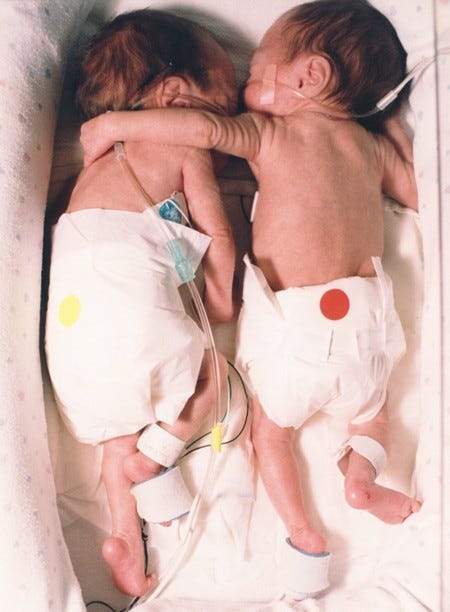
Photo credit: The rescue hug. CNN, Reuters, Facebook
The book ‘Living for two’ was Pia’s way to heal.
How twins have an unusual bond and draw strength from each other was something I noticed in my interviews. I am thinking, among other things, of the Norwegian twin pair Mariell and Michelle, who were born at week 23. They spent two months of their lives together in an incubator in Oslo. When the condition of one of them deteriorated, the same happened to the other. Likewise when their health improved. In the last three days that Michelle lived, she rapidly deteriorated. When her lungs collapsed at the same time as her kidneys failed, there was nothing more to do, the respirator was disconnected and she took her last breaths in her mother’s arms.
What happened next was a pure miracle.
When Michelle died, Mariell got better in just two hours. It was as if Michelle gave her sister her last strength. The oxygen levels could be turned down completely and instead she was able to take her first breaths with the help of a CPAP machine. The doctors had never seen anything like it. Against all odds, Mariell has since made it through life and been able to live a normal life. Despite several challenges since birth, she now has two university degrees. She is convinced that she gets extra strength from her sister. I encounter the same experience among other lone twins; it is as if the bond with the twin sibling remains. Many of those I interviewed have also chosen supportive professional roles in society, some work with palliative care, others as speech therapists, a third as a paediatric nurse. The book title Living for two is aimed at precisely this. The lone twin often feels like they have been given a chance that their sibling did not get, a humility about this and a desire to make something very special of their life.
Regardless of whether the loss occurs early or late, many lone twins experience an identity crisis. For those who have lost their twin early in life, many questions arise about what it would have been like to be two. Twin grief is the same all over the world. That is my experience after meeting lone twins in different countries. I think of the American family who named a spruce tree that was lit every Christmas - the Heather-tree. The tree stood at the sanatorium where their daughter spent her last days. In Norway, Mariell’s parents planted a lilac in their garden in memory of Michelle, which was named the Michelle-tree.
Small things become important
It becomes clear that small things become important in a loss, not least in the beginning of life when keepsakes are few. I have been told about stuffed animals that parents said came from a dead twin brother that his sister then carried with her throughout her childhood. Or about baby clothes and photographs that have been preserved as comforting memories.
Various things have given strength to the twinless twins I interviewed. Ingrid in Sweden wrote numerous diaries, but also had an important mentor as a young woman, with whom she corresponded for nine years while she trained to become a deacon. In the letters, she found an outlet for her innermost thoughts about the sister she had lost. For Anne in Sweden, Icelandic horses became a source of security and peace in life.

Christine from the USA received support in reading about death on a university-level course. Debra in the USA wrote a fictional book about losing twins in which she talked about different ways of dealing with grief. Eva in Sweden lost her sister as a young woman and expressed how she lacked perspective on being a twin when she met healthcare professionals. She has had difficulty finding the right therapist as they take the individual perspective on grief. Therapy has helped her in other areas of life but not in grieving over her twin sister.
Twins are born as a we, they have never been alone.
Those who lose their twin as teenagers or adults have lived a long time as a “we”. But I feel that even twins who have lost their twin at birth have a we-consciousness. One twin told me that when she played with dolls she always served for two.
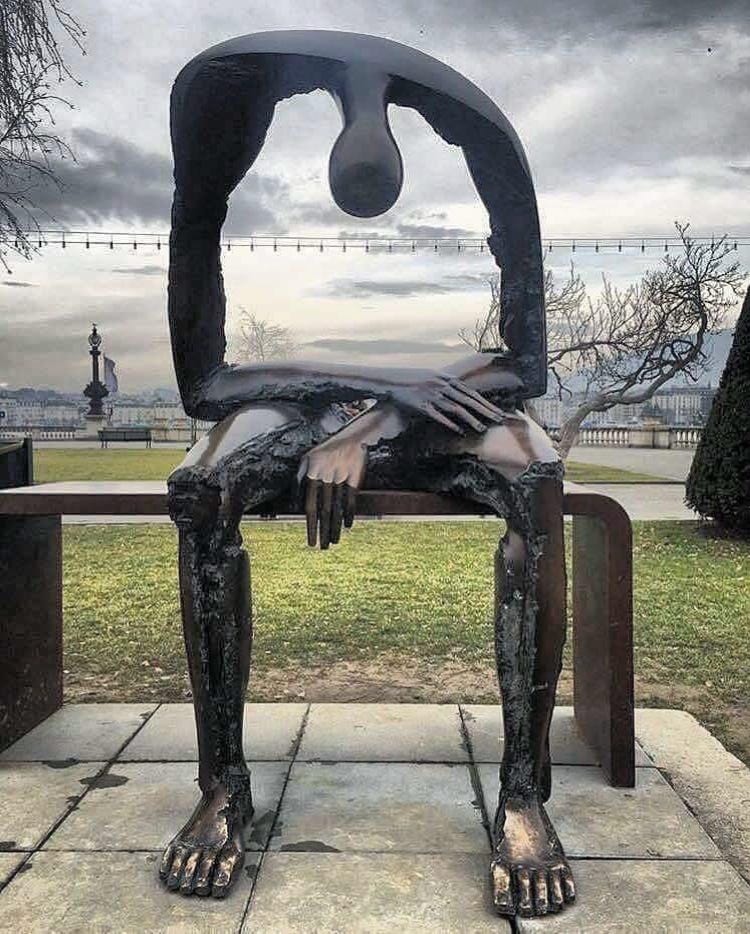
The picture was sent to Pia from a twinless twin as an expression of being a lone twin
“I talk to my twin the way others talk to God,” said several of the twins who lost their siblings early in life. A twin bond lasts, no matter how early it is broken. With “Living for two - twin loss stories,” I want to share a little of the special twin bond that makes a twin loss so unique.
Nick Embleton
Being on the NICU can sometimes feel all consuming, both for us as healthcare professionals, but especially for families and parents. Parents often talk about “living life in a bubble”. The focus of our medical and nursing care is very much the here and now - ventilator settings, constant changes in FiO2 requirements, planning X-rays or blood tests.
We rarely stop to think that for the babies that survive, more than 95% of their lives will be lived outside the NICU. However, how we help parents understand their experiences, how we behave and act towards them impacts on them for a lifetime. Family integrated care and ‘parallel planning’ matter. They help parents learn their journeys that over time become their own stories of love, and sometimes of loss. Every parent of a NICU baby who I spoke to describes ‘trauma’ in some way. For many, and especially those whose babies die, this trauma lasts forever. I don’t think neonatal doctors and nurses always appreciate that.
Pia’s stories strongly identify the importance of “twin identity”, a strong theme that emerged in our qualitative research studies. On the NICU we need to remember that surviving babies are still twins or triplets even if one died. We need to speak with parents, ask them what we can do, remember the name/s of the babies who died, and help parents learn to cope with the multiple ‘triggers’ they will face for the rest of their lives. It really matters when they come for neonatal follow up, and you remember the name of the baby who died, just as much as it did on the NICU. The Butterfly symbol seems to help, but can bring other challenges especially post-discharge (or even on the NICU) when people ask or say ‘that’s a pretty Butterfly’ and parents again must explain or share some aspect of their painful stories.
Thanks for reading. As always, please share and help raise awareness.
It’s the little things that count.
* * *
Recommended Comments