


She was here: a parent story from Uganda
By Nicholas Embleton in Neonatal Butterfly Project
· 17 views
I met Tracy at a parent summit meeting in 2025 and was inspired by her story, so I asked her to write it so I could share Alyssa and her story of love and loss on my substack platform.
By Tracy Ahumuza, Alyssa’s mother and founder of ATTA Breastmilk Community
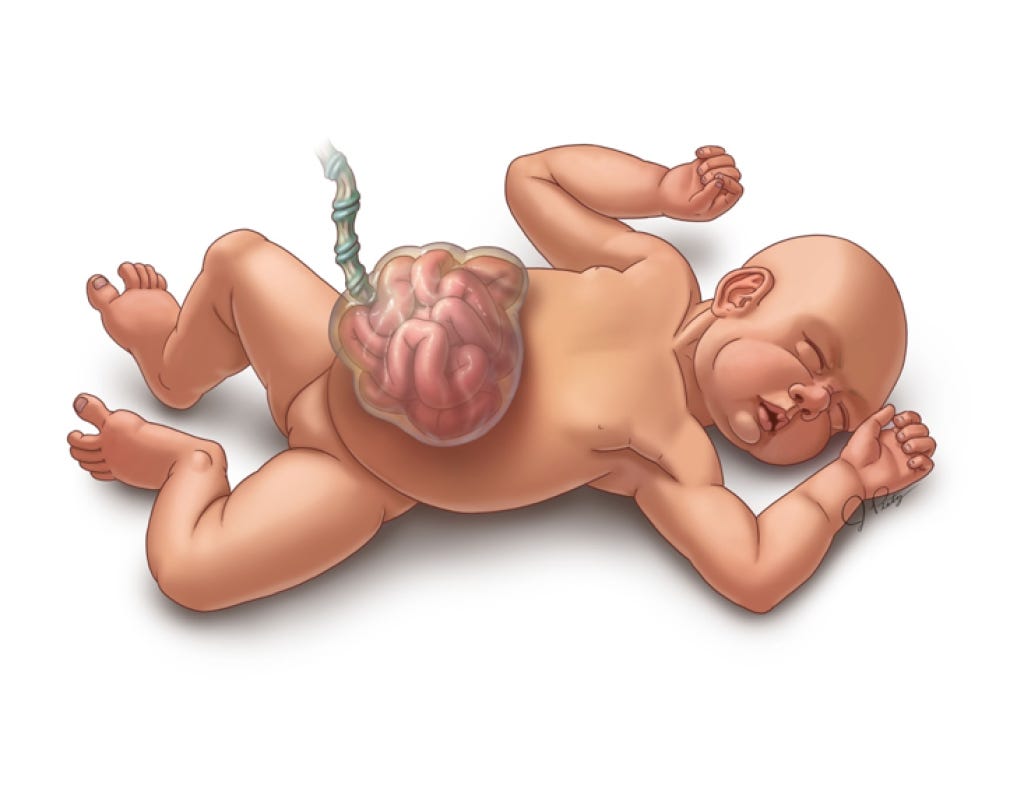
My daughter, Alyssa (Marie) Taha, was born on 2 April 2021, Good Friday. She had a four-centimetre omphalocele, an abdominal wall defect that we knew from very early on would require surgery at birth. [Nick: I’ve put a simple image below for non-medical readers].
The surgery went swimmingly! She just needed to recover from the immediate trauma after birth. I wasn’t told that all she would be able to consume at birth for the best prognosis was breast milk.

I barely had 30 ml in the first two day, stressed that my daughter was ill and I was recovering from a C-section. I was told donor breastmilk, was the next best thing. Getting the donor milk was not difficult because my sister-in-law was breastfeeding, the issue was how long it took for me to discover that this was an option for us. Uganda did not have a clear system through which donated milk could safely reach babies like her. See, knowing that your baby will need help is not the same as knowing that you will lose her. I was ready to do whatever her caretakers asked but so little information was shared in a timely manner, and she was, at some points, four floors down in the ICU hooked on life support. When she finally made it upstairs to the NICU, two doors down from me, it was Easter Sunday evening.
She died the next morning on Easter Monday 5 April 2021.
The doctor said her heart had had simply stopped beating.
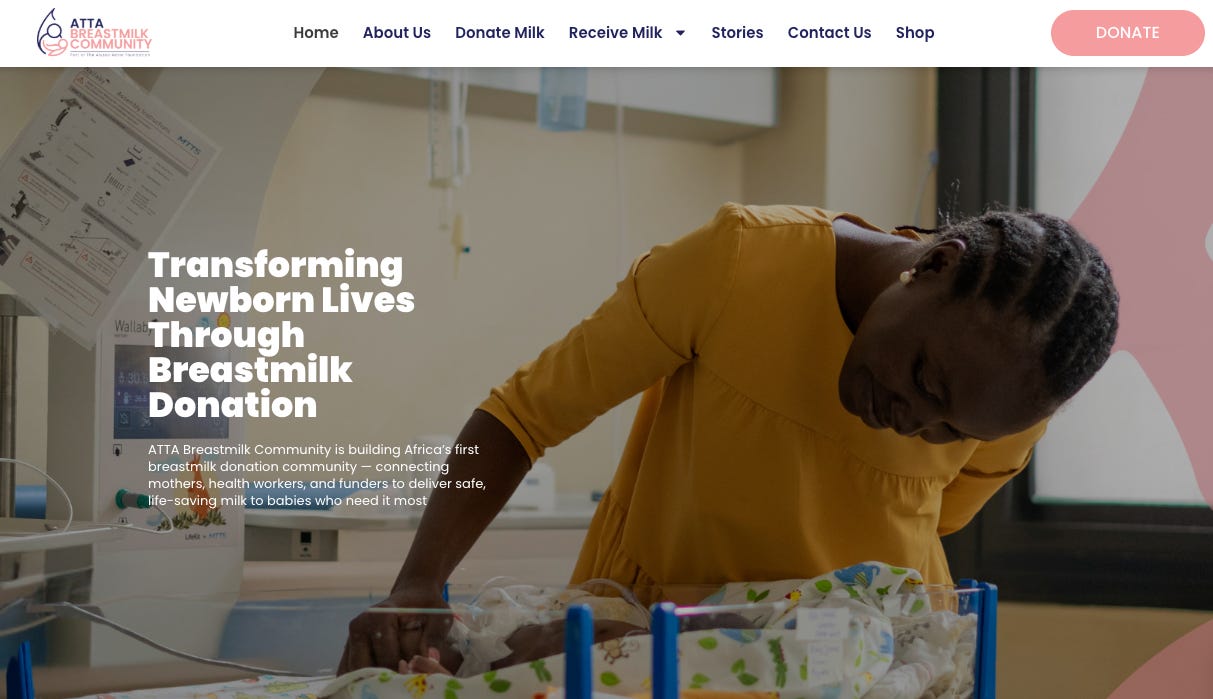
Three impossibly long days have become five equally long years of ATTA Breastmilk Community, a non-profit social enterprise registered as the Alyssa Marie Foundation Limited.
ATTA is an acronym, representing the mother-child dyad, Alyssa Taha and Tracy Ahumuza. A constant reminder that she was my daughter; she had a name. She was here.
The body
After Alyssa died, my body started to do what I had been begging it to do; making milk for my baby.
I was given a prescription that would shut down this function. I remember the name of the prescription because details from that time are vivid.
I remember that her doctor, in the minutes after her death, said; “Don’t cry so much, you will have another child.” As if he knew this to be a fact.
I remember asking my doctors if I could donate this, apparently life saving milk, I now had the displeasure of producing. I remember one saying I needed to focus on my own healing and another saying I would need to move my c-section pain ridden body to her hospital if I wanted to donate. It was also on me to find a potential donor to help. I had the pumps. I finally had the milk but I had no desire to be in a setting similar to the one I had lost my child in. And as much as I wanted to help other mothers and their babies, I did not want to see them or be reminded of the circle of life.
And so, I began to do my reading and discovered that my country’s neonatal mortality had barely changed in 20 years. We were, as of 2021, still losing 27 babies for every 1000 live births. 200,000 were dying in the first year of life but half of those were dying in the first month. The neonatal window, where I knew this milk would be lifesaving. The research showed that it reduced the risk of a deadly gut infection and reduced the length or likelihood that a sick or small baby would need hospitalisation.
There was also no clear pathway through which a bereaved mother in Uganda could donate her milk safely and yet some studies were saying that the gift of donation, helped grieving mothers to deal with grief. At the same time, premature and critically ill newborns were in hospitals needing human milk, particularly when their own mothers’ milk was delayed or temporarily unavailable. Somewhere between these realities was a gap that I could not stop seeing.
The question that became ATTA
We did not begin with a business plan or a perfect model.
Our first public fundraiser was intended to purchase a small desktop Sterifeed pasteurizer, simply because milk sharing, the way it was happening in Kampala where I lived, could be done safer. We did not raise enough. The machine was simply too expensive. That could easily have been the end of the story, but the money allowed us to do the next best thing: screen and test donor mothers and create a safer route for their milk to reach vulnerable newborns. For almost two years, that approach helped provide donor milk to more than 450 babies.
ATTA grew from the community outward. Mothers offered their surplus milk. Families trusted us with their most fragile babies. Riders moved frozen milk through Kampala. Health workers advised, referred and sometimes challenged us. We built systems for donor screening, testing, collection, cold storage and delivery. We served women using private healthcare and women who could not afford a meal every day. A baby’s access to safe milk, and a mother’s right to dignified support, we believed, should not depend on social class.
Building where no path existed
The journey has not been neat. Three years after that first fundraiser, we could finally contemplate the equipment we had once imagined, but regulatory obstacles and import taxes would have crippled our operations. We eventually adopted a more affordable modular pasteurisation system developed in South Africa by Prof. Anna Coustoudis. I still hold the dream of large-scale processing that can serve many more babies.
We have had to find our place in Uganda’s health system precisely because we were the first of our kind. That has meant asking difficult questions about safety, ethics, access and responsibility. It has also meant contributing to something bigger than ATTA. In August 2026, Uganda launched its first National Guidelines for Human Milk Banking, and ATTA was proud to have supported their development. ATTA has witnessed the set up of two hospital-based milk banks; one in Kampala and the other with our friends in Mbale.
The conversations today
Today, ATTA has supported more than 1,000 newborns and families and over 1800 liters of breastmilk.
I think about each bottle expressed and the time dedicated by a mother to do this for a child she may never meet, over and above the needs of her own child.
I think about the recipient mother who may be ill, recovering from surgery, struggling to establish her milk supply, grieving or even, unfortunately, dead. I think about the small baby whose parents are told to find donor milk quickly in a moment already filled with fear.
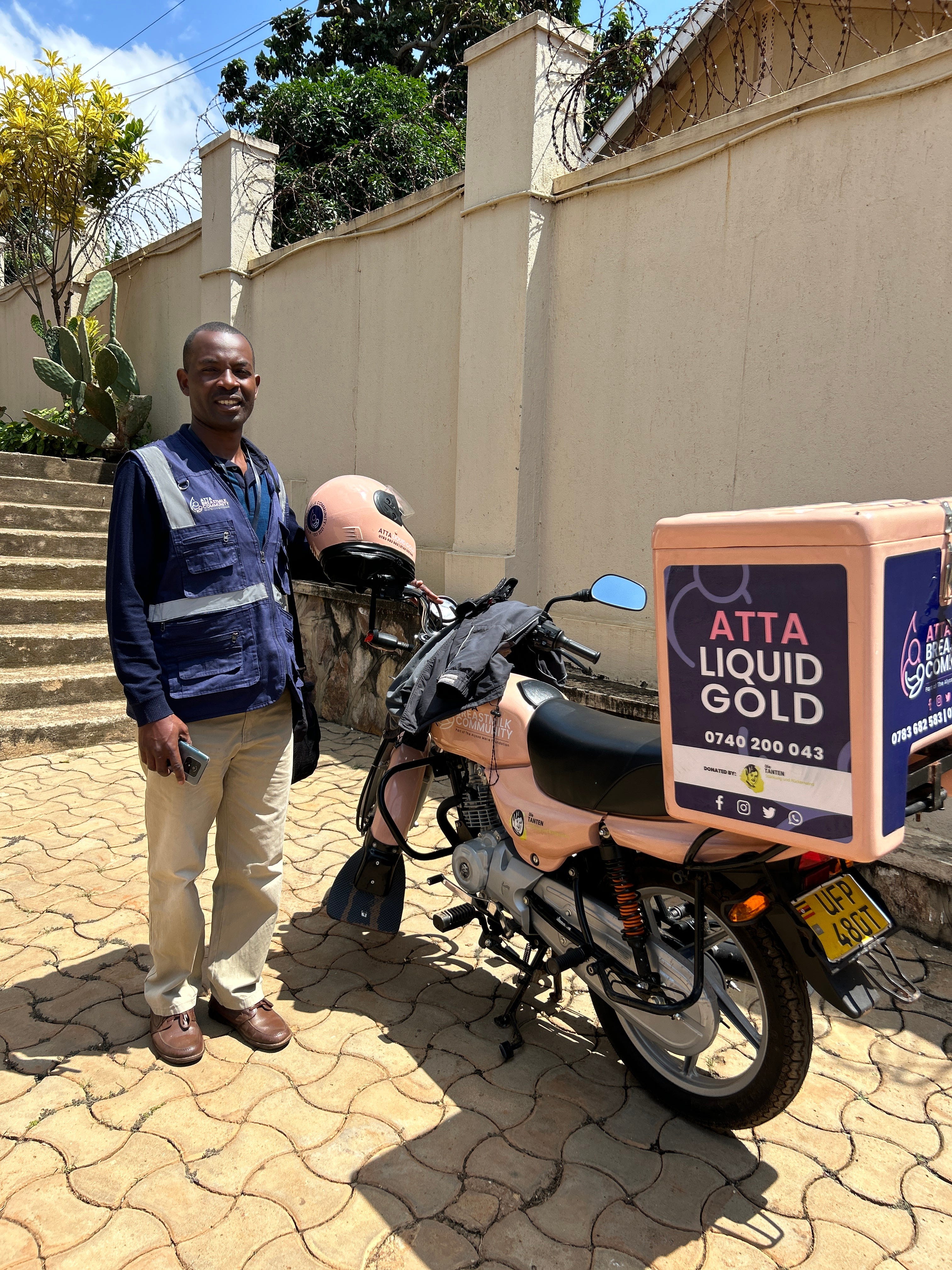
Some fragile babies leave hospital but remain at risk at home. Families cross the hospital-to-community gap with little support, and some babies do not survive it. Bereaved mothers may become pregnant again quickly, carrying trauma that was never acknowledged into another pregnancy. These experiences have taught me that milk banking cannot sit apart from lactation care, maternal mental health and continuity of care, particularly for instances where health workers are also not equipped to deal with the nuances of that season for each mother.
Through ATTA, I have also seen health professionals assume that lactation after loss will be too painful, harmful or impossible for a mother, so the conversation is closed before she is given a voice.
Silence may be intended as protection, but it removes choice.
One mother may want support to suppress her milk. Another may want to express for a short time, save a small amount, or donate. None of those choices should be imposed, and no mother should have to discover them by accident after leaving hospital.
I do not expect healthcare professionals to have perfect words. What I would have wanted was presence rather than dismissal: use the baby’s name, explain what is happening, ask rather than assume, allow questions, and recognise that the body and the heart/mind may be experiencing different timelines. Do not disappear from a family because the medical outcome cannot be changed. Small acts become part of how a parent remembers the worst days of their life.
What Alyssa’s life means
People sometimes describe ATTA as the good that came from Alyssa’s death. I understand the kindness behind that, but I have come to believe that Alyssa’s life does not need ATTA to make it meaningful.
Her life mattered because it was hers. She was loved before she was born, throughout the three days she lived and every day since.
I tell myself that ATTA is not a justification for losing her. That, it is, what I chose to build with the love, the responsibility, that remained. It is my refusal to accept that geography, income or an overwhelmed health system should determine whether a vulnerable newborn can access human milk. It is also an insistence that mothers, including bereaved mothers, deserve information, choices and compassionate support.
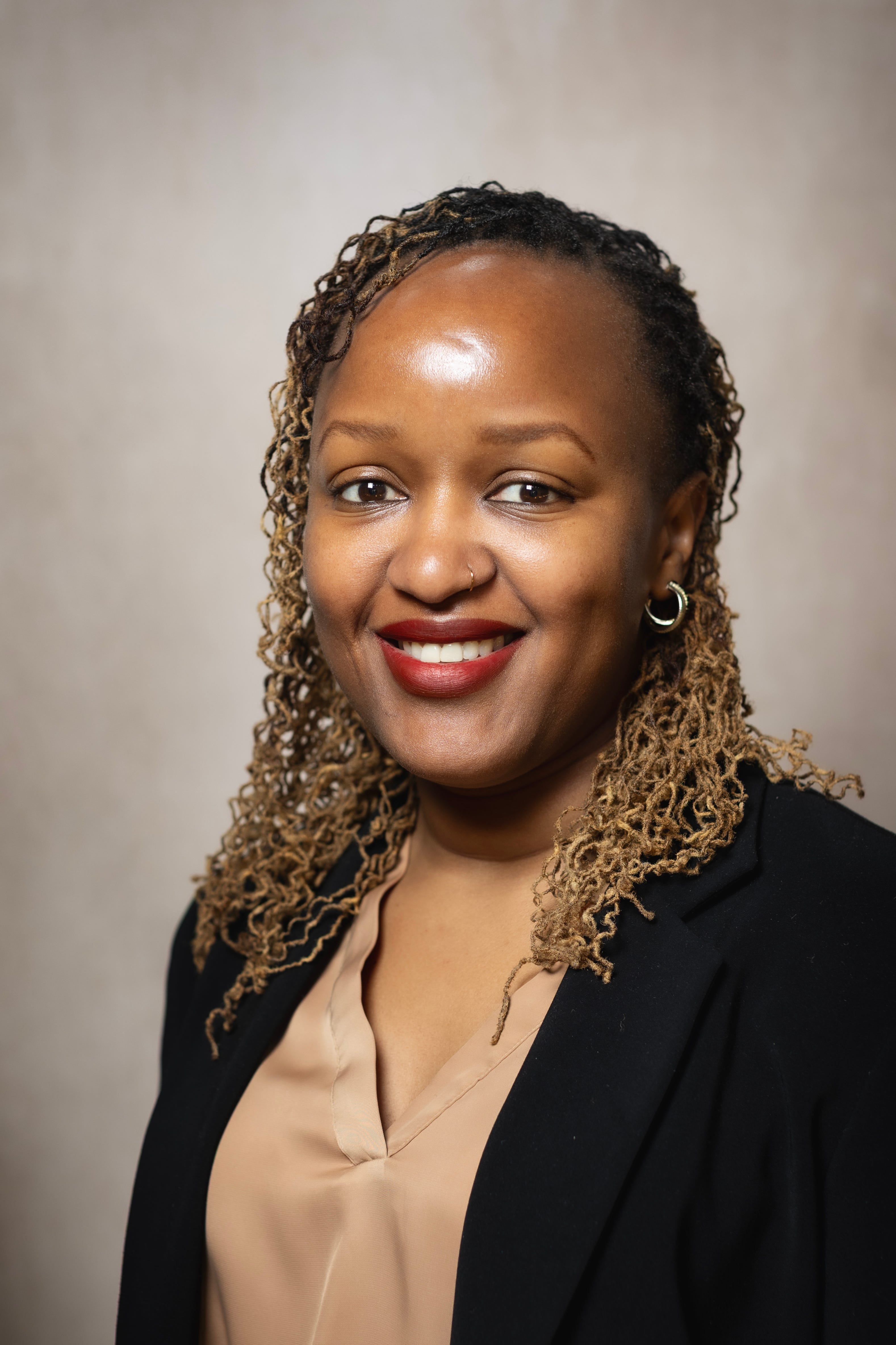
Five years later, I still wish the story had been different. I wish Alyssa were here and that ATTA had never needed to begin with me but I also know first hand that grief and purpose can live beside each other without cancelling each other out.
Nick Embleton
Meeting parents and professionals from other parts of the world has been one of the highlights of my career. Tracy’s story is inspiring on many levels, and helps remind us that we never know what the [bereaved] parents in front of us are going through. Never say “I know what you are going through”. You don’t.
It also reminds me that “it’s the little things that count”, words, phrases or actions that are seemingly ‘small’ but can be helpful or hurtful for a lifetime.
I knew nothing about Lactation after Loss until a joined a webinar back in 2022. To be honest, when I realised it involved speaking with recently bereaved parents, or a mother who had just delivered a stillborn baby, and offering a choice to continue (or initiate) lactation, I thought it was a bit ‘left-field’. Why would a mother want to prolong the agony of loss, why complicate the grief, or risk precipitating even worse psychological trauma? Who would look after and support her to do this?
I’m embarrassed how un-informed I was.
I have spoken with 100s of bereaved women in my 30-year career on the NICU yet until recently, never stopped to enquire of them, or the nurses, what was going to happen to the women’s lactation. I think I assumed it was someone else’s job. Turns out, so did many others on the NICU. I also never once thought women might want to express and donate after loss. I would always ask parents what they wanted us to do with any stored, frozen milk we had on the NICU, but never about lactation itself, although I know some staff do. Looking back, I wonder why I and many others were so blinkered. It’s not a comfortable topic for many of us, more challenging if you are male perhaps, but any discomfort we feel is of a different magnitude to the parents grief.
Logistics, resource, ethics, culture, wealth and opportunity vary enormously across the world. But the importance of compassion, honesty and acting with humanity join us together.
You cannot always change the outcome, but you can usually change the experience
Please share this article and encourage others to subscribe whilst I try to grow a global community sharing knowledge about baby loss and neonatal nutrition.
Feel free to connect to learn more about this and other projects. You can contact Tracy below.
Tracy Ahumuza, Team Leader, ATTA Breastmilk Community, tracy@attabreastmilkcommunity.org +447756338312 +256 782 148 257
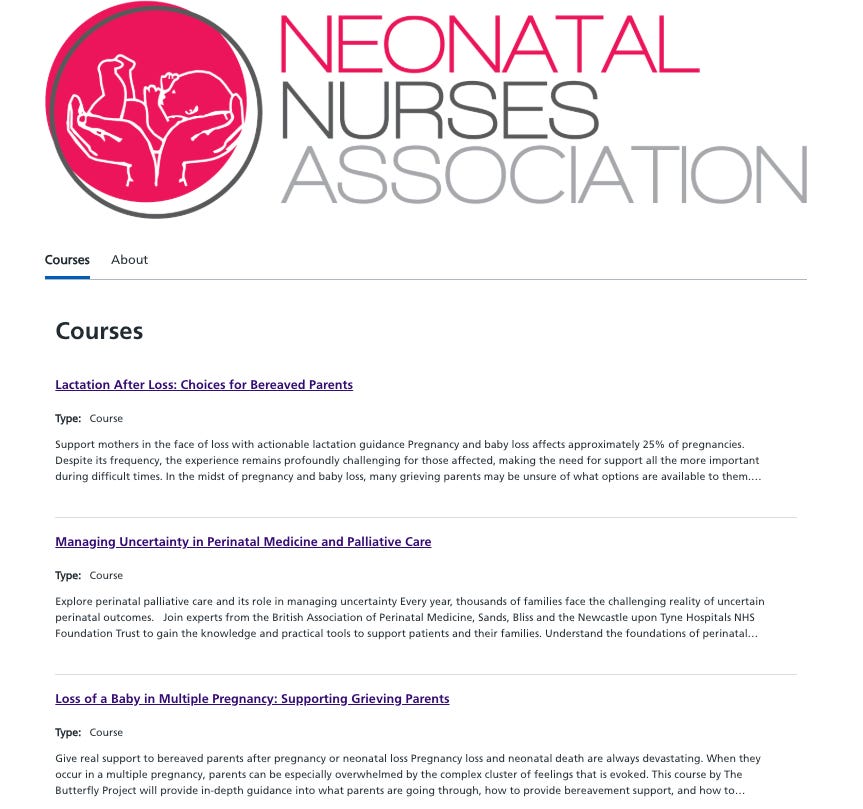
If you are based in the UK you might be interested in our free online courses on Lactation after Loss, the Butterfly project and various aspects of Managing Uncertainty in Perinatal Palliative Care - see below link.
---
Recommended Comments