
_0b6494.png)
_5c07e1.png)
_0d1bd3.png)
_75149d.png)
(26).png.c97dc453b63ee0a4658a82af0237d93f.png)
Elvis Presley & Cristiano Ronaldo - twins, butterflies and baby loss
By Nicholas Embleton in Neonatal Butterfly Project
· 552 views
More than 15 years ago I started working with a team to explore parent feelings and experiences about the time when the NICU team felt it appropriate to discuss the option of withdrawing/stopping active intensive care for their sick baby. The research ethics committee were hesitant suggesting that we might upset parents if we reminded them their baby had died …
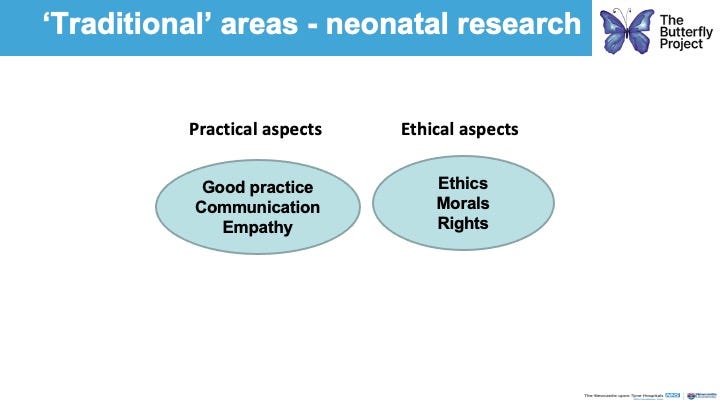
I found the research experience deeply humbling on many levels, and I learned much more in that study than I expected. I learned from academics in other disciplines, but most importantly from parents. We spoke with around 15-20 families, and a similar number of NICU staff. I thought we might end up focussing on themes around communication, or practical aspects of end-of-life care, or perhaps the morals, and ‘rights and wrongs’ of withdrawing life-sustaining support. However, most importantly I learned to listen to other peoples’ stories and the meaning of life.
I quickly came to realise that the NICU doesn’t exist in a vacuum, and became fascinated with parents’ stories, and the reflections of staff. To my shame we still haven’t got that paper published. It was rejected by two ‘decent’ journals, and even the abstract was rejected from a large paediatric meeting (PAS/AAP) that usually accepted pretty much everything!
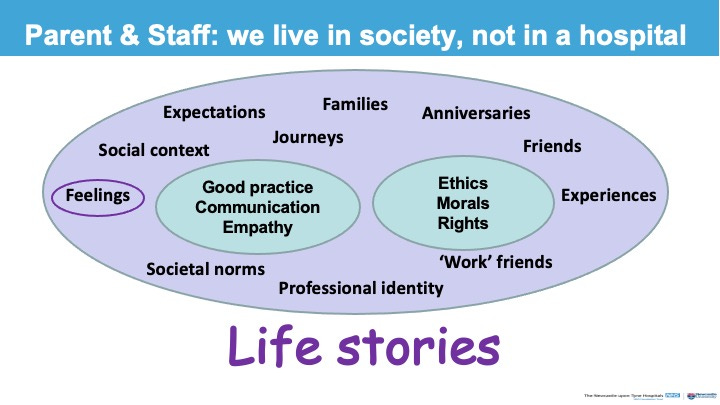
During the parent interviews we noted that 3 families had premature twins where one had died, but one had survived. This was a challenge/situation that I and many others had observed as doctors and nurses on the NICU but tended to ignore. Everyone, pretty much, is fascinated by twins and triplets - how similar or different they are, and whether any differences are due to the environment and parenting or their genes. There are films and documentaries about twins, they feature regularly in social media and they are often subjects of scientific study to determine heritability.
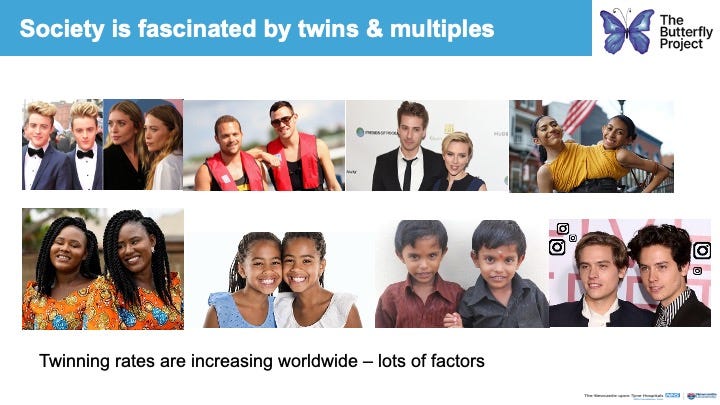
If you haven’t seen it, check out the film “Three Identical Strangers” - which used to be available on Netflix. A very sad and moving story, and one of those most powerful films I have ever seen. Identical triplets put up for adoption in the early 1960s, and deliberately placed with three separate families who had no idea they were not singletons, in what can only be described as a cruel psychological experiment. They were studied without realising they were part of an experiment. Shockingly, some of the research ‘data’ has never been made available. It gives you an idea of the importance of love and connection when you’re growing up.
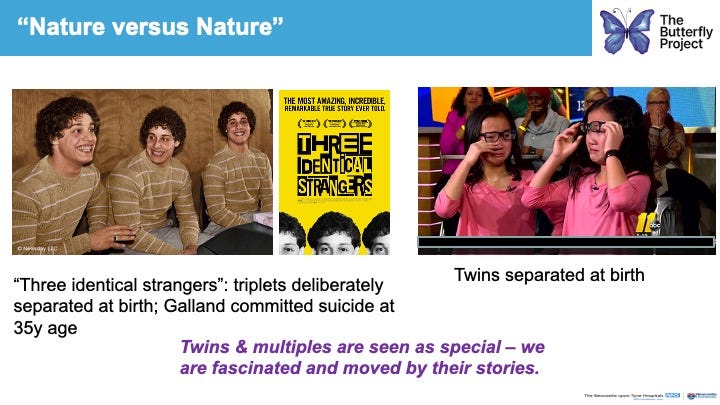
Elvis Presley was a twin whose brother was stillborn just half hour before him. Elvis’ mother apparently commented that one of Elvis’ driving motivations in life was to try and connect with Jesse. Interestingly, Elvis was encouraged by Liberace to be a showman; Liberace was also a twin whose brother died at birth. These were two of the most flamboyant characters in the 1960s and 1970s - how did their identity as twins (what some would call twinless twins or lone twins) shape their life and behaviour?
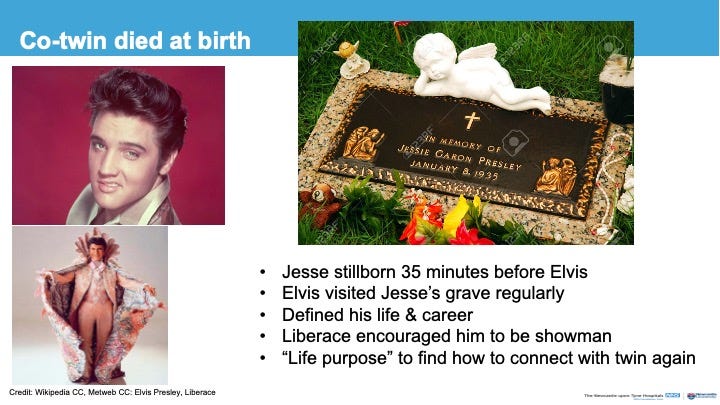
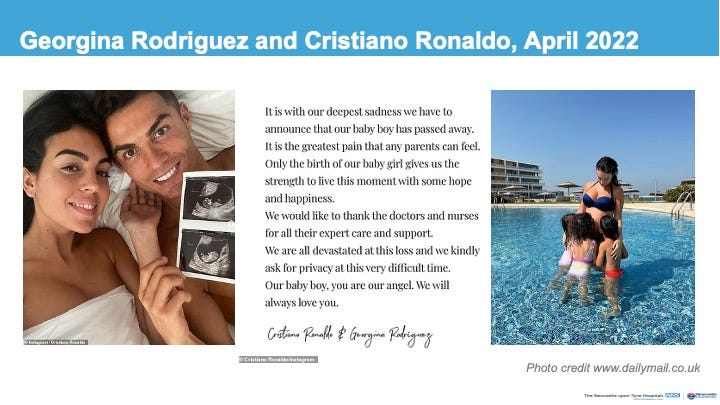
And more recently Georgina Rodriguez and Cristiano Ronaldo had to share the sad news that one of their twins had died shortly before birth. They and their other children grow up with the world watching their lives evolve.
Our first research studies taught me a lot, and I noted [on the NICU] that there was a tendency not to talk about the twin who died, or acknowledge the surviving baby was (and still is) a twin. We rarely mentioned that twin again, forgot his name, didn’t acknowledge him/her in the NICU discharge letter, or when they came back to follow up appointments. A lot of the time we didn’t know what to say. Sometimes I would return to clinical service after having been on leave, and no one told me that the baby on the ventilator in cot 5 had a twin who died 10 days ago. This made the parents’ grief more challenging and sad, and probably made the parents feel that we didn’t care.
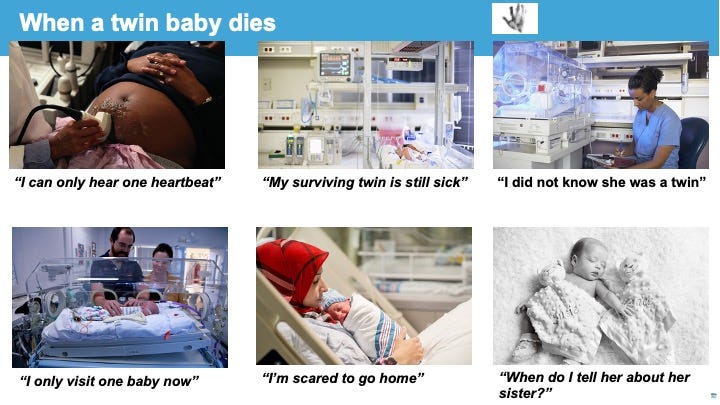
This led us to conduct a further qualitative study with the parents of multiple pregnancies where one baby had died, and at least one baby had survived. The baby loss may have been a miscarriage, stillbirth or neonatal death. We included pregnancies where the baby may have died following medical intervention e.g. a termination, or following assisted reproductive techniques (“IVF”) and included triplets as well as twins. Most often though, they were prematurely born twins. In some cases parents knew during the pregnancy that one of the babies might die if they had a serious genetic anomaly associated with a short life; in others, such as extremely preterm birth parents suddenly found themselves thrust into the trauma of the NICU, scared that one or both of their babies might not survive.
We analysed the findings using standard qualitative methods (thematic analysis) and then shared the results at workshops with other healthcare professionals, and with other bereaved parents. It was at one of these workshops that a parent remarked “…just put a little blue butterfly on the cot of the survivor, and everyone will know he was a twin”. A lightbulb went off, and I immediately discussed the idea with some of the nurses and we decided to make the butterfly purple-coloured to avoid any boy/girl connotations with blue/pink. I also recognised the importance of remembering the baby’s name. More than once, I had called the surviving baby by his deceased brother’s name, but more importantly, using the name made this personal for the families. We encouraged the parents to write the name - we used waterproof pens so it wouldn’t rub off with the humidity or cleaning wipes. Simply writing the name appeared to carry immense meaning for parents. Millie from the Skye High Foundation (named in honour of her twin baby Skye who died) had a similar idea and we have worked together for more than 10 years now sharing this project. I’ll ask her to share her story in a later post.
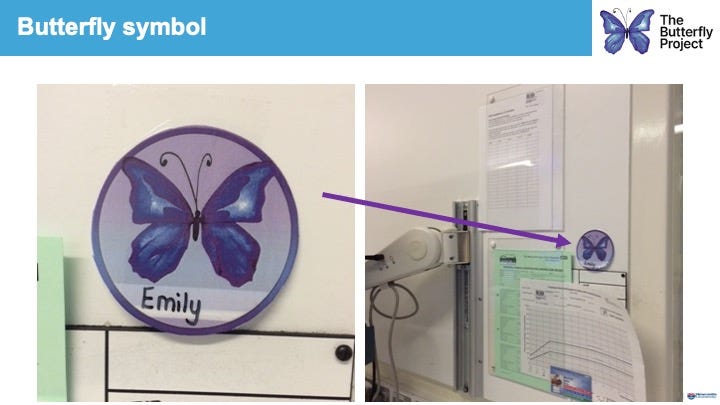
The Butterfly project has spread to 100’s hospitals in many countries around the world. We made all the resources free to download so the truth is we have no idea which hospitals use it. It would be nice to know where, but it doesn’t really matter.
In the next post, I’d like to share some of the themes that came from the research. Please share links with friends and feel free to share your opinions, insights and experience. thanks.
Recommended Comments