
_0b6494.png)
_5c07e1.png)
_0d1bd3.png)
_75149d.png)
(26).png.c97dc453b63ee0a4658a82af0237d93f.png)
Breastmilk protein in cows and humans

By Nicholas Embleton in nutrition
· 1,222 views
The process of evolution resulted in breastmilk perfectly suited to the survival and developmental needs of the newborn of that species. Mammalian milk composition varies during the day, and over the days, weeks and months of breastfeeding. All species vary in macronutrient, micronutrient and bionutrient composition. Bionutrients (also known as immuno-nutrients, or functional components) are key to many of the benefits of getting the ‘right’ breastmilk, and there are 1000s of them - we’ll get to them in another post.
Breastmilk is more than food
Human milk has lowest protein concentration of all mammals on the planet
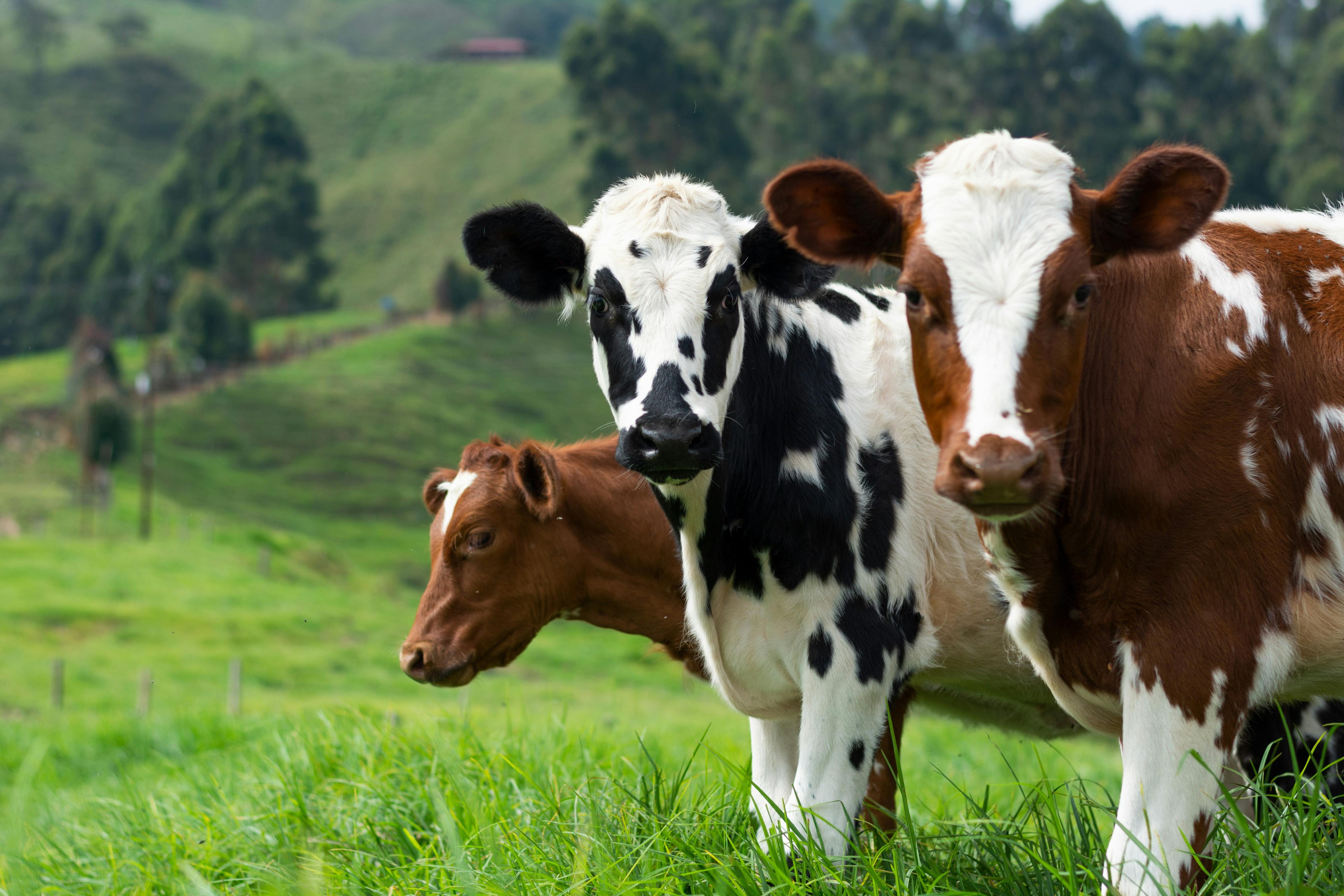
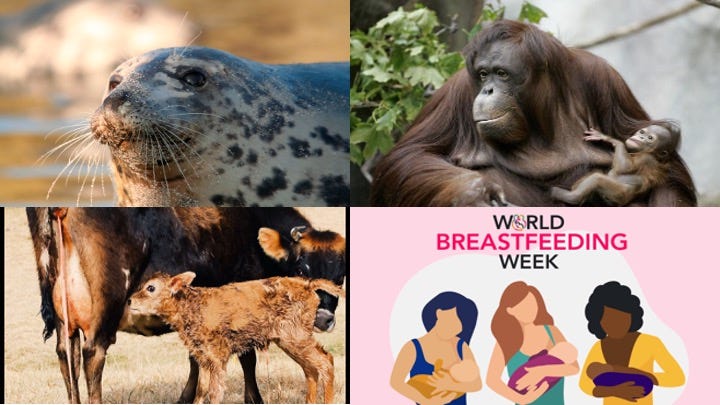
Human breastmilk has lowest concentration of protein, just under 1g/100mL on average. It is a little higher 1.5-2g/100mL in the first few days, but at this stage lactational volumes are much lower and the protein concentrations decrease in most women (even those delivering preterm) to around 1g/100mL by 1-2 weeks of age, and sometimes lower. The protein content in Orangutans is slightly higher - perhaps 1.2g, but human milk has a concentration less than 1/3 of the protein of cow milk (3.2g-3.5g). And compared to many marine mammals, human milk contains only 1/10th the amount of protein (whales and seals 12-14g/100mL) but this is still lower than a cotton-tail rabbit (14g/100ml).
Protein is the essence of life, and is needed to support growth. When growth is slower, less protein is needed. A rabbit doubles its birthweight in under a week, a calf takes just over a month, but human babies take around 6 months to double weight. Orangutans also grow slowly - they also breastfeed for longest, 6-8 years by some accounts and stay close to their mother’s sides for much of this. A newborn calf has to stand on it’s own four legs within hours of birth, and like many other mammals needs to be able to evade predators soon after birth to stop being food for some other mammal. Seal pups are vulnerable to predators in the sea or ice; certain species grow at unbelievable rates - the hooded seal only breastfeeds for 4 days.
Humans and big brains
These differences between humans and calves, are explained by the complexity of human brain development and the complexities of our social environments - the two are, of course, inextricably linked. Although the brains and breastmilk of other primates are similar, most mammals are nothing like humans. It is the reason you are reading this on a phone instead of spending all day searching for fruit like an orangutan.
Rhinos have huge heads, but most is fresh air in sinuses, compared to humans where the brain fills the entire cranial cavity. The figure on the right below shows body weight on the X-axis, and brain weight on the Y-axis (both on a logarithmic scale so it fits on the page). Proportionately you can see shrews, dogs and rhinos all plot close to the average line. But human brains are off the scale - 10-20x as big as most mammals proportionately.
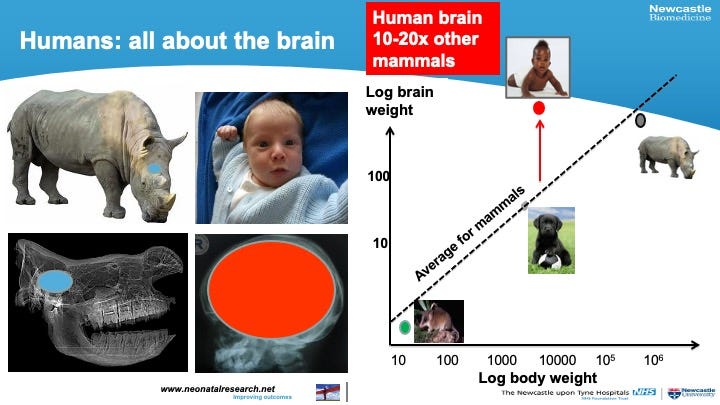
Human’s have massive brains, and around 85-90% of the final adult volume is acquired in the period between 24 weeks gestation and 2 years of life - most of the first “1000 days”. Nutrition and growth in this period determines your cognitive function, lifelong metabolic health, whether you will get type 2 diabetes, or die of a heart attack. Slow growth gives humans the time needed to learn the complex rules of social interaction. It takes around 15-20 years to learn adult behaviours, and recent societal changes show ‘parenting’ continues into the 20’s. Fast growth (like most other non-primate mammals) would be a disaster. We’d have 5 year olds the size of adults.
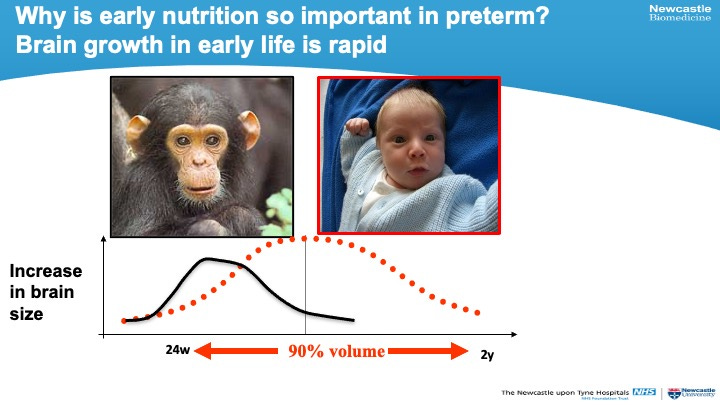
What appears to be ‘low’ protein concentration in breastmilk is actually ‘normal’ and perfectly adapted to slow infant growth in healthy, term newborns. During these first 1000 days the body grows slowly, but the brain grows rapidly. Whilst low protein concentration is ideal, massive amounts of energy are needed to support synaptogenesis (brain wiring) and explains in part why humans are the fattest mammals in early infancy. Whilst human fetuses also require high energy intakes, they also need high protein intakes provided by massive trans-placental amino acid transport especially after 24 weeks. Human milk doesn’t replicate these needs. Human mother’s own milk, warm and recently expressed, is life-saving for preterm infants, and also results in the best longer term cognitive and metabolic outcomes. But at 1g/100mL protein, it will fail to meet protein needs for ELBW even when fed at 200ml/kg/day. This is one of the key challenges we face in neonatal medicine.
My aim in writing these posts is to improve understanding and create a global community where we can share ideas, knowledge and insights to improve nutrition and growth especially in resource limited countries. Thank you for reading. Please share with your networks and like-minded friends. The next few posts will cover more topics around early growth and breastmilk composition, and we will start to un-pick the challenges we face. After that, I’d like your ideas as to practical solutions.
Recommended Comments