
_0b6494.png)
_5c07e1.png)
_0d1bd3.png)
_75149d.png)

It's the little things that count.

By Nicholas Embleton in Neonatal Butterfly Project
· 326 views
Trigger warning - discussions about babies dying.
Trust in the medical profession is the foundation of effective healthcare systems, directly influencing adult patients’ willingness to seek care, disclose confidential & highly sensitive information, and comply with treatments. Human connections are what builds that trust.
In the NICU it’s a bit different because the first human connections often happen around admission, which is often unexpected, sudden and dramatic. Connections we form in fetal medicine consults are also taking place surrounded by uncertainty and anxiety. Most of the information we need as physicians to plan acute management is gleaned from discussions with midwifery, obstetric & fetal medicine teams, or is available in the maternal notes. Unlike in adult medicine where trust is built on past interactions and public profiles, trust in the NICU team represents an immediate future-oriented acceptance of vulnerability. However, trust rapidly changes during the NICU stay.
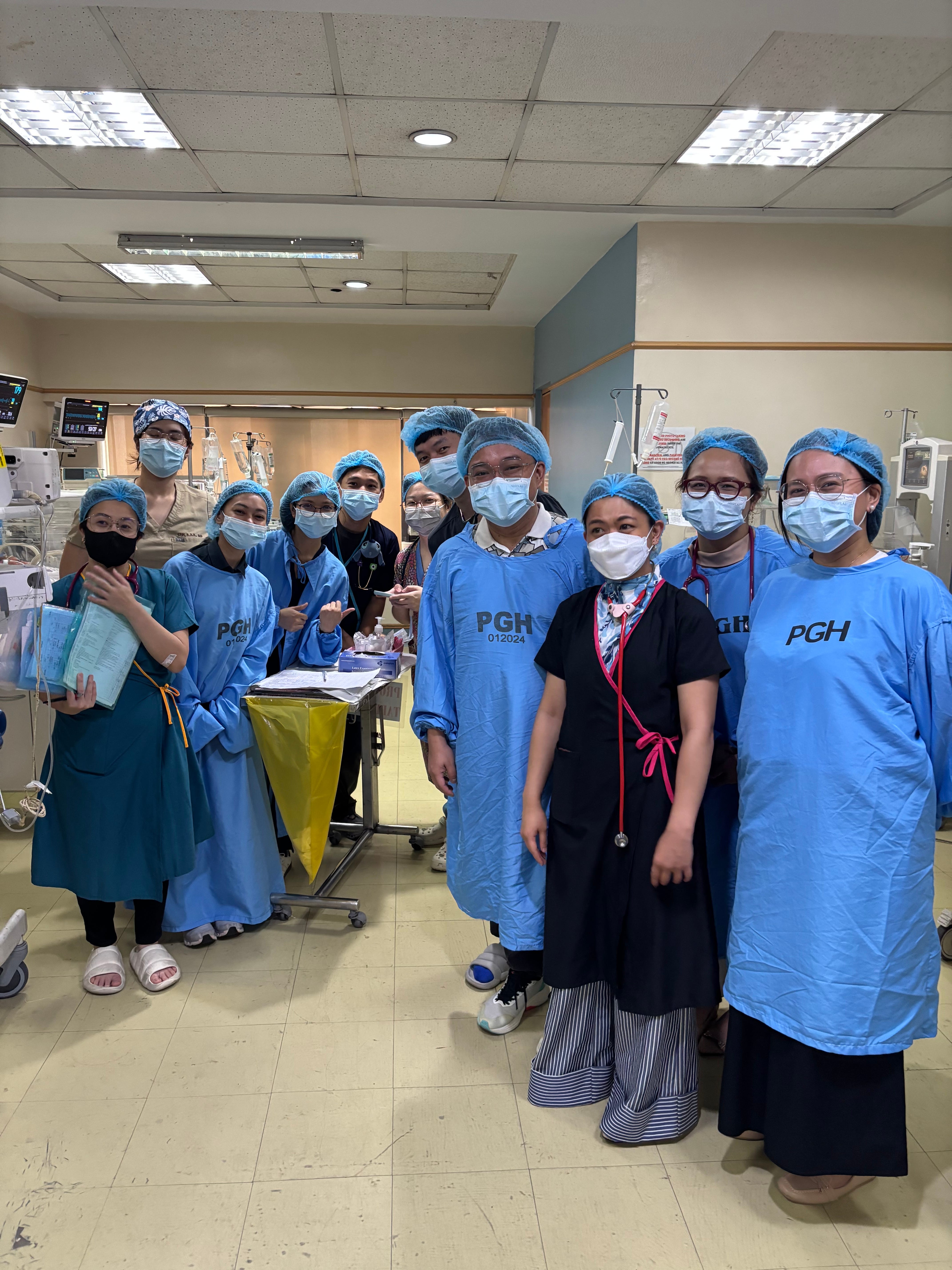
The amazing & welcoming neonatal team at PGH, Manila. Neonatal care looks very similar in most of the world!
Most parents have little idea about neonatal medicine and trust is based on the belief that the team will consistently act in the baby’s best interest. Parents have no idea how good we are at tasks like intubation or echo scanning, how experienced we are, or how much we do or do not genuinely care. As someone who worked on the NICU for 35 years, it seems we just expect parents to automatically trust us. We know we’re ‘trustworthy’, why don’t parents?
It’s the little things that count.
My experience over many years tells me that “micro-interactions” are the basis of the relationship and trust that parents form with healthcare staff. It’s the little things, the smile and greeting at the start of the day, remembering the baby’s name, who the partner or other family members are, what are the things that the mother worried about yesterday, how did she get to the NICU this morning. During antenatal consults, do we greet, introduce ourselves, explain what we do and demonstrate ‘active listening’? Or do we just tell parents what’s going to happen, and then let our colleagues know “I updated them, they didn’t seem to have any questions.”
Micro-interactions matter
On the NICU, do we behave in a way that demonstrates we have got time to listen to their questions and we aren’t endlessly busy doing ‘more important things’? If we looked at them rather than checking our pager, if we sat down instead of standing over them. These micro-interactions are vital skills for all healthcare workers, especially nurses and therapists, but it is physicians who parents see as being ultimately responsible for ‘life and death’ decision making on the NICU.
Almost 20 years ago, I was fortunate to start working with fetal medicine specialists and other specialties, as well as sociologists and academics from other disciplines. It opened my eyes, and I never saw the NICU in the same way again. I became fascinated with our body language, the precise words we use, the facial expressions that convey so much to parents without us realising. And I would watch the difference in parents’ expressions when we said things like “he’s had a bad night, we’ve been struggling to get the CO2 down” compared to “he had a CO2 of 9, so we put the MAP up, the CXR is better expanded and the CO2 is now 7.” I’m pretty sure most of my colleagues never realised I always was watching their body language and expressions so intently!
Emotion work in twin loss
Recognition of, and evaluation of, emotion work was an issue raised by all parents in our qualitative studies of baby loss when talking about their interactions with staff, in particular nurses. Mothers placed a high value on their relationships with staff who offered emotional support, and the nature of those relationships had a major impact on parents’ experiences in the hospital.
She [nurse] was really nice, we got a lot of support off her…she was more on our wave length, someone you can sort of feel comfortable talking with’.
Bereaved parents often identified one particular health professional who had acknowledged their bereavement and spent time allowing them to talk about their loss, or simply made time for a friendly chat. This person became a familiar face that mothers felt they could relate to, rely on and trust. Usually they were a nurse and they figured prominently in parent’s accounts. However, whilst parents appreciated any ‘emotion work’ done by physicians, there were many more accounts of ‘less positive’ interactions.
The nurses were very supportive…the doctors I don’t think so much, but only because they do ward rounds and they have to assess what is in front of them there and they are doing such an important thing aren’t they really, that’s kind of not relevant to them.
It seemed like parents had lower expectations of physicians providing emotional support because we had something ‘more important’ to do. In contrast, parents talked about nursing as a ‘vocation’ almost with an expectation that nurses would instinctively recognise the parents’ need for emotional support alongside the formal role of caring for their babies. It doesn’t seem that parents necessarily had the same expectations of medical staff to do emotion work.
I had issues with one of the doctors… because he was like, “oh, she’s not going to make it, oh she’s, do you understand has a blood clot.”
I knew he was doing his job, but I just don’t think that the way they get across bad news to parents is the best.
Nurses who were less emotionally accessible were also perceived as ‘just doing their job’ - caring for the baby but not recognising the emotional needs of the mothers.
they (some of the nurses) can be seen to be like “it’s just a job” you know. Some of them was just like that and just like, ‘it’s just their job’ you know. They come in and they do their job and go.
Staff who provide emotional support are perceived as more competent
Parents perceived the staff who provided emotional support as also more competent at providing the medical care for their baby. Staff who were emotionally remote made parents feel uncertain about leaving the baby in their care. Staff behaviours and unit ‘culture’ had a big impact on how parents felt when they had left the hospital to go home.
Especially on a night shift, I found that was when they [nurses] just didn’t, just didn’t seem to care. They were like…they just go in for a social and I used to come home nervous’.
It’s clear to all of us who work in the NICU, that a balance needed to be struck. There is a tension with views expressed in other literature that a genuine display of emotion is ‘unprofessional’ and potentially detrimental to the standard of care provided to the baby.
Nurses are expected to balance the these views by displaying ‘managed emotions’ which emphasises a ‘display’ of emotion perhaps rather than a deeper, more genuine feeling. If a really sick or dying baby upset us as much as another family member, or a friend, we couldn’t be effective and safe. But of course, it is OK to be upset, and to demonstrate that we care. It has to be authentic though.
How should physicians display emotions?
Like all neonatologists, I have been present in the room when a baby dies, most often in parents’ arms after a shared decision that further active intensive care is not what parents want. It’s a central component of our work. We all train to be neonatologists recognising we will have to do this. It happens a lot; in a large NICU there might be 40-50 neonatal deaths a year.
Most of the babies die peacefully in a private room on the NICU or nearby. Death happens when we remove the endotracheal breathing tube that connects the baby to the ventilator. Typically in the room with the baby are the neonatologist and nurse, the parents, and sometimes other family members. I will write more about how it happens, and what it feels like to be the physician in another article. I will also ask a nurse to write about what it feels like for them (message me!).
I would stay in the room with the parents sometimes for a few minutes but sometimes longer, perhaps 20-30 minutes after removing all life-sustaining support but it is very variable. As we sit there, sometimes next to parents on the sofa, or separately, I am ‘reading’ parents’ body language and cues, and wondering what I feel. Parents are usually focussed looking at the baby, but sometimes they will look at the nurse or me, perhaps for reassurance, or to ask a question. I try to sit still, not fidget, look relaxed but still focussed. I hope my face displays the fact that I genuinely care, but I have never shed a tear in the room. The nurses tend to display more emotion, but not always. It wouldn’t be unusual for some nurses - if they are female - to shed a tear.
There is some non-verbal eye communication with the nurse that helps me work out when it feels appropriate for me to leave the room. I might say, “what do you think if I step out for a while, and give you some time. I’m just outside if you need me, but i’ll pop back in 15 minutes?”
As humans, we are very quick to form opinions of others. Sometimes, that very first interaction that only lasts a few seconds or minutes colours impressions for a lifetime. As we then see people over months and years, our opinions and feelings change and develop. But new NICU parents don’t get that luxury. In an instant they are asked to trust us. To have a meaningful discussion about treatment decisions such as withdrawal of active intensive care, parents need to trust all of us. Micro-interactions matter enormously.
It’s the little things that count.
Recommended Comments