_0b6494.png)
_5c07e1.png)
_0d1bd3.png)
_75149d.png)

.jpg.59ab5a1ef4cde9744d175a335a798aac.jpg)
Everything posted by spartacus007
-
until
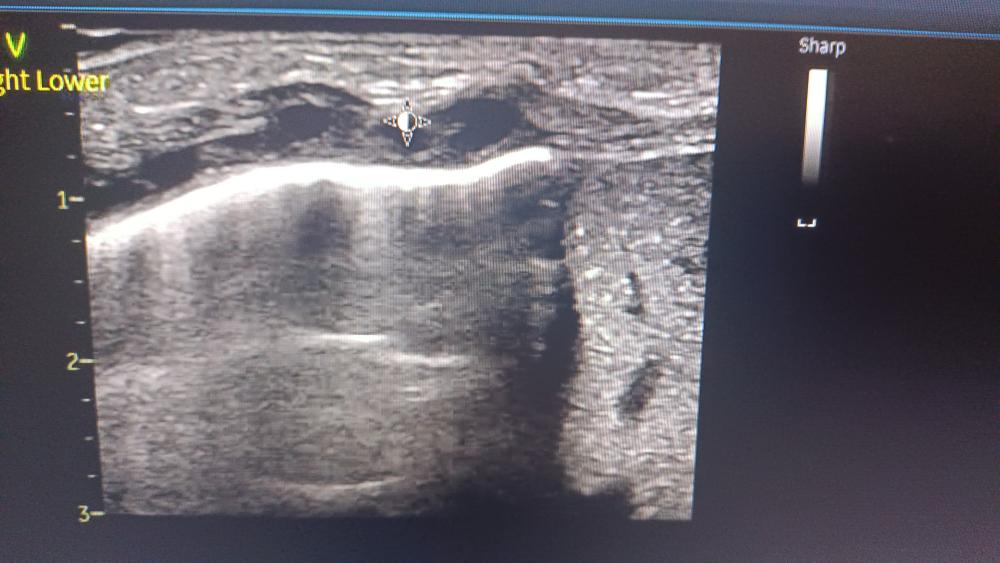
Background The MPROvE Point of Care Ultrasound-Lung (POCUS)was established in 2023. MPROvE relates to multidisciplinary education of any kind (i.e. multidisciplinary neonatal simulation, or TEL) being used to improve the quality of care and or neonatal outcomes. The MPROvE team delivers this POCUS course in 2 modules. The intention is to help institutions, hospitals, teams and specialties develop skills in POCUS using simulation and technology-enhanced learning as an educational tool POCUS helps with the delivery of high quality neonatal care and to improve neonatal outcomes. The course can be run locally in your department or delivered anywhere in the world over 2 days. The team can provide hands-on training on day 2 with parental consent. The intention is to train you as a team. Course Overview-Module 1 and Module 2 The MPROvE LUS is the first of 5 modules in learning neonatal POCUS. It has been developed by Neonatologists, and experts in TEL education. Each course has a didactic theoretical component followed by hands-on training in knobology, image optimisation, image acquisition, storage, interpretation and reporting. Training provided includes learning how to develop an evidence-based approach to LUS-Video The course addresses the following over 2 days- • Educational principles of learning LUS, Adult learning theory, Competency acquisition and logbooks • Basic principles in LUS Physics, Artefact, and LUS patterns • Recognition of the Normal versus the Abnormal Lung • Recognition of Lung Pathology in the Term and Preterm Neonate (Qualitative LUS) • Approach to Lung US scoring and Quantitative LUS • Role of LUS algorithms in diagnosis of relevant clinical symptomatology • Medico-legal implications of LUS versus CXR whilst learning; Guideline development ,Training and Privileging • The 2nd day has a hands-on component covering Knobology, Image optimisation, Image acquisition, storage, Interpretation and Reporting. Participants & Preparation For courses held in the UK, participants are limited to 15. The number of participants for courses abroad and days over which the course is held need to be discussed with the organisers. All participants must fill in a pre-course questionnaire for a needs assessment. Mentorship Please note that this course is face to face and all materials are provided as PDFs. There is also access to library of videos and articles that are open access. Formal mentorship is only available as part of the online LUS course runs annually over 3 months. Please note as additional material is added to the video content, participants have access to this as well and can contribute material which they would like to, under their own authorship, without MPROvE branding. Resources After course completion course participants can access the following 1. Presentations 2. LUS Library 3. A repository of youtube videos in neonatology 4. Any material that you might want to teach LUS is available on request by emailing mproveonline@gmail.com For more details contact mproveonline@gmail.com or go to www.mproveacademy.com -
Dear Colleagues We are running a POCUS course in lung ultrasound in neonatology from January onwards. Thank you for your expression of interest for the course on LUS in neonatal care. I am providing a framework for running the course and a little background in the video below. https://lnkd.in/dxxtMZXa Course Duration The course will be run over 3 months, starting the month of January and rounding off end of March. We will be mentoring a small group of candidates (number to be decided) through the course, combining online teaching, workshops and interactive discussions. The course covers LUS in 3 modules over three months 1. The Normal Lung 2. Lung Pathology 3. Clinical correlation diagnosis and Clinical Approach Structure Sessions will be organised weekly to cover a fixed curriculum shared below. Our faculty is quite diverse, including colleagues from UK, France, Spain, Canada and India Commitment The commitment is 90 minutes a week for the course period, which will be on a scheduled day of the week that will be sent by December. If you cannot attend the live sessions, then the topic will be shared with you online for your review. Each session will include time for you to share your cases for online critique and this is held after the teaching is complete. We will supply you with a logbook to keep your images. Fee The course fee is 250 pounds for high and middle-income countries and 10000 rupees if you are from an LMIC country. Please note that if you can't afford the course fee but want to learn and will be committed to the course throughout, then we can consider reducing/waiving the fee on a case-by-case basis. MCQ and Accreditation For those of you who would like accreditation via the course, it is mandatory that you have access to a US machine and can share cases and images in an anonymised way. We will teach you how to do that. At the end of the course, you have to give an online exam that has a pass mark which will be a review of the three core parts of the curriculum as outlined above. Please let me know if you are interested. Contact mproveonline@gmail.com. Best Wishes Alok Sharma
-
You can email me on mproveonline@gmail.com

-
I am attaching a tentative programme Lung Ultrasound Course 2023.pdf
-
We start in January. If interested please email mproveonline@gmail.com for more details
-
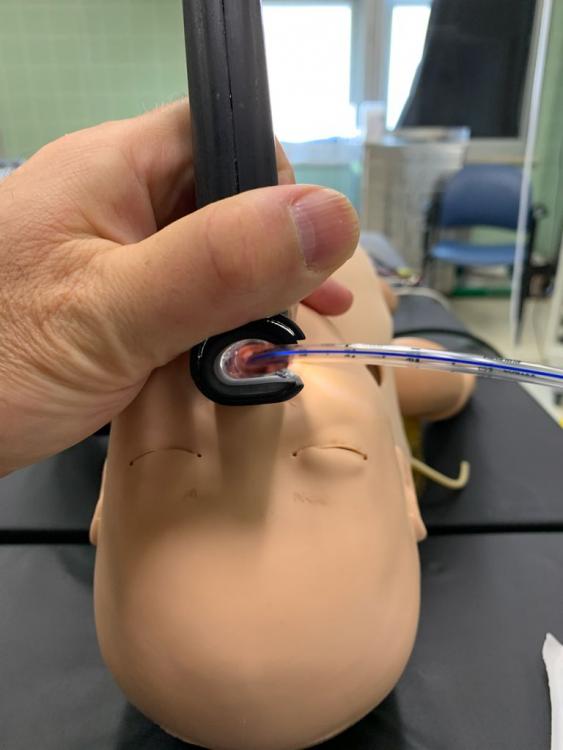
The Viescope Bebe gives an excellent view for infant and neonatal intubation. Join us to see it at the Difficult neonatal airway course in Southampton mproveacademy.com/mprove-academy…

-
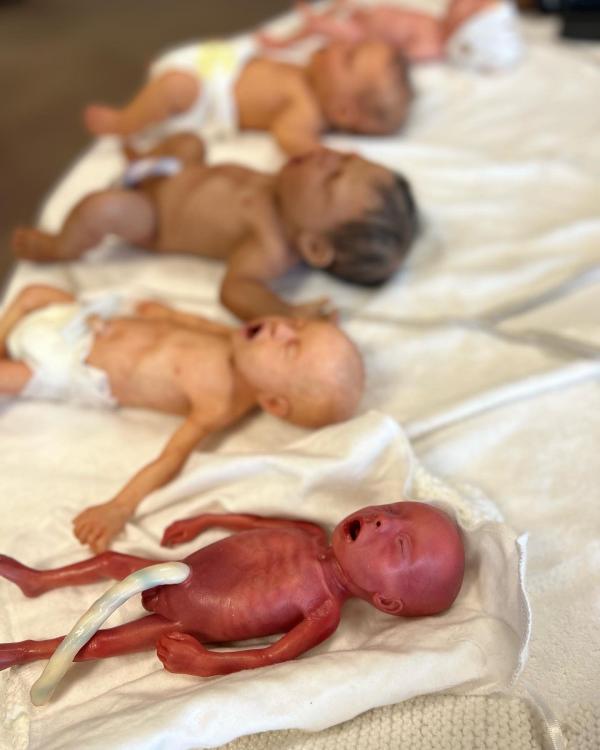
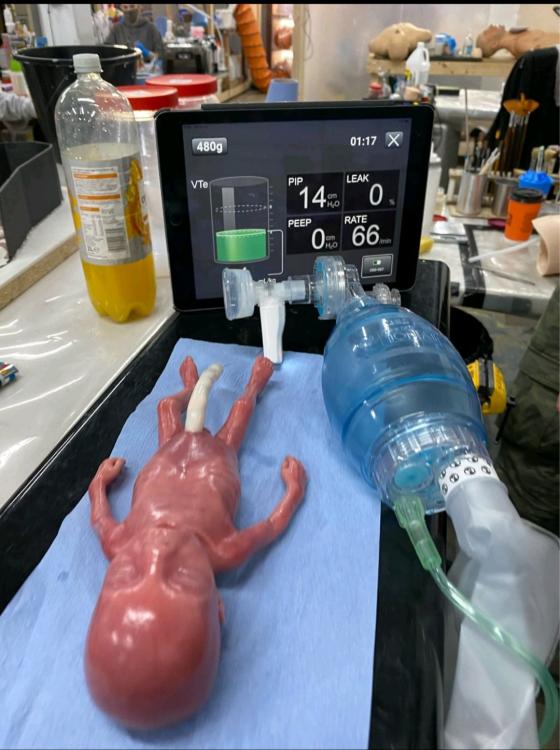
Dear Colleagues We now have dates for the neonatal simulation instructor course for the 8th and 9th of February 2023. Background The MPROvE neonatal simulation instructor course was established in 2012. The concept MPROvE relates to multidisciplinary education of any kind (i.e. multidisciplinary neonatal simulation, or TEL) being used to improve the quality of care and or neonatal outcomes. The MPROvE team delivers the neonatal simulation instructor course in 2 modules. The intention is to help institutions, hospitals, teams and specialties develop faculty skilled in using simulation and technology enhanced learning as an educational tool for quality improvement, delivery of high-quality neonatal care and to improve neonatal outcomes. The course is run in Southampton annually but can be delivered anywhere in the world over 2 days. The team brings the manikins, and the trainers can come down to your institute to train your faculty. Course Overview The MPROvE neonatal instructor training course was established by Neonatologists, and experts in simulation education. The course helps to train individuals in becoming simulation instructors, but the aim is the faculty development of multidisciplinary teams. Training provided includes learning how to develop faculty, run and administer programmes cost-effectively and use simulation and TEL as a tool in their set up. The course addresses the following over 2 days- • Educational principles in simulation, Adult learning theory, • Modelling delivery of your simulation programme • Scenario design, Packaging of Scenarios, Manikin Modification and Moulage • Debriefing principles, Debriefing styles, Difficult Debriefing • Running high fidelity simulation and equipment training • Issues of confidentiality and ethics • Simulating death The course also provides a platform for those wanting to gain accreditation with ASPIH or SSH (CHSE exam) Registration Further information can be accessed through the following link Details of the tentative programme are attached below. Dr Alok Sharma Consultant Neonatologist Corniche Hospital Abu Dhabi United Arab Emirates MBBS MD MRCPCH CCT Paediatrics (Neonatal Medicine) UK Certificate in Health Care Simulation and Education (SSH) Director & Founder Multiprofessional Neonatal Education Academy United Kingdom (www.mproveacademy.com) Module 1 Master Copy.pdf Module 2 Master Copy.pdf Accreditation.pdf

-
Event details Add Tag Share Set Reminder Follow0 Dear Colleagues, The neonatal difficult airway course (NDAC) was established in 2012 as a QI initiative in airway training. MPROvE relates to multidisciplinary education of any kind (i.e. multidisciplinary neonatal simulation, or TEL) being used to improve the quality of care and or neonatal outcomes. The MPROvE team delivers the neonatal simulation instructor course in 2 modules over 1 day. The intention is to help individuals, institutions, hospitals, teams and co specialties to develop skills in crisis resource management, human factors and advanced neonatal airway stabilisation. The MPROvE group has helped develop the course in multiple centres around the UK in Bridgend and Burnley respectively. The course is run annually and is free to paediatric trainees in Wessex Deanery. MPROvE instructors have trained over 200 participants in the UK. Course Overview The MPROvE neonatal instructor training course was established by Neonatologists, and experts in simulation education. The course combines lectures, workshops and simulation to help deliver training in approaching different situations dealing with difficulties in managing the neonatal airway. The intention is to provide teams the ability to deal with these emergencies in a structured way using CRM principles. The course addresses the following over 1 days- • CRM/HRM principles in managing neonatal emergencies • Difficult neonatal airway equipment and adjuncts (Workshops) • Traffic light pathway in managing the difficult neonatal airway • Preparing a difficult neonatal airway trolley • Evidence based use of sedation and paralysis in neonates • Checklists-Pre intubation, Pre extubation • Cant intubate Cant Ventilate Situations in Neonatology • Videolaryngoscopy training • Workshops on using the Glidescope, Airtraq, C-MAC, and Bougie intubation • We run the last part of the day using medium and high-fidelity simulators with modifications to enhance the user experience of realistic clinical conditions. Registration If you would like to register please go to www.mproveacademy.com A sample programme is attached Updated Programme.pdf
-
Dear Colleagues How would you manage tracheal atresia in your set up if diagnosed antenatally Alok
-
until
Dear Colleagues, The neonatal difficult airway course (NDAC) was established in 2012 as a QI initiative in airway training. MPROvE relates to multidisciplinary education of any kind (i.e. multidisciplinary neonatal simulation, or TEL) being used to improve the quality of care and or neonatal outcomes. The MPROvE team delivers the neonatal simulation instructor course in 2 modules over 1 day. The intention is to help individuals, institutions, hospitals, teams and co specialties to develop skills in crisis resource management, human factors and advanced neonatal airway stabilisation. The MPROvE group has helped develop the course in multiple centres around the UK in Bridgend and Burnley respectively. The course is run annually and is free to paediatric trainees in Wessex Deanery. MPROvE instructors have trained over 200 participants in the UK. Course Overview The MPROvE neonatal instructor training course was established by Neonatologists, and experts in simulation education. The course combines lectures, workshops and simulation to help deliver training in approaching different situations dealing with difficulties in managing the neonatal airway. The intention is to provide teams the ability to deal with these emergencies in a structured way using CRM principles. The course addresses the following over 1 days- • CRM/HRM principles in managing neonatal emergencies • Difficult neonatal airway equipment and adjuncts (Workshops) • Traffic light pathway in managing the difficult neonatal airway • Preparing a difficult neonatal airway trolley • Evidence based use of sedation and paralysis in neonates • Checklists-Pre intubation, Pre extubation • Cant intubate Cant Ventilate Situations in Neonatology • Videolaryngoscopy training • Workshops on using the Glidescope, Airtraq, C-MAC, and Bougie intubation • We run the last part of the day using medium and high-fidelity simulators with modifications to enhance the user experience of realistic clinical conditions. Registration If you would like to register please go to www.mproveacademy.com A sample progamme is attached Updated Programme.pdf -
until
Dear Colleagues We now have dates for the neonatal simulation instructor course for the 8th and 9th of February 2023. Background The MPROvE neonatal simulation instructor course was established in 2012. The concept MPROvE relates to multidisciplinary education of any kind (i.e. multidisciplinary neonatal simulation, or TEL) being used to improve the quality of care and or neonatal outcomes. The MPROvE team delivers the neonatal simulation instructor course in 2 modules. The intention is to help institutions, hospitals, teams and specialties develop faculty skilled in using simulation and technology enhanced learning as an educational tool for quality improvement, delivery of high-quality neonatal care and to improve neonatal outcomes. The course is run in Southampton annually but can be delivered anywhere in the world over 2 days. The team brings the manikins, and the trainers can come down to your institute to train your faculty. Course Overview The MPROvE neonatal instructor training course was established by Neonatologists, and experts in simulation education. The course helps to train individuals in becoming simulation instructors, but the aim is the faculty development of multidisciplinary teams. Training provided includes learning how to develop faculty, run and administer programmes cost-effectively and use simulation and TEL as a tool in their set up. The course addresses the following over 2 days- • Educational principles in simulation, Adult learning theory, • Modelling delivery of your simulation programme • Scenario design, Packaging of Scenarios, Manikin Modification and Moulage • Debriefing principles, Debriefing styles, Difficult Debriefing • Running high fidelity simulation and equipment training • Issues of confidentiality and ethics • Simulating death The course also provides a platform for those wanting to gain accreditation with ASPIH or SSH (CHSE exam) Registration Further information can be accessed through the following link Details of the tentative programme are attached below. Dr Alok Sharma Consultant Neonatologist Corniche Hospital Abu Dhabi United Arab Emirates MBBS MD MRCPCH CCT Paediatrics (Neonatal Medicine) UK Certificate in Health Care Simulation and Education (SSH) Director & Founder Multiprofessional Neonatal Education Academy United Kingdom (www.mproveacademy.com) Module 1 Master Copy.pdf Module 2 Master Copy.pdf Accreditation.pdf -
We are creating a new package for umbilical catheter insertion which will include videos in 4K. I am attaching a link to the old video. I am curious what peers would like to see in addition to what’s in it and a critique of it. Insertion of Umbilical Catheters in Neonates This video is 9 years old and things have moved on. Value opinions
-
This is not entirely preventable suturing and securing needs standardisation. The smaller the baby the more difficult. We are preparing a new package for umbilical access which I have been working on for a few months. Currently taking feedback on what it should include and the education strategy.
-
Just reading the NICE guidelines on exchange transfusion. This has Bilirubin thresholds for PT and Exchange. https://www.nice.org.uk/guidance/cg98 What it does not currently address is when the Jaundice after birth is predominantly conjugated. AAP guidance in yester years proposed taking off the direct Bilirubin when it exceeded 50% of the total but I have clinically seen cases in India develop Kernicterus even with a predominantly conjugated jaundice in Sepsis. We had a low threshold for exchange transfusion where we thought benefits exceed risks. I am just curious what the practice is in other units with regards to management of a baby with a conjugated hyperbilirubinemia (Conjugated Jaundice exceeding 50% of the total) where the exchange threshold is exceeded. I am aware aetiology and age as well as gestation and stability would govern management but I am talking about babies in the first 96 hours after birth who clearly are being investigated without ABO or RH incompatibility.
-
Do you do TBDCC or PBDCC
-
Dear Colleagues, I hope this email finds you well and in the best of health and good spirits. I would like to thank you for participating in our preterm epidemiology and ethics module. We along with the European foundation for the Care of Newborn Infants are organising a parent led session on 'Shared experiences of Parents at Limits of Viability'. This session is being run on the 06/05/2021 from 1400-1600 British Summer Time with a schedule as follows 1330-1400 Registration and Waiting Room Time: May 6, 2021 02:00 PM London Join Zoom Meeting https://us02web.zoom.us/j/88589132174?pwd=YThaV2ZPcnlTc203S1VBWjEyVlAwUT09 Meeting ID: 885 8913 2174 Passcode: 989631 1400-1430 Parental role in decision making 'An Ethical Framework'; 'Principles and Pitfalls';Disagreement Professor Dominic Wilkinson 1430-1515 Parent Sessions Chair Silke Mader Chair EFCNI 1. Disagreement between parents and clinicians over the care of the baby L Bonnard Germany 2. Decision – making around specific interventions (stopping intensive care, life-saving care etc) Marni Parnas Canada 3. Antenatal decisions – parental perceptions Mandy Daly Ireland 1515-1600 Q and A Meeting Etiquette All participants will be muted on entry with their camera off All participants must maintain strict silence during the talks Parents and health professionals can write their questions in the chat box while the talks are being given. They should mention who they are addressed to using initials as follows Silke Mader SM Dominic Wilkinson DW L Bonnard LB Marni Parnas MP Mandy Daly MD At the end of the parent session a Q and A session will begin in which Silke Mader chair of the session will direct your questions to the speakers.
-
Parent Session Guest Lecture Parental Experiences at Limits of Viability I would like to invite you all to the session on Thursday the 6th of May from 1400-1530 BST. The session starts with Professor Dominic Wilkinson talking about how we communicate with parents in different situations and cultures and how this changes from prior to birth to after birth. This is followed by a parent session where we will have parents from 3 different countries speaking to us about their experiences in 3 areas How we communicate and what they hear Prognostication and Difficult Conversations Disagreement To join on the day Alok Sharma is inviting you to a scheduled Zoom meeting. Topic: EFCNI Parent Session DW SM Time: May 6, 2021 02:00 PM London Join Zoom Meeting https://us02web.zoom.us/j/88589132174?pwd=YThaV2ZPcnlTc203S1VBWjEyVlAwUT09 Meeting ID: 885 8913 2174 Passcode: 989631 One tap mobile +13462487799,,88589132174#,,,,*989631# US (Houston) +14086380968,,88589132174#,,,,*989631# US (San Jose) Dial by your location +1 346 248 7799 US (Houston) +1 408 638 0968 US (San Jose) +1 646 876 9923 US (New York) +1 669 900 6833 US (San Jose) +1 253 215 8782 US (Tacoma) +1 301 715 8592 US (Washington DC) +1 312 626 6799 US (Chicago) Meeting ID: 885 8913 2174 Passcode: 989631 Find your local number: https://us02web.zoom.us/u/kd3ecw9NZz

-
Guest Lecture https://us02web.zoom.us/j/89068687386?pwd=aWtkckI5L04rN2lWV0xsYTB4N2lWdz09 Topic: Outcomes following a comprehensive versus a selective approach for infants born at 22 weeks of gestation Time: Apr 15, 2021 05:00 PM London 0930 PM India UAE 0800PM We would like to invite you for a talk on Outcomes following a comprehensive versus a selective approach for infants born at 22 weeks of gestation Professor Carl Backes Dr Omid Fatih Departments of Pediatrics and Obstetrics & Gynaecology, The Ohio State University Wexner Medical Center, Columbus, Ohio Join Zoom Meeting https://us02web.zoom.us/j/89068687386?pwd=aWtkckI5L04rN2lWV0xsYTB4N2lWdz09 Meeting ID: 890 6868 7386 Passcode: 806326 One tap mobile +12532158782,,89068687386#,,,,*806326# US (Tacoma) +13017158592,,89068687386#,,,,*806326# US (Washington DC) Meeting ID: 890 6868 7386 Passcode: 806326 Find your local number: https://us02web.zoom.us/u/kWCBElQxS


-
Register here https://www.eventbrite.co.uk/e/the-use-of-videolaryngoscopy-in-neonatal-difficult-airway-management-lisa-tickets-141404146609?ref=eios Videolaryngoscopy in Neonatal Airway Management Webinar Friday 1pm GMT https://www.eventbrite.co.uk/e/the-use-of-videolaryngoscopy-in-neonatal-difficult-airway-management-lisa-tickets-141404146609?ref=eios

-
Course details-Online module starting February 12th 2021 till 30th April Course Programme Registration-Contact Dr Alok Sharma on draloksharma74@gmail.com Course Structure and Fee 100 pounds


-
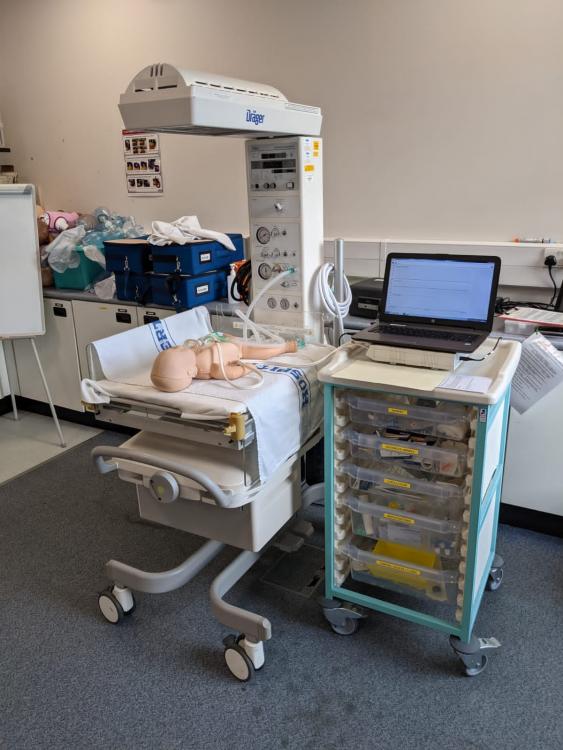
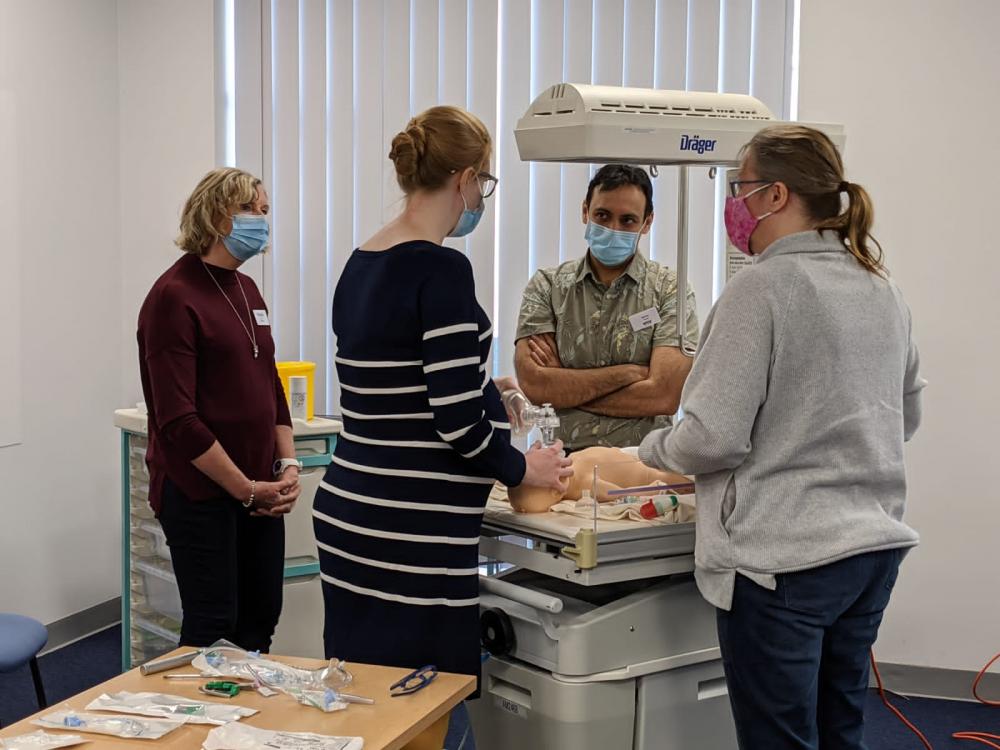
Perinatal Care of the Preterm Baby-Epidemiology and Ethics This is an online module being organised by the MPROvE Academy starting from the 12th of February till the end of April 2021. The content covered includes limits of viability, prenatal counselling, communication, prognostication, decision making, and a lot more as outlined below. The course has been broken up into content that can be imbibed weekly with a webinar covering that topic. The course has online content, and videos for review by the participants. Participants can access this from anywhere in the world. For more details a video of the course is attached. For registration please contact Dr Alok Sharma Consultant Neonatologist on draloksharma74@gmail.com
-
Dear Colleagues I am writing to you about your dose range and experiences of using fentanyl infusions for sedation. What is your range and what side effects have you seen. Alok
-
-
This series of videos takes viewers through a human factors approach to management of neonatal emergencies. This video addresses the phases of a neonatal emergency which can be compartmentalized into Situation Escalation and Management. The concept is to allow teams to get a multidisciplinary team capable of advanced neonatal life support through escalation so that they can manage the situation. The basic principles of thermoregulation, airway, breathing, and circulation apply to all neonatal emergencies. Certain situations require specialist teams, equipment and specific management. Where possible such situations are managed as anticipated emergencies. Some situations will not allow for preparation time and planning. These are unanticipated emergencies. The aims of the videos in this series are to provide neonatal teams with strategies to improve their approach to neonatal emergencies. The focus is on standardizing 1. Preparation 2. Escalation * for Help 3. Teamwork 4. Communication 5. Leadership 6. Equipment management 7. Management of systems 8. Management of specific conditions diagnosed antenatally or postnatally 9. Use of Checklists Video
-
.jpg.59ab5a1ef4cde9744d175a335a798aac.thumb.jpg.f1c20d41d563c7b7a5dad4d4cfb7848e.jpg)