_0b6494.png)
_5c07e1.png)
_0d1bd3.png)
_75149d.png)

Everything posted by Stefan Johansson
-
Do you mean that there are internal / abdominal adhesions that interfere with intestinal function?
-
Could explain more what you mean by a Clinical Pathway? That certain things are done (like investigations) at certain time points?
-
@mosarrat we do not use this practise but I don't know why. I searched pubmed but could not find any references on decompression. Anyone else knowing more about this?
-
 While we have been sharing updates here on Twitter and Facebook for some time, we finally also have a page on LinkedIn. Also follow 99nicu on LinkedIn The web link is https://www.linkedin.com/company/99nicu/ Best regards from the HQ's!
 -
Register for the 99nicu Meetup! In the virtual 99nicu Headquarters, we are now very busy with all preparations for our upcoming Meetup, AKA the Future of Neonatal Care conference. This third conference will take place in Copenhagen, 7-10 April, and we are already thrilled about what to come. Our vision for the 99nicu Community is to offer an Internet platform where neonatal staff from all over the world can share questions, experiences and expertise. Therefore, we are grateful to see, as previous years, that our conference “footprints” our global outreach and attracts a truly international group of delegates. There are currently 130 delegates coming from 30 countries, from East to West, from North to South. Naturally, we have room for You as well! What makes the Future of Neonatal Care conference different from other meetings? First of all, our principal idea is the one of postgraduate learning. To provide evidence-based neonatal care, we all need to refresh and refine our knowledge base. That is pretty obvious, as our work as neonatology professionals gravitates around know-how. IMHO, we can all improve here. Secondly, we believe conferences should be a place to exchange expertise and experience, and give anyone a chance to ask questions. Every 45 minute session typically includes a 30 minute lecture, to give sufficient time for discussion. Participants at our previous conferences especially enjoyed “very good discussions” and “plenty of time for questions”. We use the smartphone app sli.do (https://www.sli.do/) to allow immediate feedback from participants. Through polls and multiple-choice-questions during lectures, delegates learn from each other. Most importantly, lecturers also get an opportunity to comment directly on aspects popping up. Thirdly, we aim to place topics in a forward-facing context, how neonatology will develop in the future. Why do we need to know about cord clamping? How should we support breathing of preterm infants? What inotropes shall we use when? Shall discharge MRIs be standard of care for preterm infants? Why do we need to rehearse simulated scenarios? Great program! We are honored to welcome a great set of Faculty members to Copenhagen. To share a few examples: Barbara Schmidt and Haresh Kirpalani lead a workshop on when evidence should change the standard of care, and how to interpret non-inferiority trials Mortein Breindahl will lecture and lead a workshop on neonatal transports, together with Christian Heiring Victoria Payne will share her expertise on prevention of CLABSI David Edwards will challenge our minds about MRIs in preterm infants Liisa Lethonen and Sari Ahlqvist-Björkroth will, for the third time, run their highly appreciated workshop on Family-based care Brett Manley will tell us if/how to “Go with (high) flow” Gorm Greisen, Ulrika Ådén and Eduard Verhagen will engage in several lectures and a debate on practices and ethics around the border of viability, and parent-participation in decision-making. As you can see, we have lots to look forward to! Join us at the Future of Neonatal Care in Copenhagen 7-10 April! And yes, we will share take-home messages from the Future of Neonatal Care from our Twitter account @99nicu. As previous years, the hashtag will be #99nicuMeetup
-
CPAP nursing is key. We often rotate between prongs and mask if CPAP is given over longer time periods. We may also protect the skin that is pressured (like around the nostrils and nose tip) with a barrier (softish) tape to avoid direct contact with tubings. And read this paper in PLOS One a few weeks by Srinivas Murki et al in Hyderabad/India: https://journals.plos.org/plosone/article/comments?id=10.1371/journal.pone.0211476
-
Check out this video about Monivent!
-
I'd like to share info about a (possibly) not so well-known Evidence Alert service made available by McMaster University. Visit this link and register for alerts on research papers in any field (like neonatology!): https://plus.mcmaster.ca/EvidenceAlerts/Default.aspx Emails do not come often, like ~1-2 /month. The latest included the following papers: Article Title Discipline Rele- vance News- worthiness Efficacy and Safety of EMLA Cream for Pain Control Due to Venipuncture in Infants: A Meta-analysis. Pediatrics Pediatric Neonatology 6 6 Enteral lactoferrin supplementation for very preterm infants: a randomised placebo-controlled trial. Lancet Pediatric Neonatology 7 6 Therapeutic hypothermia for mild neonatal encephalopathy: a systematic review and meta-analysis. Arch Dis Child Fetal Neonatal Ed Pediatric Neonatology 7 5 Just click on the title to review the abstract and/or PubMed record.
-
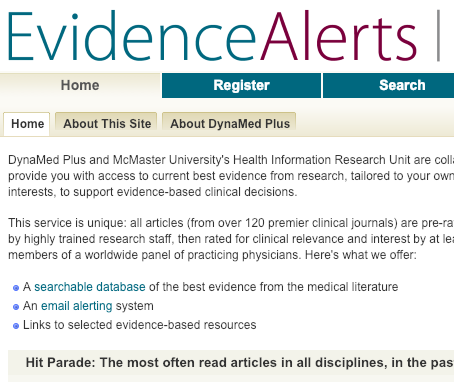 DynaMed Plus and McMaster University's Health Information Research Unit are collaborating to provide you with access to current best evidence from research, tailored to your own health care interests, to support evidence-based clinical decisions. This service is unique: all articles (from over 120 premier clinical journals) are pre-rated for quality by highly trained research staff, then rated for clinical relevance and interest by at least 3 members of a worldwide panel of practicing physicians. Here's what we offer: A searchable database of the best evidence from the medical literature An email alerting system Links to selected evidence-based resources Register (free) here: https://plus.mcmaster.ca/EvidenceAlerts/Registration.aspx
 -
@satyen75 - thanks for your input. Do I understand you correctly that you do not set the "NEC" label on x-ray findings of intramural gas, IF lab results and clinical signs are all normal? Here's two references on the problem: https://www.ncbi.nlm.nih.gov/pubmed/11421417 https://www.ncbi.nlm.nih.gov/pubmed/12736409
-
I would like to hear about how you diagnose and manage pneumatosis intestinalis. the background - we sometimes comes across infants (mostly preterms) with some GI symtoms, like blood in stools, but without clinical signs and no lab signs towards NEC. But the xray shows some intramural gas. we usually start conservative NEC TX (fasting, antibiotics, TPN) but stop it after a few days of normal blood tests and if xray normalize. there are some Pubmed reports on this seemingly more benign phenomen but would be great to hear how you handle this.
-
I agree with the rationale put fw by @rehman_naveed. We have though used gel sometimes in well preterm infants solely on enteral feeds and with sugars in the range of ~1.8-2.0 mmol/L, and where we have tested gel firstm before starting glucose iv. Usually succesfully. I recall the lowest gest-age to be 33+ weeks.
-
-
@talatahmed@sbcglobal.net - I fw your request to the meeting agency, expect a reply tomorrow.
-
@Maureen Spain Here's the URL: https://www.mproveacademy.com/quality-mprovement/toolkits
-
If you find such videos on Youtube, please share them in the Hemodynamics forum (here: https://99nicu.org/forums/forum/17-cardiovascular-problems/) When posting a topic or a reply and pasting a Youtube URL, the video is automatically embedded
-
-
 A friendly reminder - this is the last week you can register as an Early Bird for our 3rd "Future of Neonatal Care" conference (AKA the 99nicu Meetup), 7-10 April in Copenhagen, Denmark. The program includes important topics such as BPD prevention, cord clamping, HFNC, neonatal transports, transfusions, pain management, NEC-reducing strategies, and management around the border of viability. Furthermore, the last day there will be workshops on EBM, transports, family-centered care and echocardiography. Click here for more information, and to register! Looking fw to meet up in Copenhagen!
 -
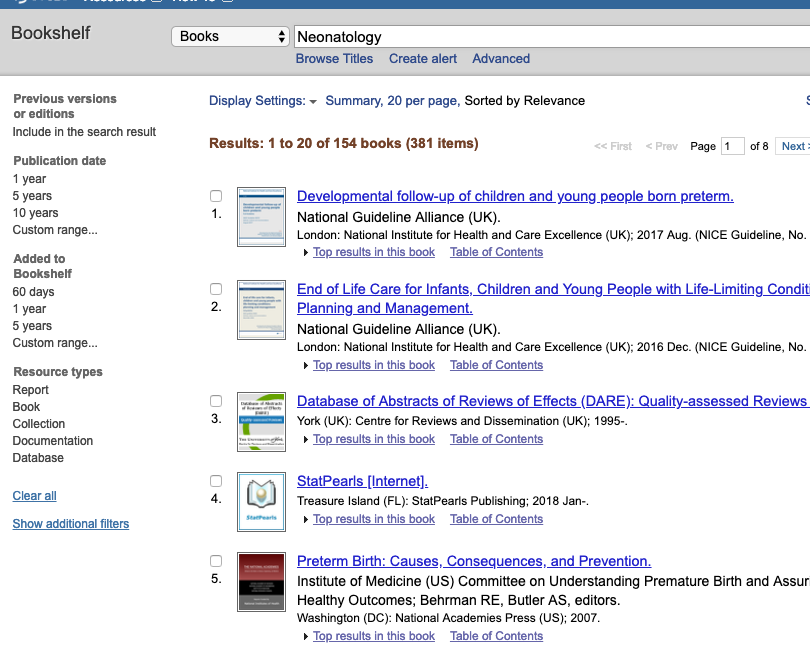 Free online books and publications related to neonatology.
 -
-
@Dr Vira - it is indeed allowed to share links but sharing PDF's of publications not open-access (i.e. downloaded from hospital libraries for example) cannot be done. If we find out, we delete such attachments, but the responsibility is the posting member's. We state early in our Terms (agreed upon when registering) that copyrighted material shall not be posted: https://99nicu.org/terms/
-
@Dr Vira - is the AAP policy available online? @AntoineBachy - I summarize our national guidelines in Sweden, try Google translate http://neo.barnlakarforeningen.se/wp-content/uploads/sites/14/2017/12/Osteopeni-20-dec-2017-reviderad-slutversion.pdf Yes, we do screening in infants based on BW, and screen infants <1500g, and check blood levels of phospate and ALP at 4-6 weeks. given low phospate (<1,6 mmol/L) and/or high ALP (>15 µkat/L), we do x-ray of the wrist and if there is rachitis - we set the osteopenia diagnoses All infants <1500 g are given supplemental Ca/P, and those with rachitis continue until the x-ray of the wrist has normalized. We had this topic on the first 99nicu Meetup in Stockholm, find the (low-tech) video below
-
I would just like to share a new document by the World Health Organization, WHO. In a report that come out the other week, WHO present its key findings from an upcoming publication "Survive and thrive: transforming care for every small and sick newborn." While we commonly think about neonatal care and preterm infants in high-resource settings, there is really a lot of public health work to be done when it comes to improve neonatal care in low-/mid-resource contexts. In fact, the world will not achieve the global target to achieve health for all unless it transforms care for every newborn. What I specifically like is that this documents really acknowledge the power of family-based care. To save newborns, the report recommends: Providing round-the-clock inpatient care for newborns Training nurses to provide hands-on care Harnessing the power of parents and families Providing good quality of care Counting and tracking every small and sick newborn Naturally, countries need to allocate the necessary resources. While we (in the rich world) may think that a LOT of money is needed, WHO estimates that an additional investment of US$ 0.20 cents per person can save 2 of every 3 newborns in low- and middle-income countries. IMHO, that's a small investment for the best of benefit. Click here to find the report on the WHO web site. And click here to find "Social media tiles" illustrating the key findings, which I also share below.
-
Great to bump this topic! I made a screen shot of the photo you referred to (below), did those infants have such marked "out-stamped areas" at the iris margin? I also looked into the first suggestion Ectropion uvae, and found something that seemed to look like your first drawing. Which one best illustrates your clinical finding?


-
Is this something you are looking for: https://www.ncbi.nlm.nih.gov/pmc/articles/PMC3653511/