_0b6494.png)
_5c07e1.png)
_0d1bd3.png)
_75149d.png)

Everything posted by Stefan Johansson
-
I completely agree with JACKs first post, that the driver is more important than the machine. I remember Martin Keszler speaking on HFOV long ago. Experimental data on HFOV was very promising in terms of clinical outcomes, but results from clinical trials was not that convincing. One of his comment of this discrepancy was that HFOV, being a very powerful tool, was put in hands of people at the beginning of the HFOV learning curve. My personal experience is limited to Stephanie, Leoni PLus and Drager Babylog. Given that fact that (tidal) volume matters more than pressure when it comes to lung injury, some kind of volume control is needed. Through various ways, this can be achieved with all those three machines.
-
Hi! I understand your point, but I would like to stress the fact that all questions or comments are welcome, regardless of degrees, experience etc. Ever since we started, we have nourished a vision of 99nicu being a place where everyone feels equally welcome and free to contribute. You should to feel this way too! (This is a bit off-topic, but I personally think the medical world (as many other 'worlds'") is a bit tied back by strong hierarchies that make people to step forward & backward for reasons that is more related to power-by-position than knowledge/interest/enthusiasm/ambitions.) There's a balance between getting reminded and getting annoyed by more frequent emails. We'll discuss this in the Team! With regard to competitions... funding is really a major issue, partly because of our lack of time to chase potential sponsors. I personally wished more people would like to sign up as Supporting members (10 euro/year). Since we launched this option more than one year four members have upgraded, despite the VIP status this membership included
-
How is it going?! Do not hesitate to post the good news in the Celebrations Social group
-
I visited Hot Topics last year and one of the best lectures (according to me!) was held by Judy Aschner, about the use of sodium bicarbonate being principally useless (and could even have adverse effects). Please click here to read an excellent review article on the topic by Aschner and Poland. Unfortunately only the abstact is available for free, but the article is worth to order! As many other units, we have a strong tradition to consider the use buffer, if pH is less than 7.25 and BE less than -5 (at least in in ELBW infants) The article by Aschner and Poland has been subjected to some debate in our units. The major argument in favour of buffer is that we do not use sodium bicarbonate but Tribonat, which is a combination of trometamol (THAM), bicarbonate och acetate. The theoretical idea behind Tribonat is to achieve intracellular (THAM), extracellular (bicarb & acetate). Personally, I have switched to a quite restrictive approach and rarely use buffer, but try to consider the etiology of the base deficit in the management of acid-base. What's your experience and view upon the use of buffer?!
-
Hi again. I just checked the protocol for our delivery unit (about 6000 deliveries/y). They use only scalp lactate (and not pH), and use the "Lactate Pro", manufactured by Arkray Inc, Japan. The instrument is a "bedside" and very handy thing, about 5x5x1 cm. Lactate levels used in decision-making are <4.2 normal 4.2-4.8 preacidotic / increased attention / repeated testing >4.8 acidotic, deliver asap!
-
Read this classic article by Gonzales and co.workers!
-
Is the summary intended for a journal, a presentation in your own department or a legal document? I personally like the following main sections in (any case report) 1. clinical scenario 2. data from investigations (lab, x-ray etc) during intensive care 3. data from postmortem investigation 4. discussion, what's known from the literature 4. summary of your case and take-home-message (what have we learned)
-
This is really a HUGE topic... I suggest you browse www.pubmed.org, use the MESH term for RDS (print "Respiratory Distress Syndrome, Newborn"[Mesh] in the search box) Another source is the web site www.curoservice.com, it is set up by the Chiesi group and therefore not an independent web site. You will need to register there to get access, but registration is free.
-
This is a conceptual - philosophical issue that may also be discussed in the Lounge or in a Blog post. But I decided to post it here! This interesting thread underscored what I have thought about for a pretty long time, that the management of infections has a pretty weak evidence-base. And that we should try do something about it! We do not know terribly much which drug combinations to use and dosing schedules. You may think "so what... are there not a lot of clinical management scenarios that cannot be backed up by the level-A evidence?" I'd say that's a completely valid point, but infections are really an every-day clinical problem. It would not be hard to recruit many 100s of infants in well-designed clinical trials, where various treatment protocols could be evaluated. I think one would glance at Pediatric Oncology (completely different field, I know). In Scandinavia (and I guess in other regions too), they have been very successful in designing well-functioning treatment protocols, by tedious but efficient collaborative work. One may argue that Pediatric Oncology works with more expensive drugs, and I agree that antibiotic-treatment may not attract a lot of industrial funding. One the other hand, funding from other (independent) sources may not prove to be that difficult considering that antibiotics are so cheap. Another argument not to start such trials is that the etiology of infections is a moving target (species differ, various strains develop etc-etc). I'd say - a moving target - makes the challenge even more adventureous! Let's clear up the mess of antibiotics, immunoglobulins, granulocyte stimulation, pro-biotics etc-etc. We need to know more, to do better.
-
Hi! Our obstetric dept use scalp lactate and use lactate levels for decisions to perform emergency caesarean sections (toghether with other parameters like CTG). I have no idea what equipment they use for their analyses, but it is a bedside technique as I understand it. I will ask them about details (when I go on duty on Sunday again).
-
Much better! Changed! Now, post in the Celebrations Group when you want to be celebrated! http://www.99nicu.org/forum/group.php?groupid=4
-
So... I have created one. I could not figure out a good name though. Can you come up with a better suggestions than "Congratulations". You find this group (and others) here: http://99nicu.org/forum/group.php
-
Hi! So you have a degree ahead, you'll do great! I like your ideas how that we can promote and cheer each other. As far as I know there are no applications (like on Facebook and similar sites) to "bump" and send gifts to each other, I will keep my eyes open for such extensions to our software. But, there are ways to solve this. You/we could start a discussion thread in the Lounge, you/we can blog about the good things we do and achieve. Maybe the best option would be to start a Social Group for salutes! (Social Groups can be added by anyone, you can start your own Krakow Group for instance) I open a new Social Group, let's see what happens! NB: Only logged in members have access to the social groups. Like the Lounge, they are closed for non-members.
-
Locally, we have an electronic report system on our intraweb (the same for the whole Karolinska university hospital). Anyone in the staff can report "local incidents" in our units and a group analyse and classify all reports according to pre-defined criteria. All kinds of events can be reported here: poor cleaning, drug doses missed, difficulties to have emergency x-rays done within a reasonable time, etc-etc. The event report together with the analysis is reported back on a monthly basis, to our staff AND to the heads of all departments involved in the report. For example, if the report is about an issue with emergency x-rays, the head of the radiology department gets a copy of the report+analysis. The idea behind is to have a control system with a feedback mechanism, resulting in an improved quality of care. This report system is confidential "externally", although the group knows who's reporting what. For serious adverse events, the department can report to the National Board of Health and Welfare, which then decides whether an audit should be done with independent experts. If parents feel that serious mistakes have been done, they can also report to the National Board of Health, and have "their case" scrutinized. These two latter kinds of reports are quite unusual.
-
I bought a pair of crocs for home use, and thanks to your post I feel confident about my first impression (that people disagreed with) - these footwear sticks to the floor! I guess they are better for outside use, where the surface is not completely flat. My son has a pair (for outside use) and he likes them a lot. I have a pair of "anti-static"plastic clogs, and I still feel like a wizard!
-
1. every 24 hours 2. we don't have this strategy 3. we leave all parameters (although one may argue that CDP is abrupted during suctioning, and a new lung recruitment may be needed) 4. We have no written protocol but guidelines every need to learn: no suctioning below the tube (no rules without exceptions...), and infrequent suctioning (no strict time intervals, but we really try to be gentle with suctioning).
-
In the midst of all "funny" mails that comes to my mailbox, I think this one is a good one... for me and others struggling with English grammar and style!
-
Have you ever experienced a "crash"? We have computerized medical records and we recently had a major database failure for about 18h, which dramatically influenced patient care. The hospital admin told everyone to move over to "manual routines", but that was not easy since noone is used to real paper work any longer. I reckon that technical problems with a system when everything is connected may a great impact.
-
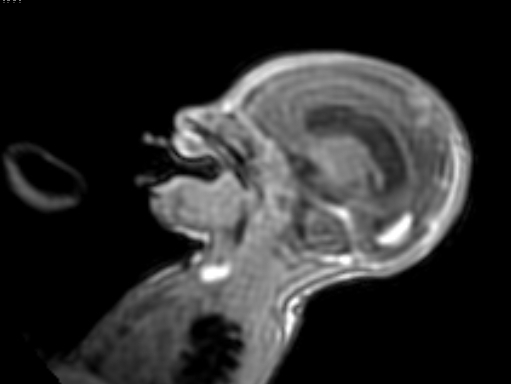
I am interested in pulse oxymetri screening, but we do not perform such screening in our maternity units. Yesterday, a Swedish group published in BMJ, a large screening study including almost 40.000 infants. It seems that the article is available in free full text format here! My question to you is... since this method has been discussed for a pretty long time now - do you already now perform pulse oxymetri screening before routine discharge of well babies? If yes, what is your experience?A picture from a recent MR investigation, very good visualisation of a pacifier!
 Aha! Sounds like an interesting location!Sorry, I wished I could be of any help but we do not use this filter. But (offtopic ), I get curious about the isolated island?!Great resources, thanks for posting these links!I have got a new job , from the 16th of March I will be the medical editor-in-chief at the Swedish Medical Journal (Läkartidningen). It may seem as the greatest of surprises, but those who know me are not surprised. Since my late teens, I have been involved in various info/media projects (local newspapers, student papers, free-lance writing, 99nicu...). And, I am really looking forward to this new challenge! During the recruitment process I questioned myself many times how I would feel about not working clinically, caring for infants and parents. Some of my colleagues have argued that I am trained to live on the edge of neonatal medicine (take-home message - do not leave us!). And to be honest, this is something I still wonder about. Neonatal care is a fantastic medical field! As a compromise, I will work 80% (i.e. Mon-Thurs) for the Journal, and keep 20% of work for clinical commitments / research. Time will tell whether this combo will work out, but that's my way staying in touch with the rewarding work in the NICU. This new job will affect my work for the 99nicu community. The editorial board felt there's a risk of conflict-of-interest between the Swedish Medical Journal - 99nicu. Although I am pretty sure these two publication platforms would not interfere/compete etc, I need to be loyal to my new employer. I will still be around as a resource for the 99nicu Team, but I will leave the administration/moderation to the other members of the 99nicu Team. My colleague and friend Alexander Rakow, one of the founders of the 99nicu, will be coming back to chair the Team instead of myself.