
_0b6494.png)
_5c07e1.png)
_0d1bd3.png)
_75149d.png)

Everything posted by Stefan Johansson
-
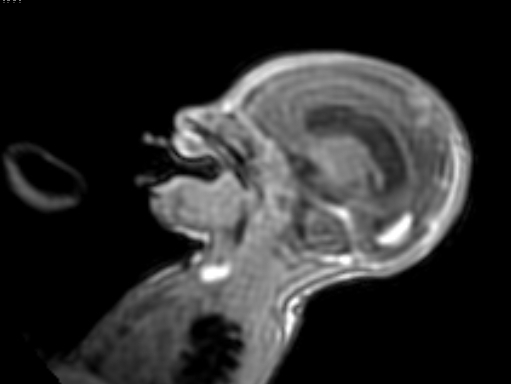
I am interested in pulse oxymetri screening, but we do not perform such screening in our maternity units. Yesterday, a Swedish group published in BMJ, a large screening study including almost 40.000 infants. It seems that the article is available in free full text format here! My question to you is... since this method has been discussed for a pretty long time now - do you already now perform pulse oxymetri screening before routine discharge of well babies? If yes, what is your experience?A picture from a recent MR investigation, very good visualisation of a pacifier!
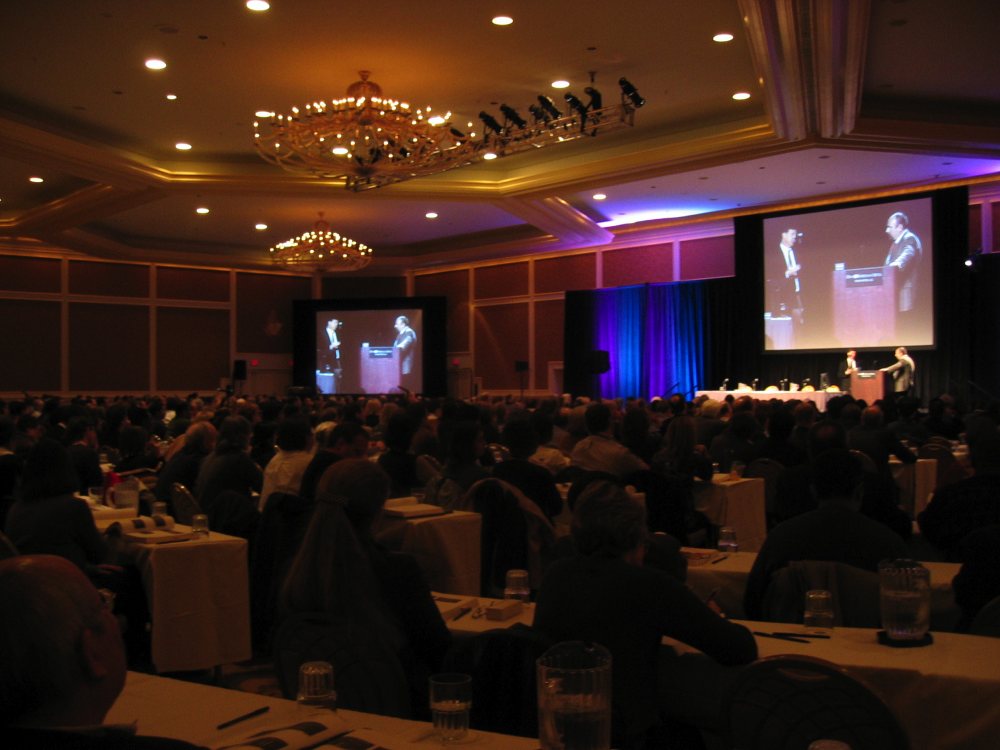
 Aha! Sounds like an interesting location!Sorry, I wished I could be of any help but we do not use this filter. But (offtopic ), I get curious about the isolated island?!Great resources, thanks for posting these links!I have got a new job , from the 16th of March I will be the medical editor-in-chief at the Swedish Medical Journal (Läkartidningen). It may seem as the greatest of surprises, but those who know me are not surprised. Since my late teens, I have been involved in various info/media projects (local newspapers, student papers, free-lance writing, 99nicu...). And, I am really looking forward to this new challenge! During the recruitment process I questioned myself many times how I would feel about not working clinically, caring for infants and parents. Some of my colleagues have argued that I am trained to live on the edge of neonatal medicine (take-home message - do not leave us!). And to be honest, this is something I still wonder about. Neonatal care is a fantastic medical field! As a compromise, I will work 80% (i.e. Mon-Thurs) for the Journal, and keep 20% of work for clinical commitments / research. Time will tell whether this combo will work out, but that's my way staying in touch with the rewarding work in the NICU. This new job will affect my work for the 99nicu community. The editorial board felt there's a risk of conflict-of-interest between the Swedish Medical Journal - 99nicu. Although I am pretty sure these two publication platforms would not interfere/compete etc, I need to be loyal to my new employer. I will still be around as a resource for the 99nicu Team, but I will leave the administration/moderation to the other members of the 99nicu Team. My colleague and friend Alexander Rakow, one of the founders of the 99nicu, will be coming back to chair the Team instead of myself.I am sorry but I do not know. However, this infant was critically ill, and I would guess that we did not have a valid recording of the body length. So, my guess is that weight was used to derive BSA.Must admit that we use weight as the correcting factor (/kg) when it comes to medications at least. A few years we had an extremely preterm infant with Hemophagocytic lymphohistiocytosis (HLH) who were treated with cytostatic drugs. If I recall this correctly, the pediatric oncologists calculated doses by body surface area. This is a bit off-topic, but this case was published: http://www.ncbi.nlm.nih.gov/pubmed/17888050A few pictures from Washington!







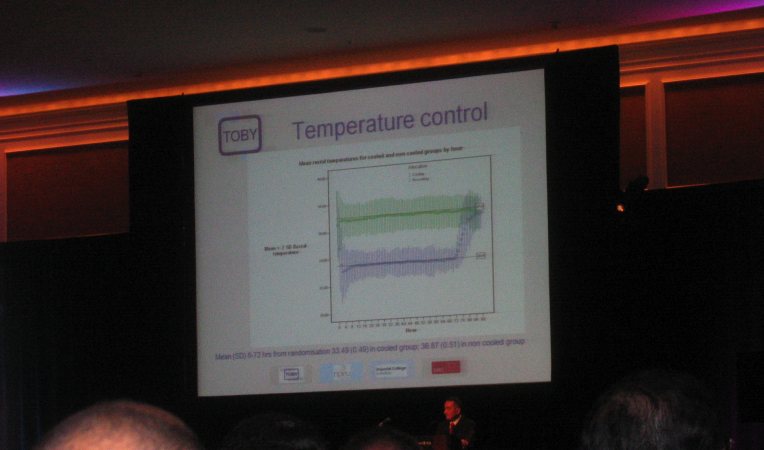
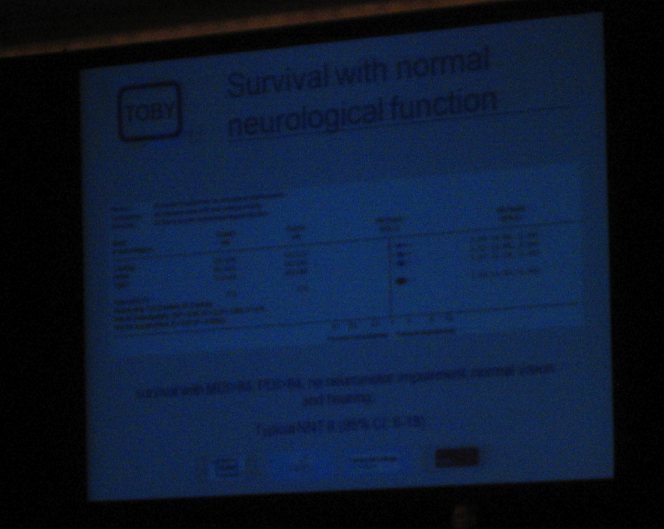
 Interesting case! I wished I could give you advice, but I have no personal experience in a case like this. No hits in PubMed?We try to start minimal enteral feeding asap, usually during the first days of life. If we go for bolus feeding we typically start with 0.5-1 ml every 3 hours in the smallest infants, and keep this small volume until the baby gets more stable and tolerate larger volumes. After some research done in our department (see link below), we typically start with continuous feeding now. http://www.ncbi.nlm.nih.gov/pubmed/16027693 And a word of caution: we have a lot of respect for feed residuals especially in the most immature infants. But minimal feeding is usually tolerated well.I am at the Hot Topics congress. Despite my severe jet-lag... it's a great congress, on clinically relevant aspects of neonatal care. If you have the opportunity... come here next year! For example; hypothermia - it's here to stay, I am sure. And, I must admit I have been a sceptic, but taking the TOBY trial together with the older trials... it's no doubt of the improved outcome in terms of increased survival, free of disability. Still, many of treated infants will have to live with sequels of perinatal asphyxia. The numbers-needed-to-treat seems to be in the range of 5-10, i.e. for every 5-10 treated infants, there will be one without disability. Whether this is good enough or not may be up to debate, I would say it is good enough! The best lecture today was about a commonly used therapy; buffering with bicarbonate. Take-home message - bicarbonate is a completely useless therapy. Do not use it! And read the recent article by Judy Aschner and Ronald Poland, in Pediatrics 2008;122:831-5. Best wishes from Washington DC!If you wish to purchase this book you can visit the publisher on this link: http://www.xlibris.com/TheNICURollercoaster.html Alternatively, you can buy this book from Amazon.com. 99nicu is a partner of Amazon and a purchase using the link below, results in a small portion of the order value being paid back to 99nicu. At no extra cost for you. Click here to order this book through Amazon.com! Visit this page to read more about the partnership with Amazon, and the 99nicu bookshops!Well, I have limited but some experience with the Leoni+, and as I understand there's not really a volume set ventilator, but a pressure controlled ventilator where you can set a (tidal) volume upper limit. Maybe someone else with more experience have better input than this.Great, I'll meet you there! And, being a 99nicu junkie, can I book a computer in advance?Hi! I am not sure if I understand what you mean by "back to sleep" - do you mean how infants are prepared for discharge home, or the transition from level-3 to level-2 care?I think Martin Keszler has coined "PEEPophobia" - I have heard him lecture about the adverse effects of too low PEEP enough times to adopt the concept of "optimal lung volume". I think the take-home-message from Keszler makes a lot of sense. Sufficiently high PEEP helps to maintain patency of the smallest airways, reduces atelectasis, improves ventilation/perfusion matching. I am sorry to say that we do not use the volume guarantee mode (we use Leoni-ventilators that lack true VG). We generally use PEEPs of 4-5 cm when the infants are on MV. When we use HFOV we use a lung-recruitment strategy where we increase PEEP/CDP until we feel oxygenation is good.I will be staying at the congress hotel (The Omni Shoreham Hotel). Unfortunately the travel schedule is very tight, arriving Sunday evening and leaving Tuesday afternoon, but let's hope we find an opportunity to meet anyway!A friend of mine went into journalism after his medical studies, and he is now editor-in-chief of a large newspaper. We had sushi a few weeks ago, and among other things we discussed my favourite spare-time project... the 99nicu community. One issue is what I believe is a conflict how we run 99nicu: the idea of true independence (from the market) and the fact the funding is needed to maintain the community. My friend enlightened me how the media world works: although information wants to be free and independent, someone has to pay for it. And, noone questions the validity and independence of der Spiegel, le Monde, the Guardian or the New York Times, for the fact that they are all funded by adverts. To accomplish to their publicistic missions, they have big market departments trading ad space for money. I do not intend to compare New Your Times and 99nicu, but my friend has a point, we need funding too. I promise that 99nicu will not drown in adverts, but I feel more confident about the necessity of selling ad space in our newsletter 99nicu News and make sponsors sign up for display of their logos here at the web site. Today, 99nicu has more than 100 unique visitors per day, and the possibility to reach the highly specific audience we represent should be attractive for companies marketing products in neonatal medicine. Bottomline: it is true - there is no such thing as a free lunch.We only use nasogastric tubes. They are secured the following way: a small rectangular hydrocolloid tape is attached to the chin, and then the tube is taped on top of that. We practise contineous feeding ("milk drip") on the tiniest infants (typically those below 28 weeks) and intermittent bolus feeding on more mature infants.Check this out in NEJM; about the apgar score in the "21st century" Article: The Continuing Value of the Apgar Score for the Assessment of Newborn Infants Commentary: The Apgar Score in the 21st Century My personal opinion is that Apgar score is should be considered as one of many factors in attempts to predict outcomes. Need of resuscitation, umbilical blood gases and other lab tests, the degree of encefalopathy, aEEG (CFM), etc-etc all add to the picture.Hmm, I am not completely sure if we have a clear/written policy about this! We weigh our infant pretty often, every other day usually, or even every day, especially if there are fluid / water balance issues. The most instable ones are not weighed at all during their instable periods. I'd say our strategy is a bit contradictory; we weigh the stable ones too often, and the instable ones to seldom... Incubator change: linens are changed with the infant inside and when we need to clean the incubator, we just rollmove the infant from the old to a new and clean incubator. Minimize stress: we let parents take care of as much of the care as possible, always "support" the infants (NIDCAP language!) In practise, the "top and tail" can be done during the morning, day or evening. Baths: no limits in terms of gest-age or weight, but infants must be stable in circulation and breathing.







Account
Navigation
Search
Configure browser push notifications
Chrome (Android)
- Tap the lock icon next to the address bar.
- Tap Permissions → Notifications.
- Adjust your preference.
Chrome (Desktop)
- Click the padlock icon in the address bar.
- Select Site settings.
- Find Notifications and adjust your preference.
Safari (iOS 16.4+)
- Ensure the site is installed via Add to Home Screen.
- Open Settings App → Notifications.
- Find your app name and adjust your preference.
Safari (macOS)
- Go to Safari → Preferences.
- Click the Websites tab.
- Select Notifications in the sidebar.
- Find this website and adjust your preference.
Edge (Android)
- Tap the lock icon next to the address bar.
- Tap Permissions.
- Find Notifications and adjust your preference.
Edge (Desktop)
- Click the padlock icon in the address bar.
- Click Permissions for this site.
- Find Notifications and adjust your preference.
Firefox (Android)
- Go to Settings → Site permissions.
- Tap Notifications.
- Find this site in the list and adjust your preference.
Firefox (Desktop)
- Open Firefox Settings.
- Search for Notifications.
- Find this site in the list and adjust your preference.