_0b6494.png)
_5c07e1.png)
_0d1bd3.png)
_75149d.png)
(26).png.c97dc453b63ee0a4658a82af0237d93f.png)

-
Hello everyone, CEPAS 2026 is getting close. The congress takes place in Lyon, 28–31 October, and 99nicu will be there - in the middle of things! Where to find us We have a home base in the Meet & Connect Zone, in the Early Career Professionals' Space. Come by, say hello, ask questions, or just sit down for a moment between sessions. If you have ever posted here, or only read quietly for years, you are equally welcome. Our two sessions 🗓️ Thursday 29 October, 10:10–10:25 — a short introduction to 99nicu, and the start of our Treasure Hunt. Small, fun, and a good excuse to talk to people you have never met. 🗓️ Saturday 31 October, 12:45–13:15 — our Anniversary Session. We begin with an interactive clinical quiz, then open the floor for discussion. Twenty years of this community, and the best part is still the conversation. One practical reminder The regular registration rate ends on 30 September. From 1 October, late rates apply. For example, the member fee goes from €550 to €685, and the early career / nursing rate from €315 to €390. So if you are planning to come, better book your spot this week. 👉 Registration: https://www.cepas.org/registration See you in Lyon 👋
-
The interactive scientific programme for CEPAS 2026 is now online, and if you haven't explored it yet — check out https://www.cepas.org/scientific-programme. Built on more than 15 years of collaboration between the European Academy of Paediatrics, the European Society for Paediatric Research, and GFCNI, the CEPAS programme brings together science, clinical practice, advocacy and paediatric training in one place. Sessions, topics, networking opportunities — it's all there, and it's a lot. Which brings us to a question we've been thinking about. With a programme this rich, how do you actually navigate a conference? Do you plan every session in advance or follow your instincts on the day? Do you wander beyond neonatology or stick to what you know? Paper programme or app — or both, just in case? We're genuinely curious how the 99nicu community does it. We've put together a quick poll — it takes two minutes, the results are live, and we'll be sharing them at our session at CEPAS in October. Because let's be honest - everyone has their own system. Or complete lack of one... Share your approach in the comments too — we want to know if the 99nicu community is a meticulous-colour-coded-schedule crowd or a go-where-the-wind-takes-you crowd. Probably both. Probably at the same time. Hope to see you in Lyon! - Kat from 99nicu.org
-
Hi @Mariana Oliveira , I'd like to just ask for a practical clarification. I've read this case, and now I'm wondering- this mother seems to be interested in a transition to direct breastfeeding. While pumping and bottle/tube feeding we can control amounts of MOM intake, however with direct breastfeeding, especially at home, parents have much less control of the amount of consumed milk. What would be your practical advice for the mother while preparing them for a home discharge- aim to breastfeed before medication dose (as much as infant wants, without controlling the amount?), and offer formula if infant demands feeds at peak plasma concentration moments? Would you recommend that mother pumps-and-dumps in between the feeds to sustain the lactation (hoping when infant grows, the medication levels will become less problematic and she will be able to breastfeed until a desired timepoint, eg. 1 or 2 yrs of age?). I'm just thinking of this case in terms of long term planning and supporting lactation beyond NICU and immediate post-discharge.
-
Such an important topic! Having a dear colleague, a brilliant scientist with a PhD, who was born very preterm in the 90's as one of the triplets, where one of his siblings died in the NICU, and another one is living with a severe disability, I'm always reminded: you need to survive in good overall health to be able to tell your story. And I'm glad that, although it feels a bit like a pushback, your ethics committee is actively trying to be the voice of the ones who don't get to tell their stories.
-
Conference in Brazil? Packing ASAP!
-
Hi @ali , while waiting for more answers here, I will suggest browsing for previous posts on the topic (is nanoprem the same as micropreemie?) - How do you manage micropremies? https://99nicu.org/forums/topic/2661-how-do-you-manage-micropremies/#comment-12636, and my favorite resource coming from Japan https://plaza.umin.ac.jp/nrndata/pdf/NICUManual.pdf.
-
99nicu has been definitely a lifechanging journey for me too! I remember registering here as medical student (I also recall asking @Stefan Johansson for permission via email explicitly!!!). At that point I was actively searching for summer observership opportunities*. I had previously done an excellent observership via IFMSA in Sweden and wanted to visit another NICU there, but @Stefan Johansson said his unit is very quiet during the summer and suggested I ask @Francesco Cardona instead. I can confirm that Francesco's unit was NOT quiet during the summer- it turned out to be one of my best learning experiences, and I'm forever grateful! Then I remember it being a bit more quiet for a while, there was an episode of me writing a blog here but nothing regular, until I joined the 99nicu Team. Since then it has been a fun rollercoaster, full of us having insane ideas and Stefan supporting them (with a patience of a saint). Have grown so fond of everybody in the Team and appreciate so much Stefan being always there for us, despite his many many hats. It's so funny how small choices can affect our life (they call it a butterfly effect, don't they?). I don't want to say that 99nicu is the reason why I've been pursuing the neonatology path (this dream has been there even before), but it has definitely had a very supportive role throughout this process. Feeling nostalgic now!!!!!! * In 🇵🇱 it was obligatory for students to complete summer internships, and some of them could be completed abroad.
-
Neonatal sepsis remains one of the leading causes of death and harm in newborns worldwide, and it disproportionately affects babies in low- and middle-income settings. This week at the PAS 2026 conference, a new global initiative took its first formal step: the Newborn Sepsis Society held its founding meeting. The Society brings together clinicians, researchers, and partner organizations across disciplines and borders, with a shared mission: to improve outcomes for newborns worldwide by advancing the prevention, diagnosis, and treatment of neonatal sepsis. They explicitly prioritize representation from diverse regions, especially where the burden of neonatal sepsis is greatest. 👉 Learn more and join at https://newbornsepsissociety.org/ And as 99nicu, we are excited to see this initiative take off, and keeping our fingers crossed for the growth and good ideas to come. And being the grassroot community we are, we are always open for sepsis discussions- so bring them on! Kat from 99nicu
-
I’ll dare to tag our expert in Heliox from Poland, @Tomasz Szczapa - maybe you could share some insights here
-
Hi @Mo7 , recently I gave a talk on apnea focused respiratory monitoring in a conference, and was also surprised about many different approaches! In southern Finland (where I do my research) it's not uncommon to discharge kids home on caffeine. There's a lot of trust towards parents abilities here, so it aligns well with other practices ( eg. kotiloma, I even committed a blog post about it ages ago: https://99nicu.org/blogs/entry/330-kotiloma-means-vacation-at-home/). From what I understand, they later admit caffeine-at-home kids for an overnight observation in the ped unit (SpO2 and HR, Edi monitoring if possible) when they try to wean off the medication, and only then make a final decision. Everybody is quite chill about it (but hey, it's Finland). A small proportion of the kids in my study were on caffeine at home (7/99 included) until median age of 45 weeks PMA (data still unpublished).
-
Hi all, @Brar post visibility should not be a problem - I can build a dedicated box for neoIPC in the main page (currently, only neoIPC class users see it) or something similar. Let’s see what works best for this content. I was waiting with this task until I had a clearer idea of how you would like to use this space. We have plenty of options here. I have completed a launch post in consultation with @Valentina Canepa , @Stefan Johansson has also already "OK" it, so now we are waiting for your go-ahead. Have good week!
-
- Full Time
- Positions: Not Provided
- 1 applicant
This is an opportunity to join a young motivated team to deliver a ring to a nearby volcano/ mountain and drop it off there. We already have an axe, bow and a sword. -
We are excited to share news that 99nicu.org has begun collaborating with NeoIPC, a European Union-funded initiative addressing hospital-acquired infections and antimicrobial resistance in neonatal units. What is NeoIPC?Nearly 1 in 10 European newborns requires NICU admission in their first days of life, which can expose them to antibiotic-resistant bacteria. NeoIPC is a European Union-funded research initiative focused on improving infection prevention and control (IPC) in NICUs. The project brings together an international network of clinicians and researchers to develop innovative, evidence-based strategies to reduce the transmission of resistant bacteria in premature newborns. It integrates clinical research, implementation science and surveillance to better understand infection patterns and improve IPC practices across neonatal care settings. Moreover, through an innovative study named NeoDeco, NeoIPC is also evaluating if the implementation of optimised kangaroo care can reduce severe neonatal infection, sepsis and resistant bacterial colonisation in high-risk newborns in the neonatal intensive care unit. NeoIPC has also developed standardised surveillance methods focused on healthcare-associated infections, multidrug-resistant organisms and antibiotic use in neonatal care. Participation in the NeoIPC Surveillance is completely free and open to neonatal care sites worldwide. The NeoIPC Surveillance Network already includes 25 partner sites across Europe and Africa, working together to improve infection prevention and surveillance in neonatal care. More about the NeoIPC surveillance Finally, NeoIPC places strong emphasis on the perspectives of families. "NICU Journeys" is a video series that captures and amplifies the voices of parents, sharing their experiences, concerns and hopes, and highlighting their essential role in the care of their premature babies. More about NICU Journeys Why This Matters to Our CommunityNeoIPC aims to connect units together in a global Clinical Practice Network, encouraging greater involvement of units in infection prevention planning and delivery. This aligns well with what we do at 99nicu.org—connecting professionals across borders to share practices, learn from each other, and improve neonatal care. Meet the NeoIPC LeadershipThe project is led by : Julia Bielicki, NeoIPC Scientific Coordinator, University Children’s Hospital Basel (UKBB), Switzerland; City St George’s, University of London, UK Tuuli Metsvaht, Chair of the NeoIPC Clinical Practice Network, Professor of pediatric and neonatal intensive care, Head of the Clinic of Paediatrics Tartu University Childern’s Hospital (Estonia) Annika Tiit-Vesingi, Deputy Chair of the NeoIPC Clinical Practice Network, Head of the Neonatology department Tartu University Children’s Hospital (Estonia) Brar Piening, NeoIPC Surveillance lead, Member of the NeoIPC Clinical Practice Network Steering Board, Deputy director of the Institute of Hygiene and Environmental Medicine at Charité – Universitätsmedizin Berlin (Germany) Chiara Minotti, Member of NeoIPC, MD, Paediatrician, PhD candidate in Clinical Research (University Children's Hospital Basel, Switzerland) You can learn more about NeoIPC in the club space they are hosting in the 99nicu NeoIPC Club. You can freely join the club to stay in touch and get notified when new content is being shared. Join us in warmly welcoming NeoIPC to 99nicu! Kat from 99nicu Julia Bielicki Professor Julia Anna Bielicki is a Professor of Paediatric Infectious Diseases at City St George’s, University of London, Professor of Paediatric Clinical Pharmacology at the University of Basel. Julia trained in Social and Political Sciences and Medicine at the University of Cambridge, where she graduated top of her year, and holds a Medical Doctorate from the University of Zurich, as well as an MPH and PhD from the London School of Hygiene and Tropical Medicine. Her research focuses on optimising antibiotic use in neonates and children and developing innovative infection prevention and control strategies across high-income and low- and middle-income country settings. She has led and co-led multiple randomised controlled trials, including cluster and platform trials, funded by organisations such as NIHR, Horizon 2020, EDCTP, IMI and the Wellcome Trust, with the aim of generating robust evidence to inform clinical practice and health policy in the context of rising antimicrobial resistance. Tuuli Metsvaht Tuuli Metsvaht is a paediatric and neonatal intensive care doctor in Tartu University Hospital, Estonia, with over 25 years of experience in the field. She is also Professor of paediatric and neonatal intensive care and pharmacotherapy in the University of Tartu, Estonia. Her interest has been in developemntal pharmacology with specific focus on PK and efficacy studies of antimicrobial therapy in neonates. She has worked in several EU-funded International projects like NeoMero, NeoVanc, ALBINO. Other fields of interest include early cardiovascular support in postnatal adaptation, excipients use in neonatal drug formulations (Era-Net funded International Project ESNEE). Currently she is involved in postnatal colonisation studies in NICU with specific focus on family centred care and development and implementation of novel infection prevention and control measures in NICU in the NeoIPC Project. Annika Tiit-Vesingi Annika Tiit-Vesingi is a paediatrician at Tartu University Hospital in Estonia with over 20 years of experience in the field of neonatology. She currently serves as the Head of the Neonatology Department at the University of Tartu, where she plays a key role in both clinical care and academic development. Her main areas of interest include neonatal feeding, family-integrated care, and advancing the concept of the “golden first hour” for all newborns to improve outcomes. In addition to her clinical and leadership work, she is actively involved in research on postnatal colonisation in neonatal intensive care units, with a special focus on promoting family-centred care practices. Brar Piening Brar Piening is a senior physician and deputy director of Charité's Institute of Hygiene and Environmental Medicine, board-certified in hygiene and environmental medicine. He is responsible for infection prevention and control at Charité's Campus Virchow-Klinikum and has worked in HAI surveillance, antimicrobial resistance, and antibiotic use for more than 20 years. He is the scientific coordinator of NEO-KISS, Germany's national surveillance system for nosocomial infections in very low birth weight infants and leads the MEASURE work package of the EU-funded NeoIPC project, where he coordinates the development and operation of a multinational HAI surveillance system for high-risk neonates. His research spans the epidemiology of healthcare-associated infections in vulnerable patient populations, with a focus on neonatal infection outcomes, antibiotic use, and the design and evaluation of surveillance systems. Chiara Minotti Chiara Minotti is an MD and a NICU‑trained, board‑certified paediatrician (University of Bologna and Padova University Hospital, Department of Women's and Children's Health, Italy). She previously worked as a neonatologist and clinical researcher at the Department of Neonatology, Modena University Hospital, Italy, and was involved in large, EU‑funded international projects (PedMERMAIDS, GBS‑PREPARE). She is currently a PhD candidate in Clinical Research at the University Children’s Hospital Basel, Switzerland. Her research focuses on innovative strategies for the prevention and management of infections in neonatal intensive care units, within the NeoIPC and NeoSep ADAPT projects.
-
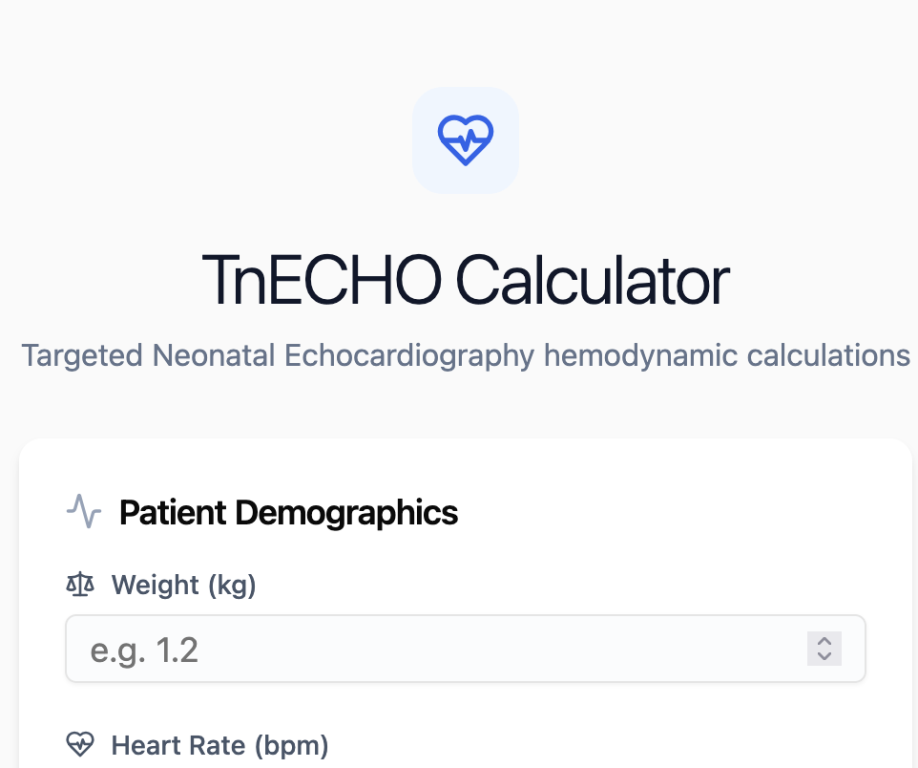 Hi @Mo7, I had a moment to look at your tool again today, and love the changes you introduced. It's much more careful with the interpretation now, and also pointing towards missing values. I think it's has additionally an educational value now. I also appreciate information about the tool and the creator behind it.
 -
Hi @Brar - welcome! I'm really excited to see NeoIPC members joining, this is the essence of what we want to be doing here at 99nicu- creating spaces for people to share their expertise. Make yourself at home! We're ready to post about this collaboration, but currently still awaiting some materials from your comms team. Good thing about old-fashioned forums- nothing is on fire here. Much more relaxing than Twitter! Have a good week everyone!

View in the app
A better way to browse. Learn more.