_0b6494.png)
_5c07e1.png)
_0d1bd3.png)
_75149d.png)

Everything posted by Stefan Johansson
-
@Nathan Sundgren Novonate - that’s a cool startup!
-
Like @Dr.Lamiya we also secure UAC/UVC's with a holding sutur. In addition, a "tape bridge" with Steristrip This works pretty well, nurses check positions daily, as nb of cm inserted at skin level. @Jennifer check out the topic below, @gayle omansky posted some really nice fixation pictures there.
-
@Jennifer - how do you mean? That the position of the UVC tip changes over time?
-
Many of you have attended our educational conferences in Stockholm, Copenhagen and Vienna (aka as the #99nicuMeetup). Those first three meetings were a great way to gather the web community, and meet up IRL. Feedback from you all and from speakers were exceptionally good and for 2020 we had some really great plans for a 4th edition. However, the Covid pandemic effectively crushed all our plans... Now we have started to think about a #99nicuMeetup in Sept 2022 (for example 15-17 Sept, 2022) What do you think about such a plan? Join the discussion in our Lounge, which you can access as a logged in member.
-
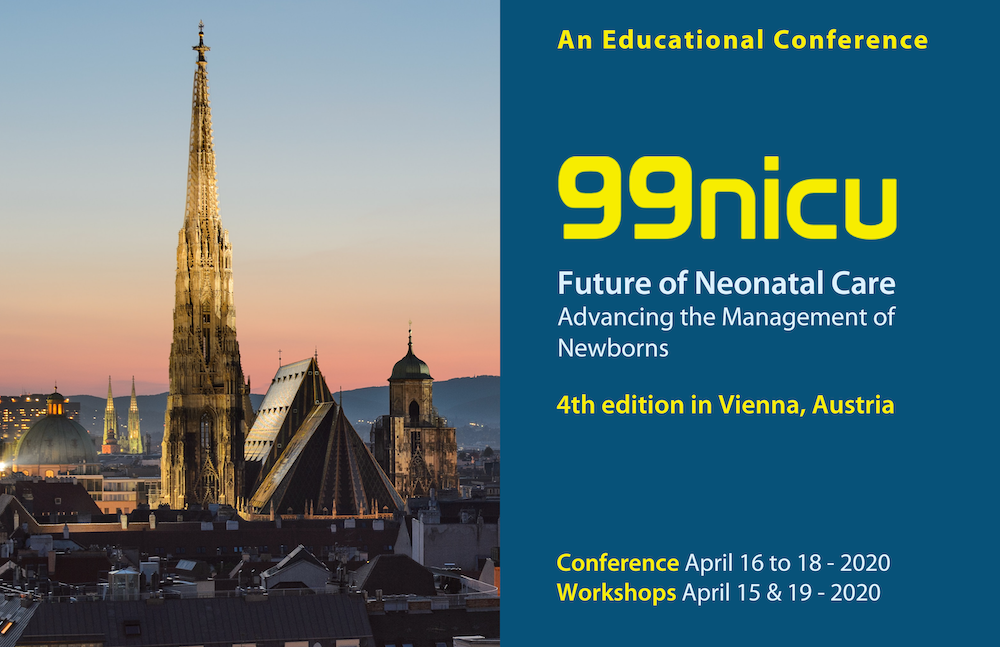
As you may recall, we planned our IRL #99nicuMeetup in April 2020, in Vienna, but had to cancel due to the Covid pandemic. Find that program attached We have now started to think about running this event 15-17 Sept 2022 (and pre/post workshops 14th and/or 18th). Please note that we have not set a definite date, we have no venue, we have not decided about location etc-etc. We just feel we want to meet up IRL again What do you think about all this? How/where/when would you like to attend? Please also share your thoughts on the previous program, and feel free to share your thoughts on topics/speakers/workshops etc-etc! Program.pdf
-
Good questions! We would clamp for a few hours, make an x-ray (always fine if the infant is fine ) and then pull the drain. In a poll, I'd vote for the 2nd option, i.e. pull without x-ray given stable vitals etc. We have practically switched to pig tail tubings for all infants. I have used three different straight tubes (the clunky old school with troachar, one seldinger variant and the "easydrain"), all did the job but I think pig tail tubes are the most easy ones and still effective usually.
-
.png.e8e9d810ea98876a39e7354effeb9c5a.png) Family-centered care (FCC) is an essential strategy to improve outcomes, for both infants and parents. And, from my own experience, FCC also improves our own "outcomes", as staff members. There are still a lot of work to get done to spread the word about FCC, how to research it, and how to implement it. We thought we could help by setting up a series of five webinars. All free of charge and without any sponsors. We will update this post ASAP with photos and bio's of the panelists, and the dates for the latter ones but would like to open the registration for the two first webinars. Kangaroo Mother Care - an opportunity to improve infant outcomes globally, 8 December at 17.00-18.00 CET Skin-to-skin contact is a novel, low-tech and highly effective approach to improve outcomes for especially LBW infants. Join this exciting webinar about this with the following panelists: Dr Suman Rao, WHO, Geneva, Switzerland Suman Rao is Professor of Neonatology at St. John’s Medical College in Bangalore, South India. She is also a consultant in the Department of Maternal, Newborn, Child, Adolescent and Aging at the WHO. She has worked for over 20 years to improve outcomes of the small and sick newborns and has done pioneering research in Kangaroo mother care and developmentally supportive care in India. She is keen on low cost innovations and has helped to develop low cost remote monitoring of newborns, therapeutic hypothermia devices and CPAP devices. She has been part of WHO projects on immediate KMC, ACTION and Scale up KMC implementation research. Dr Agnes Linnér, Karolinska University Hospital, Stockholm, Sweden Agnes Linnér is a neonatologist at Karolinska University Hospital and a doctoral student at Karolinska Institutet in Stockholm, Sweden. Her research interest is global neonatology and more specifically the potential of early skin-to-skin contact or Kangaroo Mother Care. In June 2022 she will defend her thesis with the title "Immediate skin-to-skin contact for very preterm infants, from newborn physiology to mortality reduction". Professor Stefan Peterson Swartling, Karolinska Institutet, Stockholm, Sweden Stefan Swartling Peterson is a Public Health Physician and Professor of Global Health. His formative work has been in East Africa over the last 20 years working on health systems and implementation science related to of child survival, perinatal quality of care and capacity development. Prof Swartling Peterson served as the Global Chief of the Health for UNICEF 2016-20, based in New York, and from 2021 he is professor of Global Transformation for Health at Karolinska Institutet. Click here to register or copy&paste the link below into your browser: https://meduniwien.webex.com/meduniwien/onstage/g.php?MTID=e63b7c9709a0902653fe53d324c0da563 The journey towards family-centered care, 10 November at 17.00-18.00 CET Family-centered care is a model of care that involves parents in the care of their baby born sick or premature. We will talk with one of the creators of a training program aiming to change neonatal care culture and also with the representatives of the NICU that has completed the implementation of this intervention. Panelists: professor Liisa Lehtonen, MD, Turku University Hospital, Turku, Finland Dr Dace Sniedze, Children's Clinical University Hospital in Riga, Latvia Dr Renāte Zariņa, Children's Clinical University Hospital in Riga, Latvia Click here to register or copy&paste the link below into your browser: https://meduniwien.webex.com/meduniwien/onstage/g.php?MTID=e5f9e875c529eaf5607f771b6d0501c2c
Family-centered care (FCC) is an essential strategy to improve outcomes, for both infants and parents. And, from my own experience, FCC also improves our own "outcomes", as staff members. There are still a lot of work to get done to spread the word about FCC, how to research it, and how to implement it. We thought we could help by setting up a series of five webinars. All free of charge and without any sponsors. We will update this post ASAP with photos and bio's of the panelists, and the dates for the latter ones but would like to open the registration for the two first webinars. Kangaroo Mother Care - an opportunity to improve infant outcomes globally, 8 December at 17.00-18.00 CET Skin-to-skin contact is a novel, low-tech and highly effective approach to improve outcomes for especially LBW infants. Join this exciting webinar about this with the following panelists: Dr Suman Rao, WHO, Geneva, Switzerland Suman Rao is Professor of Neonatology at St. John’s Medical College in Bangalore, South India. She is also a consultant in the Department of Maternal, Newborn, Child, Adolescent and Aging at the WHO. She has worked for over 20 years to improve outcomes of the small and sick newborns and has done pioneering research in Kangaroo mother care and developmentally supportive care in India. She is keen on low cost innovations and has helped to develop low cost remote monitoring of newborns, therapeutic hypothermia devices and CPAP devices. She has been part of WHO projects on immediate KMC, ACTION and Scale up KMC implementation research. Dr Agnes Linnér, Karolinska University Hospital, Stockholm, Sweden Agnes Linnér is a neonatologist at Karolinska University Hospital and a doctoral student at Karolinska Institutet in Stockholm, Sweden. Her research interest is global neonatology and more specifically the potential of early skin-to-skin contact or Kangaroo Mother Care. In June 2022 she will defend her thesis with the title "Immediate skin-to-skin contact for very preterm infants, from newborn physiology to mortality reduction". Professor Stefan Peterson Swartling, Karolinska Institutet, Stockholm, Sweden Stefan Swartling Peterson is a Public Health Physician and Professor of Global Health. His formative work has been in East Africa over the last 20 years working on health systems and implementation science related to of child survival, perinatal quality of care and capacity development. Prof Swartling Peterson served as the Global Chief of the Health for UNICEF 2016-20, based in New York, and from 2021 he is professor of Global Transformation for Health at Karolinska Institutet. Click here to register or copy&paste the link below into your browser: https://meduniwien.webex.com/meduniwien/onstage/g.php?MTID=e63b7c9709a0902653fe53d324c0da563 The journey towards family-centered care, 10 November at 17.00-18.00 CET Family-centered care is a model of care that involves parents in the care of their baby born sick or premature. We will talk with one of the creators of a training program aiming to change neonatal care culture and also with the representatives of the NICU that has completed the implementation of this intervention. Panelists: professor Liisa Lehtonen, MD, Turku University Hospital, Turku, Finland Dr Dace Sniedze, Children's Clinical University Hospital in Riga, Latvia Dr Renāte Zariņa, Children's Clinical University Hospital in Riga, Latvia Click here to register or copy&paste the link below into your browser: https://meduniwien.webex.com/meduniwien/onstage/g.php?MTID=e5f9e875c529eaf5607f771b6d0501c2c -
Hi Flavio, sorry no other had given their input yet, but here's mine: per our feeding guideline, feeds are advanced w 20-40 ml/kg/d, and of course tailored per tolerance and infant. The more immature and IUGR, we are def in the lower range or even below it, at least the first few days. So, practically speaking, we are more careful with IUGR infants, but how it is actually done depends on both baby and team
-
We posted a short survey on Twitter about dosing of caffeine. Do you use caffeine (citrate) at a maintance dose of ≥20 mg/kg/day? Do you follow serum levels of caffeine? Take the survey on Twitter and/or share your practises here!
-
Hi Flavio! I would generally not, but work work with ventilator pressures such as PEEP/CDP to achieve FRC. But I think others may do, let’s hope more people join the discussion.
-
From Twitter:@Vijaykumar Do you mean that caffeine can lead to leucocytosis? If yes, I was not aware of it Could this be a neonatal leukemoid reaction? I am aware this is a "ruling out" diagnosis, but if all testing turns out negative, it would be a likely diagnosis.Hi @ali, I must admit I am not sure about how we do this... but I think it goes about like this. Registrations are first stored on the hard drive of our aEEG machine, and the electrophys depart then "tanks" them over somehow to interpret our tracings. I suppose the electrophys dept keep the aEEG tracings with all their other tracings (EEGs, EMGs etc-etc),i.e. so it complies to legal frameworks.We are very happy that MONIVENT extends its Supporting Partnership with 99nicu! @Monivent is a medtech company dedicated to improve the emergency ventilatory care given to newborn babies in need of respiratory support at birth. About 3-6 % of all newborns end up in this situation, where healthcare personnel today are lacking tools to determine how effective their manual ventilation really is. Monivent® Neo is a non-invasive monitoring device to be used during manual ventilation, measuring the air volume given to the baby with sensors wirelessly built-into the face mask, providing the caregiver with continuous feedback on several critical parameters. A target volume is presented and any volume given outside the recommended interval is clearly indicated by a color change on an intuitive display. MONIVENT products are Monivent Neo Training to be used within simulation training on a manikin, and Monivent Neo100 for use in clinical settings. Learn more about MONIVENT on: http://monivent.se/Great to this topic re-surface after 10y! We switched to an AccuCheck apparatus (not the small patient device, a more bulky white/purple device for hospital use) since a few years back. It works reasonably ok in my experience but we still see false positives for hypoglycemia (for example, the AccuCheck results indicates like 1.9 when our blood gas machine gives 3.1) My feelings around this super-common test: in those times when everything becomes better, why cannot someone invent a point of care device that WORKS for newborns... 🤔Thanks @tarek for sharing. We do the same. I personally think that the attention brought up around the diseased twin has a great value for us how we approach the family and also for the family to muddle through their tough experience. And the butterfly, there could not be a better symbol IMHO.@Francesco Cardona Thanks! 15 Years of posting made it happen You Will soon follow!
 After the latest update of the software that runs 99nicu.org, there is a new Ranks feature. From registration and through your activity (like starting threads and posting replies, and giving likes to posts), you collect points that upgrades your rank through 14 levels, from "Newbie" to "Grand Master". Check out your current Rank in your profile Even if this is a new feature from this software version, all your activity since you registered is counted. Best wishes from a Grand Master 😎The registration is now open! Click here to register!
 We look forward to welcoming you to the 4th 99nicu webinar on the 24th August at 17:00-18:00 CET, this time about the Butterfly Project, a framework that helps parents and staff to signify that a surviving infant has had a deceased twin or triplet sibling. Most women who have a multiple pregnancy (twins, triplets or more) do not have complications, but sadly, death of one baby from a multiple pregnancy is more common than many people appreciate. A group of clinicians and researchers in Newcastle, UK, wanted to start to understand what it felt like to be a parent who has had to face such a difficult challenge and conducted a series of research studies. They spoke to parents who had lost one or more babies, and had a least one surviving baby from a multiple pregnancy, and they also spoke to midwives, doctors and nurses to hear about their experiences. During workshops, one of the parents suggested that a Butterfly cot card could signify the twin status for the surviving baby. Through the Butterfly project, these Butterfly cot cards have been made freely available to several hundreds of hospitals worldwide including the UK, North, South and Central America. The guidelines describe how to work with the Butterfly project in the NICU and has been translated into many languages. Speakers / panelists Nicholas Embleton, Consultant Neonatal Paediatrician, and Professor of Neonatal Medicine, Newcastle upon Tyne UK, having completed paediatric and neonatal training in Newcastle upon Tyne, UK and Vancouver, Canada. Professor Embleton helps lead a broad portfolio of research based in Newcastle, UK see www.neonatalresearch.net The research group includes the unique Great North Neonatal Biobank and studies include large-scale NIHR nutrition trials, and studies of immune, microbiomic and metabolomic development. Professor Embleton also leads a series of qualitative studies exploring the experiences of parents (and the staff who cared for them) who suffered baby loss, recently completing a project with staff and parents where one of a twin pair dies. This led to the creation of a educational film based website www.neonatalbutterflyproject.org Professor Embleton coordinates the UK based Neonatal Nutrition Network (N3) www.neonatalnutritionnetwork.org , and has >200 peer reviewed publications in addition to numerous educational articles and book chapters. Alex Mancini-Smith is a senior neonatal nurse with over 30 years’ experience and is the National Lead Nurse, leading the National Neonatal Palliative Care Project in the UK, the first innovative post of its kind. This is a unique role developing the training and education of staff nationally across neonatal, maternity and children’s palliative care teams. She has been instrumental in developing national and international guidelines and frameworks, including robust complex and palliative care pathways. Building on her educational work over previous years, Alex Mancini-Smith supports and works alongside teams in embedding palliative care within routine neonatal care by training professionals across the UK and Europe in a variety of settings. Alex Mancini-Smith has published widely and is the Lead Editor for the ‘Nurses Textbook in Neonatal Palliative Care’, the first textbook of its kind, published January 2020. Current work includes the national review of the British Association of Perinatal Medicine’s palliative care framework for practice, previously published in 2010. Date and time 24 August, at 17:00-18:00 CET Registration Click here to register!I just finished listening to a most interesting interview with Dr. Horan in the Incubator podcast about field work with Medicine San Frontiers (Doctors without borders). Insights, laughters and tears about NICU work under challenging circumstances (to say the least!) I can only recommend listening to this interview. Would be great to hear if you have experiences and advice to share for those wanting to take on a similar mission. https://www.buzzsprout.com/1739595/8806860-010-dr-katherine-horan-a-neonatologist-without-bordersLooks like a great tool! I voted "Not yet, but interested" above I remember a special case some time ago where we really wanted to get CSF for herpes-PCR, and the LP failed x several. We asked our radiologist for support and ultrasound showed a hematoma after the first puncture attempts, completely compressing the the dural sack. So, getting CSF seemed just impossible. But... a new ultrasound (day after as I remember it), showed that hematoma was smaller and with guidance, we performed a succesful tap. Shared the poll also on TwI would love to, but we mostly work per the outdated approach